Professional Home Renovation Kitchen Remodeling Bathroom Remodeling Services
Guide / Dallas-Fort Worth / (469) 850-7087

Aging in Place and Accessible Remodeling in DFW

Safe, accessible, and built to stay in the home you love, without the clinical look. This is a practical Dallas-Fort Worth guide to curbless showers, grab-bar blocking, wider doorways, and zero-step entries, with honest 2026 costs and what to prioritize first.

5,875+
Projects since 2014
$8K-$60K
Accessible bath
21
DFW cities
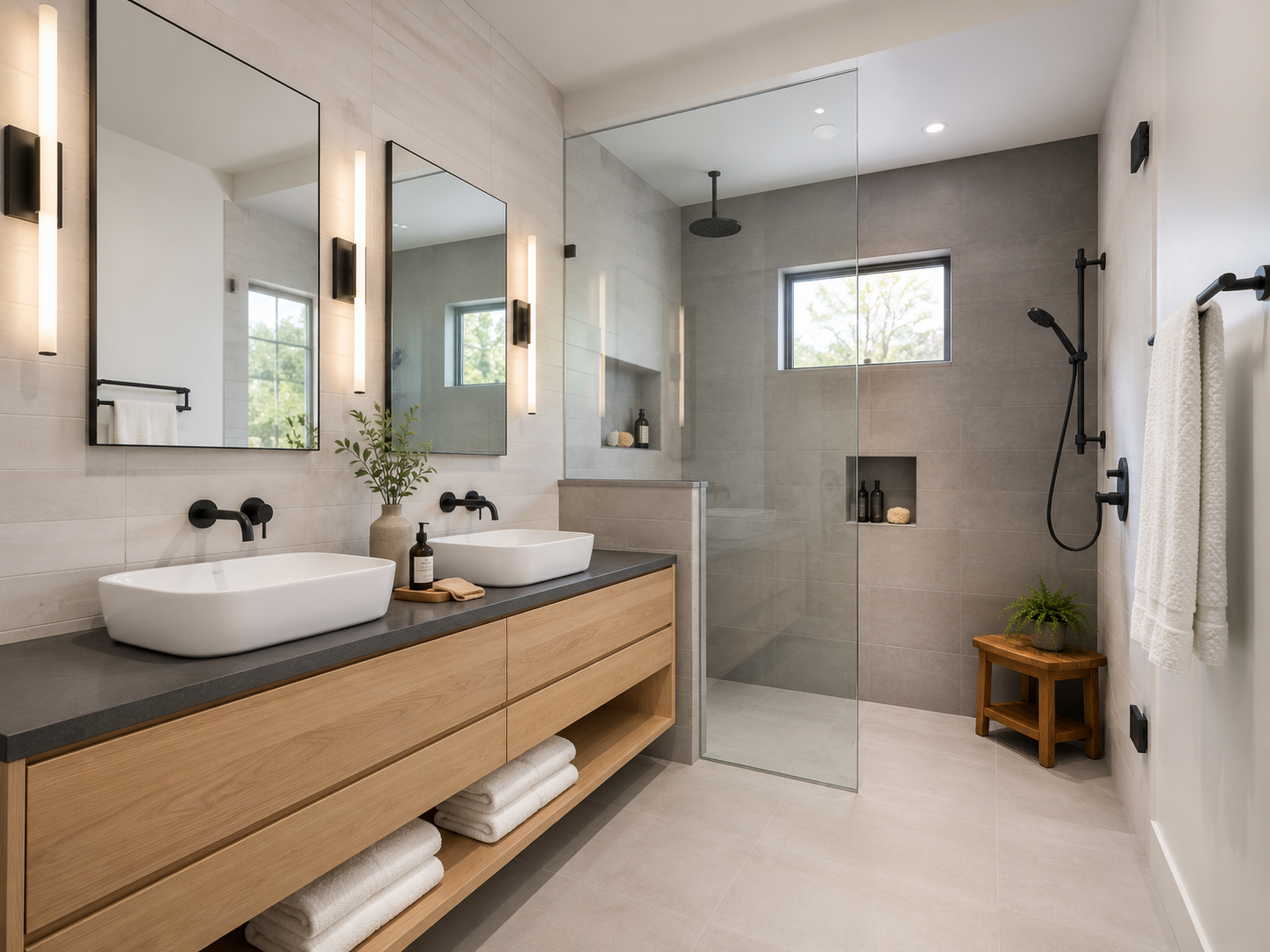
Accessible modern bathroom in DFW with a curbless walk-in glass shower, a double floating vanity, and a built-in bench
Aging in Place · DFW
The short answer

How do you make a home accessible without it looking like a hospital?

The trick is to build accessibility into the design instead of bolting it on afterward. A curbless walk-in shower with a linear drain reads as a high-end spa feature, not a medical one, and it removes the most common fall hazard in the house. Grab bars only look clinical when they are stainless-steel afterthoughts. We install solid wood blocking inside the walls during framing so designer bars, or a teak fold-down bench, can be mounted later at full strength wherever you want them. Wider 32-inch to 36-inch doorways, comfort-height toilets, lever handles, and a bench seat all read as simply nice finishes to anyone who does not know to look. Done this way, an accessible remodel adds resale value and never announces itself. See how this fits into a full interior remodeling project, or talk it through on the contact page.

01 · The details

Accessible features that don’t look clinical

01
Curbless showers: the single highest-value change
A zero-threshold, roll-in shower with a frameless glass panel and a linear drain eliminates the lip that causes most bathroom falls. In DFW slab-on-grade homes the floor often has to be recessed or the whole bathroom floor built up to slope to the drain, which is the real cost driver, not the tile. Built right it looks like a luxury wet room, not a medical fixture.
$9K-$25K
02
Grab-bar blocking: cheap now, expensive later
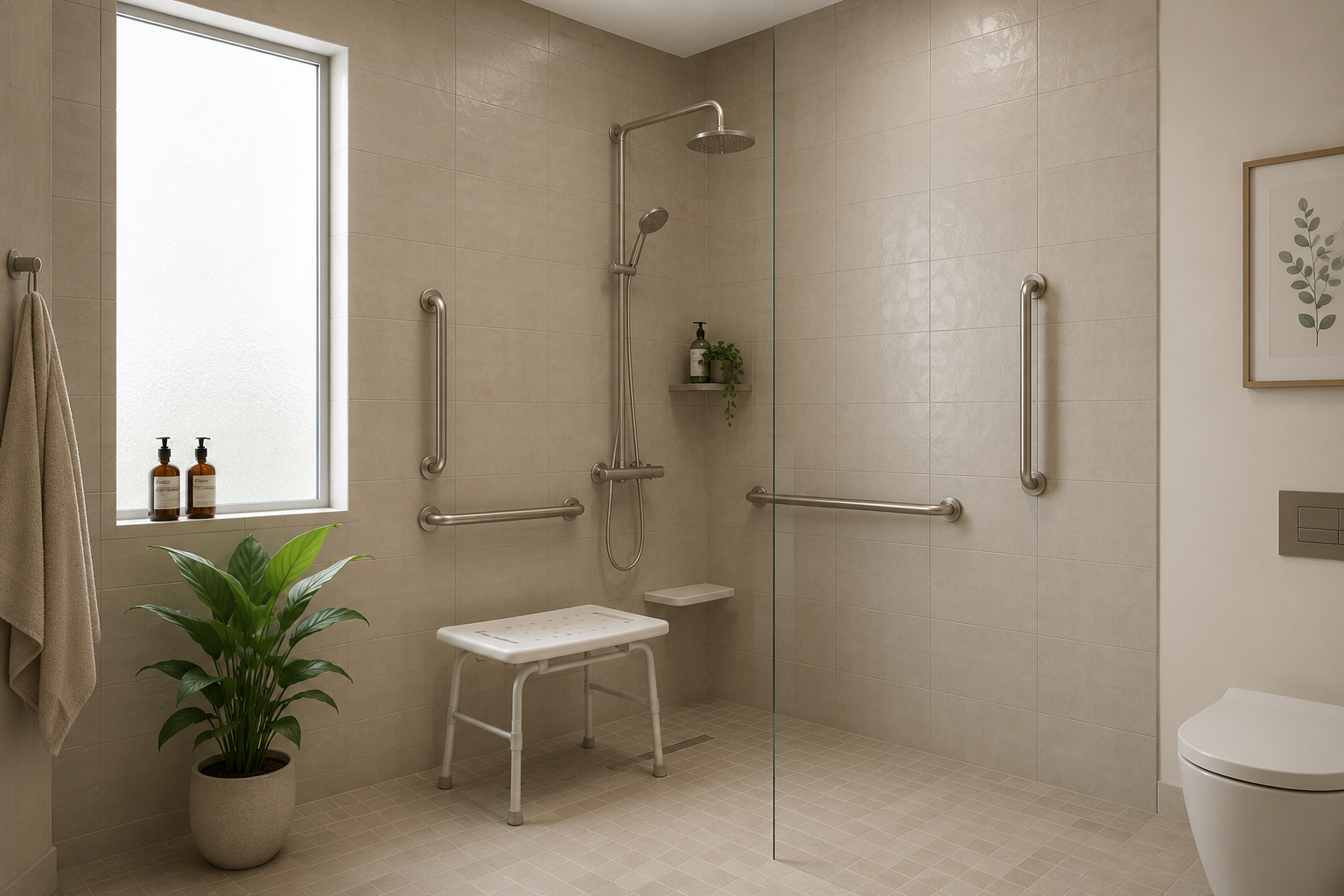
The smartest move in any accessible remodel is also the cheapest. While the walls are open, we add solid plywood or 2x blocking behind the shower, beside the toilet, and along the tub so a grab bar can later be screwed into structure, not just drywall. Adding blocking during a remodel costs a few hundred dollars. Retrofitting it into finished walls means tearing out tile and can cost ten times more.
$150-$400 during framing
03
Wider doorways and clear floor space
Standard interior doors give about 23.5 inches of clear width. A walker or wheelchair needs a 32-inch clear opening, and a 36-inch door is better. We also plan a 60-inch turning circle in bathrooms and a 5-foot landing at the bottom of stairs. Widening an opening can mean moving a header or relocating a switch, so it is far easier as part of a full remodel than as a standalone job.
$700-$2,500 per opening
04
Zero-step entries on a Blackland clay slab
At least one no-step way into the house matters more than any interior change. In DFW this is rarely a simple ramp. Blackland clay soil heaves and shrinks with the seasons, so a poured approach has to be designed to move with the slab without cracking or creating a new trip lip at the threshold. A gently sloped, textured concrete approach beats a steep bolt-on ramp every time, and looks like landscaping rather than equipment.
$2,500-$12,000
05
Universal design choices that never look clinical
Lever door handles, rocker light switches, comfort-height (17-19 inch) toilets, a handheld shower on a slide bar, a shower bench, contrasting counter edges, and good layered lighting all serve aging-in-place without reading as accessibility gear. Pull-out drawers instead of base cabinets and a section of lowered counter help anyone seated. These are now mainstream design upgrades, which is exactly the point.
folded into the remodel
06
Where to spend first when the budget is finite
If you cannot do everything at once, the order that prevents the most injury is: 1) curbless shower with blocking and a bench, 2) one zero-step entry, 3) a full bath and bedroom on the main floor, 4) wider doorways on the main path, 5) lighting and lever hardware. The bathroom and a single-floor living path solve the two biggest real-world risks, falls and stairs, for the most people.
priority order
07
Honest costs: what an accessible remodel actually runs in DFW
A focused accessible bathroom remodel typically lands between $8,000 and $60,000 depending on size, tile, and whether the slab has to be reworked. A main-floor primary suite addition so stairs become optional runs $120,000 to $400,000-plus. A whole-home renovation that bakes in universal design across the house runs $95,000 to $350,000. We give fixed-price quotes, so the number you sign is the number you pay.
2026 ranges
08
Permits, HOA review, and doing it once
Moving plumbing, changing structure, or building an entry approach all require city permits, and UHS Remodeling pulls every one. Most DFW subdivisions also require HOA architectural review for any exterior change like a new entry or ramp, which adds time up front. We plan for both so the project is approved and built once, not corrected after an inspection.
we handle it

May N., Co-Founder and Design Lead at UHS Remodeling
From the field · Dallas-Fort Worth
The fastest way to make a home feel clinical is to wait until someone gets hurt and then bolt safety gear onto finished walls. The fix is to design for it quietly from the start. We put blocking behind every wall a grab bar might ever touch, slope the shower to a linear drain so there is no curb, and choose a teak bench and a designer bar that look like a spa, not a hospital. The homeowner gets to age in place, and nobody walking through ever sees the engineering that made it safe.
May N.
Co-Founder and Design Lead, UHS Remodeling
02 · Keep exploring

Where to go next

03 · Questions, answered

FAQs

For a personalized number, start with our remodeling cost calculator.

What is aging-in-place remodeling?
+
Aging-in-place remodeling means updating a home so someone can live in it safely and independently as they get older, instead of moving to assisted living. In practice that is a mix of curbless showers, grab-bar blocking, wider doorways, at least one zero-step entry, lever hardware, and good lighting. Done well it also reads as a normal high-end remodel, so it adds resale value and never looks like a medical retrofit.
How much does an accessible bathroom remodel cost in DFW?
+
A focused accessible bathroom remodel in Dallas-Fort Worth typically runs $8,000 to $60,000 in 2026. The biggest cost driver is the curbless shower: on a DFW slab-on-grade home the floor often has to be recessed or built up to slope to a linear drain, which is more involved than a standard tub-to-shower swap. Tile choice, the size of the room, and whether plumbing moves also affect the final number. UHS Remodeling gives a fixed-price quote so there are no surprises mid-build.
Should I add grab bars now or just blocking?
+
If a grab bar is needed today, install it now. If you are remodeling but do not need bars yet, the right move is to add solid blocking inside the walls while they are open and skip the visible bar for now. Blocking costs a few hundred dollars during a remodel, makes the wall ready to hold a 250-pound load anywhere you choose, and lets you mount a designer bar later in minutes. Retrofitting blocking into finished, tiled walls is the expensive part, so doing it during the remodel is the smart, low-cost insurance.
How wide do doorways need to be for a wheelchair or walker?
+
Aim for a 32-inch clear opening at a minimum, with 36 inches preferred. A standard interior door only gives about 23.5 inches of clear width once you account for the stops and the open door, which is too narrow for most walkers and wheelchairs. We also plan a 60-inch turning circle in key rooms like the primary bathroom. Widening a doorway can involve moving a header or a light switch, so it is far cheaper to do as part of a larger remodel than on its own.
Can you build a curbless shower on a Texas slab foundation?
+
Yes, and most DFW homes are slab-on-grade, so this comes up constantly. Because the slab is flat, we create the slope to the drain either by recessing a section of the slab or by building the surrounding bathroom floor up so the whole room flows to a linear drain with no curb. The waterproofing and slope detailing matter a lot here, which is why a curbless shower is a job for an experienced design-build remodeler rather than a quick tub swap. See how this fits into a full interior remodeling project.
What is the most important accessibility change to make first?
+
If you can only do one thing, make the bathroom safe with a curbless shower, in-wall blocking, and a bench, because falls in the bathroom are the most common and most serious in-home injury for older adults. The next priority is creating a single-floor living path: a primary bedroom, full bath, and at least one zero-step entry all on the main floor, so stairs become optional rather than a daily risk. Those two changes solve the biggest real-world dangers for the most people.
Do you pull permits for accessibility work, and what about my HOA?
+
Yes. Any work that moves plumbing, changes structure, widens an opening, or builds an exterior entry approach needs a city permit, and UHS Remodeling pulls every permit. We are fully insured. For exterior changes like a new zero-step entry, most DFW subdivisions also require HOA architectural review, which we plan into the timeline so the project is approved up front and built once. Texas does not issue a state license for general residential contractors, so the right credibility test is that a remodeler is fully insured and pulls permits.
04 · Let’s talk

Plan an accessible remodel that
looks like a home, not a hospital

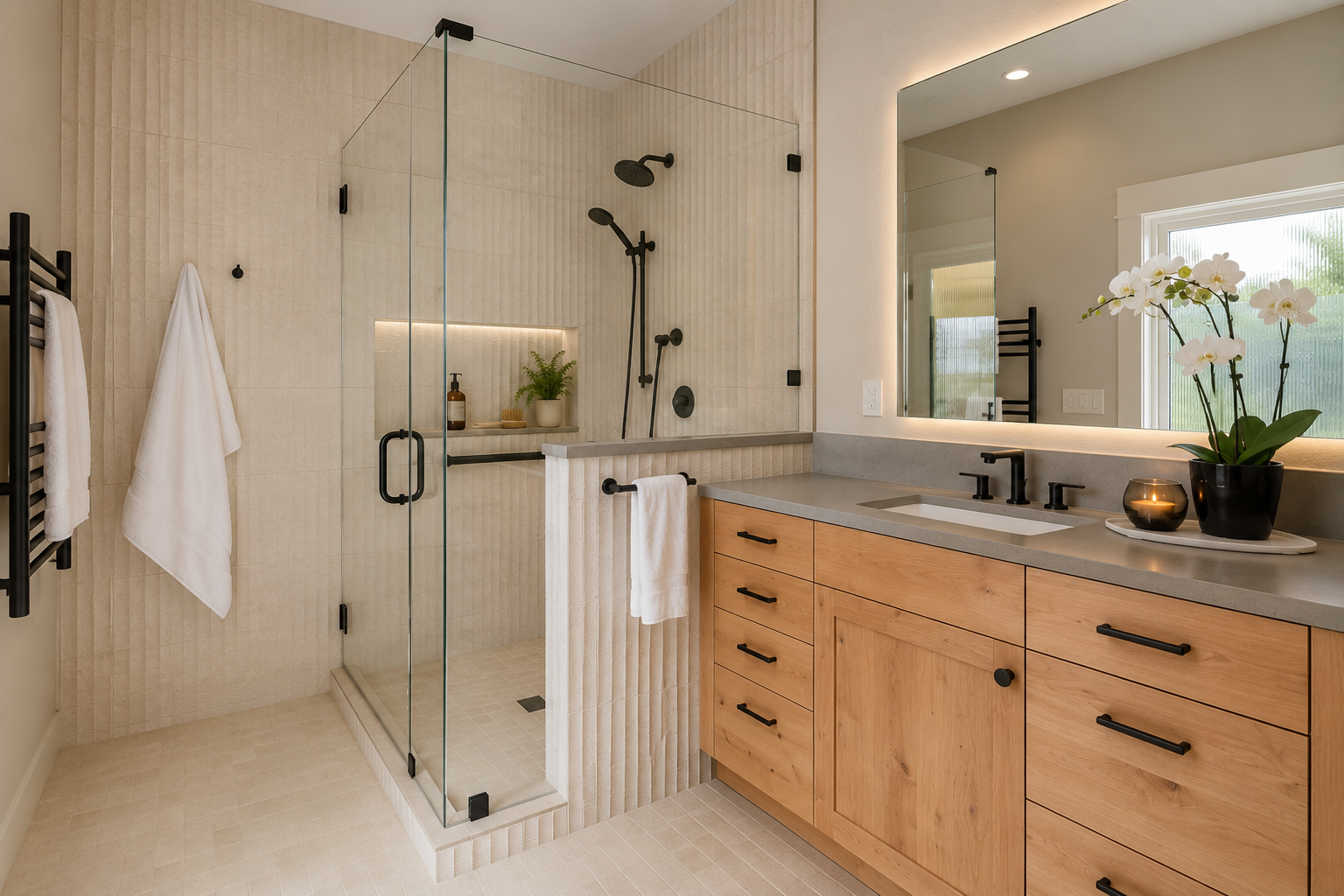
Accessible bathroom remodel in Dallas-Fort Worth that looks like a home, not a hospital