
What it really costs to add a room, wing, second story, or guest house in North Texas in 2026.
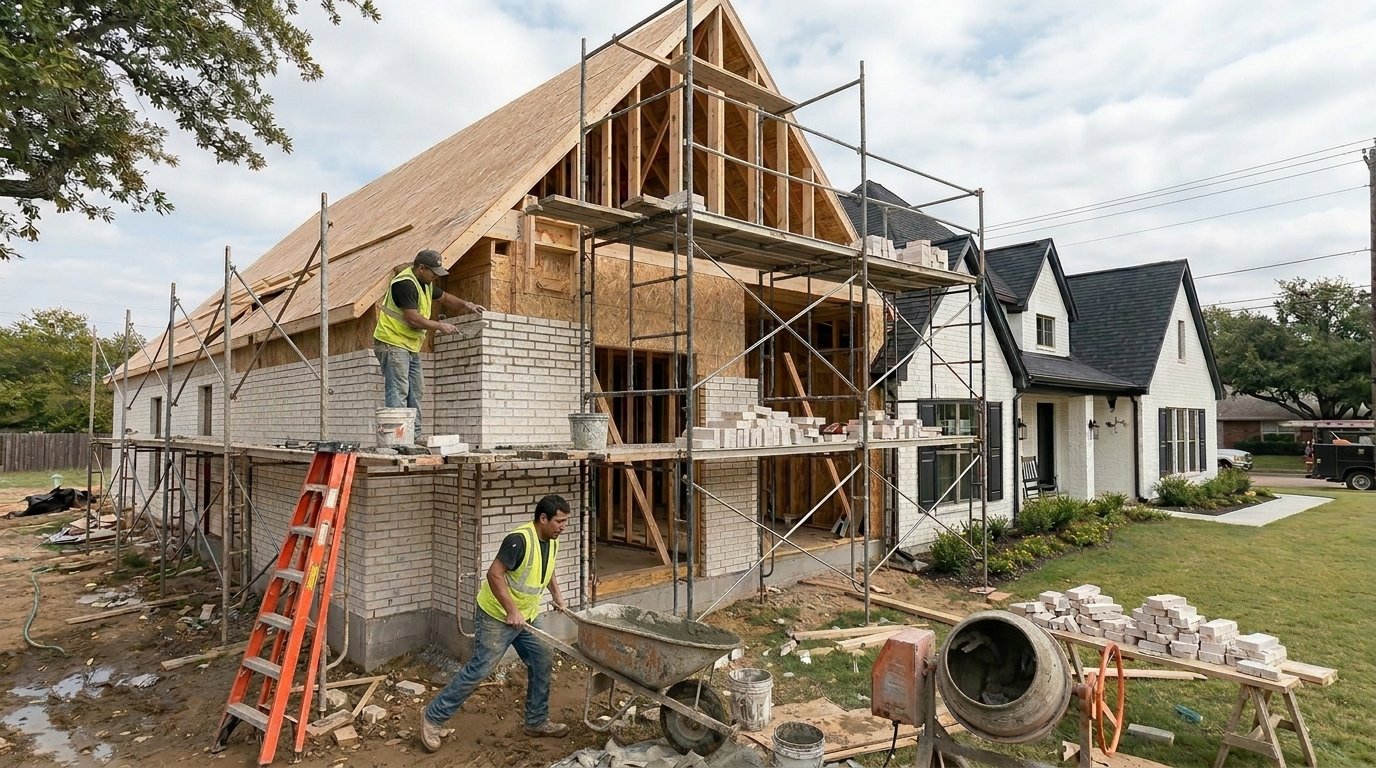
A home addition in DFW costs roughly $48,000–$180,000 for a single room, $160,000–$650,000 for a wing or multi-room addition, and $340,000–$2.5M+ for a full second story in 2026. Per square foot, a standard single-room bump-out runs $220–$340 and a second-story addition $280–$475, with foundation, finish level, and city driving the spread. Every DFW city requires stamped structural plans, and permit plus HOA approval adds 4–8 weeks before construction starts.
Single-room addition: $48,000–$180,000 (bedroom, office, sunroom, or extended living).
Wing / multi-room addition: $160,000–$650,000 (primary suite, guest wing, or family room + bed + bath).
Second-story addition: $340,000–$2.5M+ (adding a full floor with bedrooms, baths, and stair relocation).
UHS Remodeling: 500+ verified reviews · 4.9★ avg · 1-year written warranty · fixed-price contracts · full permit + foundation handling.
Home addition cost in DFW ranges from about $48,000 for a single sunroom in Rowlett or Sachse, up to $2.5 million for a full second-story estate expansion in Highland Park. Additions are different from renovations: you’re creating new square footage, which triggers permits, engineering, foundation work, and typically a full architectural review.
2026 DFW addition costs are up 7–11% year-over-year, driven by two things: structural engineering demand (every Collin County addition now requires stamped plans, and engineers are booked 6–10 weeks out), and foundation construction costs (new pier-and-beam or slab foundations rose with steel and concrete prices). If you were quoted $180,000 for a wing addition in 2024, expect $205,000–$215,000 in 2026 for the same scope.
UHS Remodeling handles room additions from concept to certificate of occupancy under one fixed-price contract. We manage the structural engineer, the surveyor, the permit submittals, the HOA review, the foundation crew, framing, MEP, insulation, drywall, and finishes. You sign one contract; you get one point of contact.
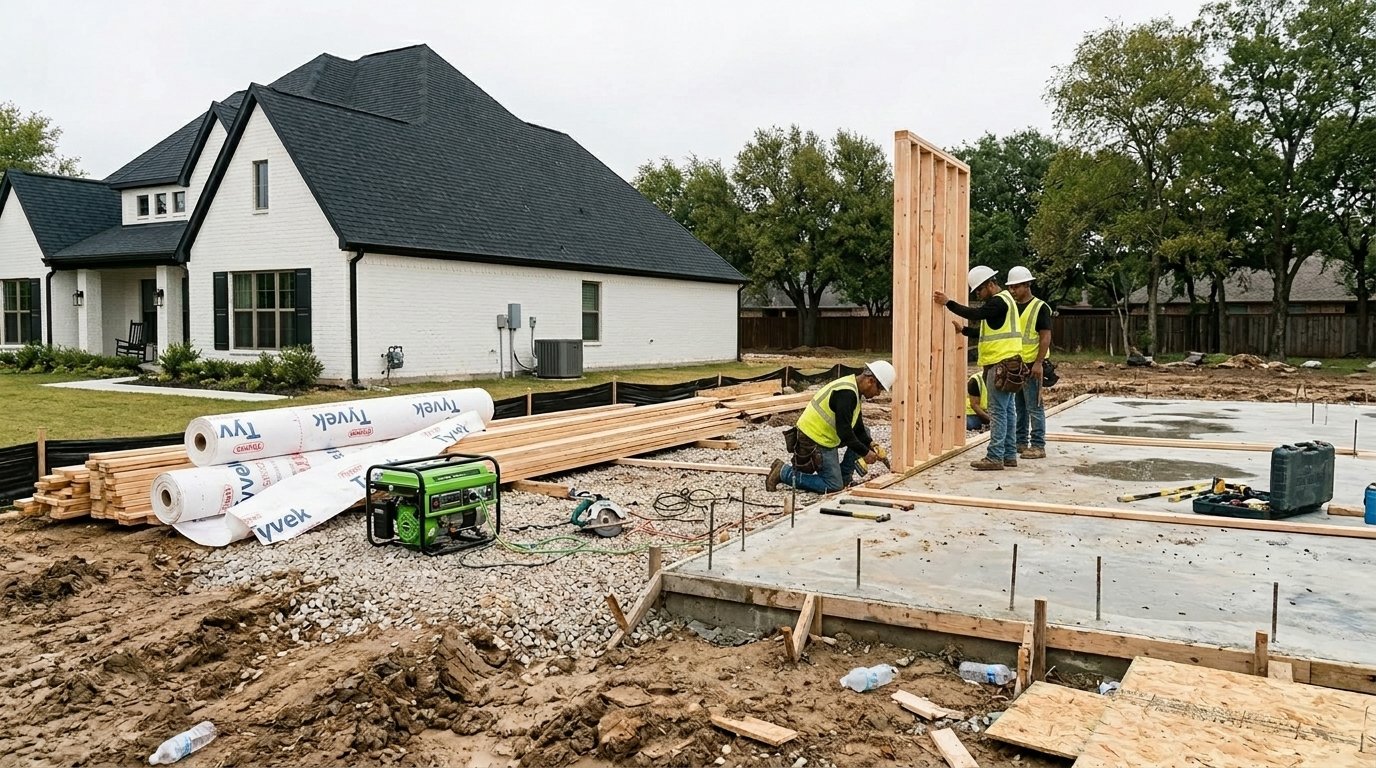
A single-room addition expands the existing footprint by one room. Typical scope: 150–400 sq ft of new space, new slab foundation or pier-and-beam, new framing tied into existing roof, electrical extension, HVAC zone extension, windows, drywall, flooring, paint. Common uses: sunroom, home office, extended master bedroom, or a larger kitchen bump-out. Timeline: 10–18 weeks. Best for homeowners who need just a bit more room without reworking the whole house.
A wing addition adds 500–1,200 sq ft and typically 3–6 new rooms. Scope: full slab foundation, new framing, new roof integration, dedicated HVAC zone, new electrical panel subfeed, new plumbing rough-in, windows, doors, and full finishes. Common uses: new primary suite with walk-in closet and bath, guest wing with private entry, or family-room + playroom + kids’ bath combo. Timeline: 20–28 weeks. This is the dominant addition type in Frisco, Allen, Richardson, Plano, and McKinney as families expand.
Adding a second story is the most complex DFW addition type. Scope: structural analysis and reinforcement of existing foundation, new stair construction (often requires relocating utilities), complete framing of second floor, roof tear-off and rebuild, new HVAC system (almost always), full MEP extension upstairs, windows, finishes. Typical size: 1,200–2,800 new sq ft. Timeline: 30–48 weeks. Most common in Highland Park, University Park, older Plano, and M Streets Dallas where lots are small and single-story homes need more space.
Here’s what a full addition (Type 2: wing/multi-room) actually runs in 2026 across the 21 DFW communities UHS Remodeling serves. Each city link goes to our dedicated home addition page for that city with tier breakdowns, typical scope, and local permit notes.
| City | Addition Cost Range | Typical Timeline |
|---|---|---|
| Plano | $120K–$650K | 16–28 weeks |
| Frisco | $120K–$720K | 16–28 weeks |
| Allen | $120K–$600K | 16–28 weeks |
| Richardson | $120K–$620K | 16–28 weeks |
| McKinney | $120K–$650K | 16–28 weeks |
| Dallas | $120K–$1.5M | 16–28 weeks |
| Highland Park | $180K–$2.5M | 16–28 weeks |
| University Park | $160K–$2.4M | 16–28 weeks |
| Carrollton | $120K–$560K | 16–28 weeks |
| Addison | $120K–$680K | 16–28 weeks |
| Farmers Branch | $120K–$570K | 16–28 weeks |
| Garland | $120K–$540K | 16–28 weeks |
| The Colony | $120K–$570K | 16–28 weeks |
| Rockwall | $120K–$580K | 16–28 weeks |
| Rowlett | $120K–$500K | 16–28 weeks |
| Sachse | $120K–$500K | 16–28 weeks |
| Wylie | $120K–$500K | 16–28 weeks |
| Murphy | $120K–$600K | 16–28 weeks |
| Little Elm | $120K–$570K | 16–28 weeks |
| Prosper | $120K–$750K | 16–28 weeks |
| Flower Mound | $120K–$730K | 16–28 weeks |
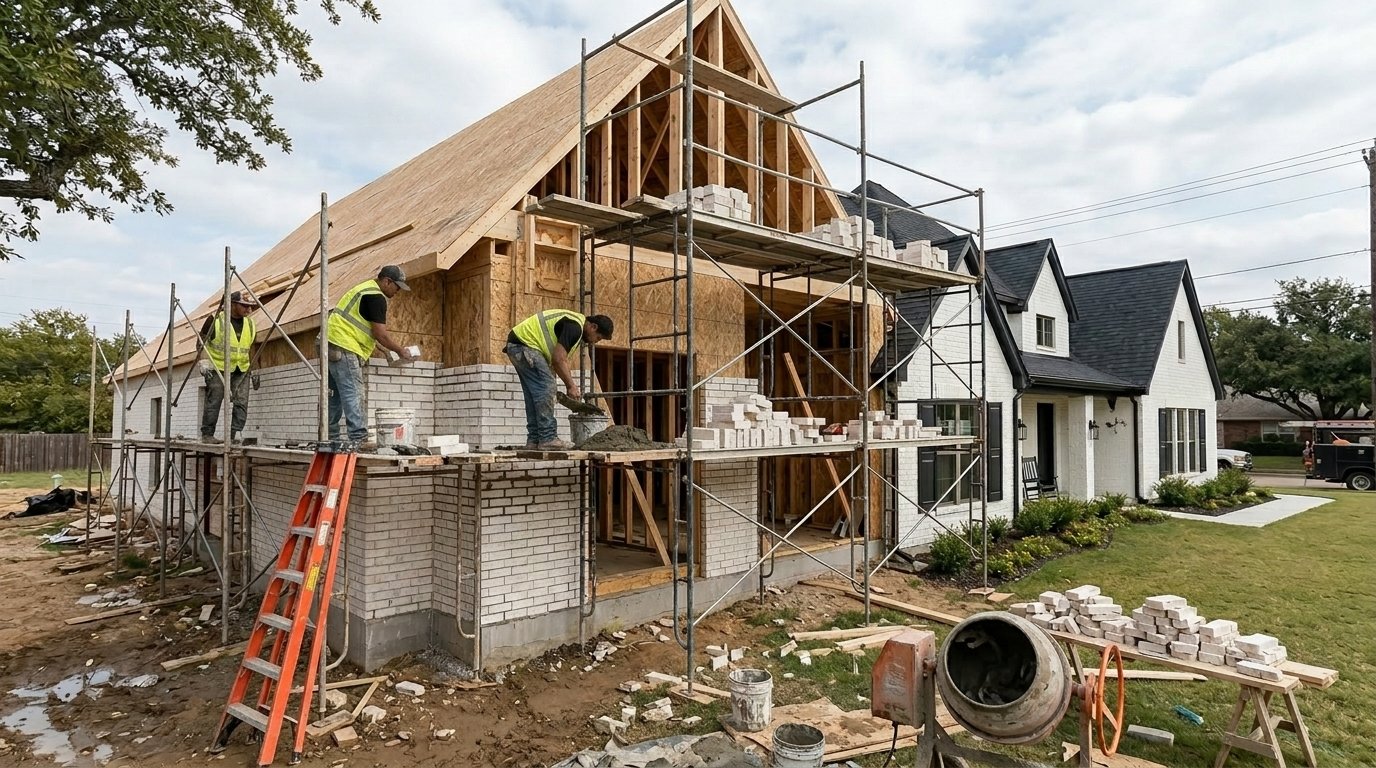
The per-square-foot number is the question every DFW homeowner asks first, and the honest answer is “it depends on foundation, finish level, and city.” Here is the real 2026 range UHS Remodeling sees on signed contracts:
Why the wide spread? Three factors: (1) foundation condition: slab-on-grade homes in DFW clay soil often need soil stabilization before any new foundation can be poured; (2) MEP routing: running new plumbing, electrical, and HVAC across an existing home adds labor costs disproportionately; (3) finish level: the same 800 sq ft footprint can be finished with $18,000 of flooring and fixtures or with $95,000 of flooring and fixtures.
For a typical 800 sq ft wing addition in Frisco or Plano priced at $295,000, here is where every dollar actually goes. These numbers come from UHS Remodeling’s internal costing spreadsheet for signed 2025–2026 contracts.
Architectural drawings: $6,500–$12,000 depending on scope. Structural engineering (stamped plans required by every DFW city): $3,500–$8,500. Survey and site plan: $650–$1,400. Soil report (required for new slab construction in some cities): $1,200–$2,200. City permit: $1,800–$4,500 depending on project valuation and city.
For an 800 sq ft slab-on-grade addition: excavation $4,500–$8,000, forms and rebar $8,000–$14,000, concrete pour $14,000–$22,000, post-tension cables (common in DFW clay) $3,500–$6,500, soil prep and compaction $5,000–$14,000. Pier-and-beam additions run $8,000–$15,000 higher due to pier installation and beam layout.
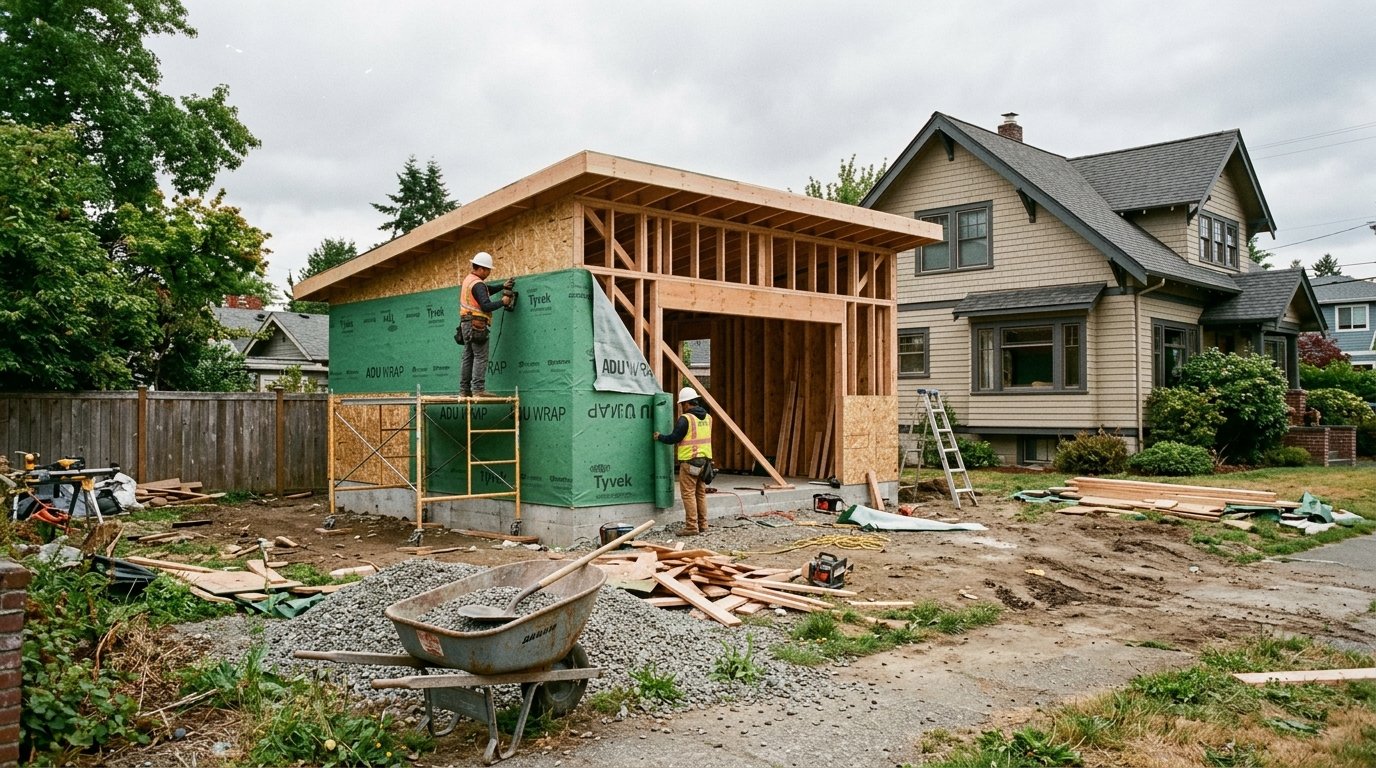
Wall framing, roof framing, sheathing, house-wrap, and tie-in to the existing structure. Includes the structural beam at the break-through where the new addition meets the existing home. That beam is typically the most expensive single line item on an addition, because it often requires temporary shoring and a steel beam to replace a load-bearing wall.
New shingles or tile to match the existing home, new fascia, new soffit, new gutters, and an exterior paint or stucco pass on the new wing and the seam where it meets the original home. For brick homes, expect to pay $8–$16/sq ft of brick face to match the existing brick color and course pattern.
Plumbing rough-in for new baths and laundry: $12,000–$22,000. Electrical rough-in with a new sub-panel: $8,500–$18,000. HVAC rough-in with a new zone or dedicated mini-split: $7,500–$15,000. These three trades work in sequence and each gets an inspection before insulation.
Insulation (spray foam or batts): $5,500–$9,500. Drywall, taping, texturing or smooth finish: $12,000–$22,000. Trim (baseboards, casing, crown, door casing): $6,500–$14,000. Paint: $5,000–$9,500. Flooring: $15,000–$38,000. Cabinetry and counters (if bath or kitchen is included): $18,000–$45,000. Tile (bath and backsplash): $8,500–$22,000. Doors and hardware: $3,500–$7,500. Finish plumbing fixtures: $4,500–$14,000. Finish electrical devices and light fixtures: $5,500–$12,000.
Architectural drawings finalized, structural engineering completed, selections locked. Purchase orders go out to cabinet, window, and long-lead material suppliers.
Permit submittal and HOA architectural review happen in parallel. Frisco, Plano, and Allen average 2–3 weeks; Highland Park and University Park average 4–6 weeks; HOAs add 3–6 weeks on top. During this time the crew continues prior projects.
Site clearing, tree protection, utility locates, temporary fencing, and excavation for the new foundation footprint. Soil compaction and plumbing ground-rough happen in parallel.
Forms, rebar, post-tension cables, and pour. Concrete cures for 7–10 days before framing can begin.
Wall framing, floor system (for second-story additions), roof framing, sheathing, roof-dry-in, house-wrap, windows and exterior doors installed. The addition is “dried in” (weatherproof enough to work inside).
Plumbing, electrical, and HVAC rough-in. First round of inspections at the end of week 15.
Insulation inspection, drywall hanging, taping, texture or smooth finish. Prime coat.
Flooring, cabinetry, tile, trim, interior doors, paint.
Countertop install, finish plumbing, finish electrical, appliances, hardware.
Touch-up, cleaning, final inspections, walkthrough, keys, warranty package, and filing for the Certificate of Occupancy with the city.
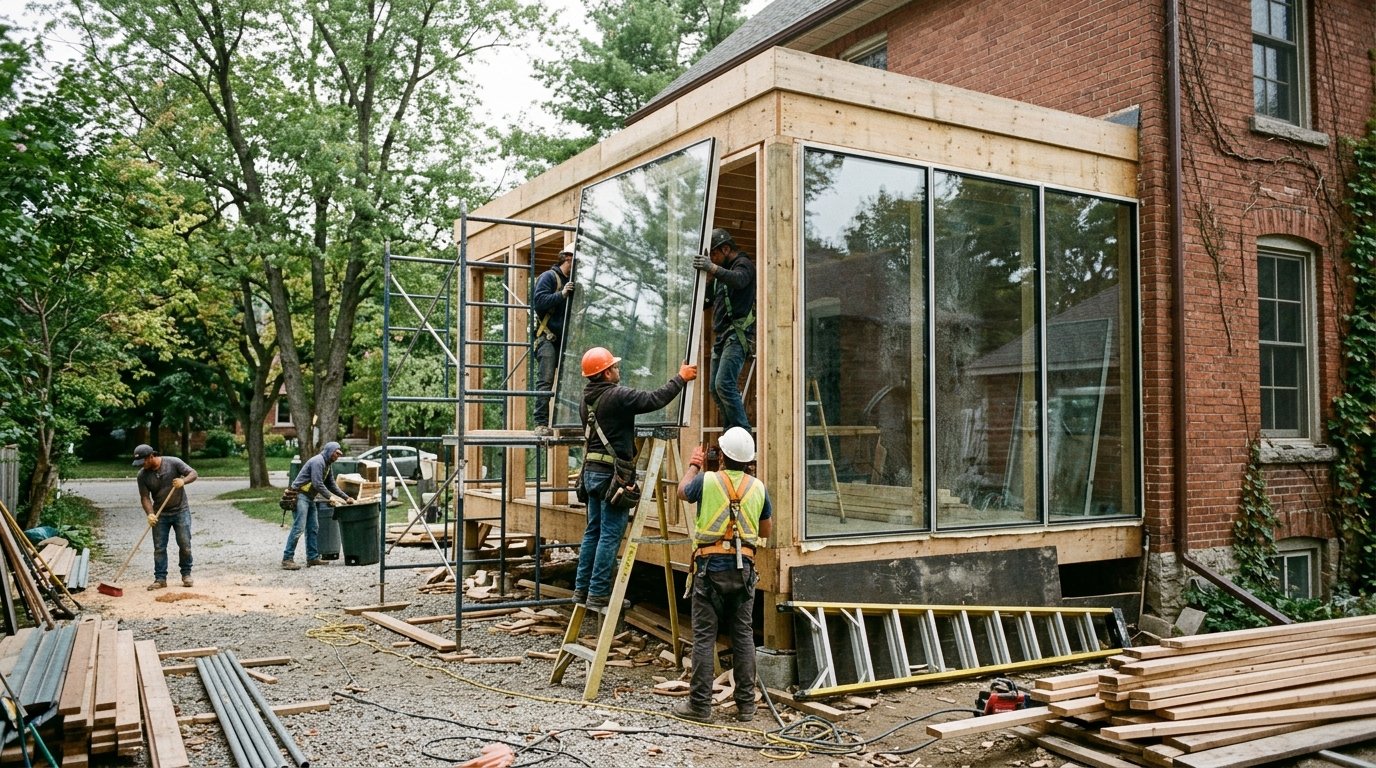
Looking for inspiration first? Browse our home addition ideas: 12 ways to add space, each with a cost range and resale ROI.
The #1 addition request in Plano, Frisco, Allen, and McKinney. Typical scope: 500–900 sq ft new suite with bedroom, large walk-in closet, primary bath with double vanity and walk-in shower, often a small coffee bar. Adds 400–700 sq ft to appraised value. Timeline: 18–24 weeks.
Common in University Park, Highland Park, and M Streets Dallas. Relocates the primary suite upstairs to free ground-floor space for expanded living and kitchen. Scope: partial second story with primary suite, primary bath, closet, sometimes a sitting room. Requires foundation reinforcement. Timeline: 26–36 weeks.
Popular in Prosper, Frisco, and Dallas. A detached accessory structure typically 450–900 sq ft with bedroom, full bath, kitchenette, and living area. Permitted as an Accessory Dwelling Unit. Timeline: 22–32 weeks. HOA approval is almost always required.
A glazed addition integrated with the existing home. Modern four-season rooms include insulated walls, climate control, and full HVAC. Timeline: 10–16 weeks. Best return-on-investment of any addition type in most DFW markets.
Convert existing garage to living space AND build a new detached garage elsewhere on the lot. Common in Plano, Richardson, and Dallas. Creates 400–600 sq ft of new living plus a refreshed garage. Timeline: 18–26 weeks. Good ROI because the conversion is cheaper than new construction.
Addition permits average 15–22 business days. Plano requires stamped structural engineering for every addition, plus a survey showing the new footprint, setbacks, and any protected trees. Fees run roughly $2–$3 per sq ft of new construction, so an 800 sq ft addition costs $1,600–$2,400 in permit fees. Plano enforces front setback, rear setback, and side setback strictly, and will deny permits for additions that violate lot coverage.
Addition permits average 18–25 business days. Frisco requires a soil report for any new foundation over 500 sq ft, plus stamped structural. Fees are valuation-based and run $2,200–$5,500 for most additions. Stonebriar, Starwood, Phillips Creek Ranch, and Hollyhock HOAs all have strict architectural review with 4–6 week review cycles and require full material boards.
Addition permits average 12–18 business days. Allen is more lenient on lot coverage than Plano or Frisco but strict on exterior finish: new brick must match existing, new siding must match existing, new roofing must match existing.
Addition permits average 14–20 business days. Richardson has older lots with smaller setbacks, which means additions often trigger a variance request. Variance hearings happen monthly and add 4–8 weeks to the schedule.
Addition permits average 15–22 business days. McKinney historic district requires Certificate of Appropriateness for exterior changes, reviewed by the Historic Preservation Commission. Modern subdivision additions move through standard building permit with faster turnaround.
Addition permits average 25–40 business days, the slowest in DFW and often the biggest schedule risk for Dallas additions. The Sustainable Development Department may require additional drawings, energy calculations, or stormwater management plans. Plan for 6–8 weeks from submittal to approved permit.
Addition permits average 20–35 business days plus the Design Review Board process, which meets twice monthly. Full Highland Park addition approval timeline: 10–16 weeks from submittal. Fees are flat and run $4,500–$12,000 depending on project scope. Highland Park strictly enforces height, lot coverage, and setback ordinances; expect minor redesigns during review.
Addition permits average 18–28 business days. University Park’s ordinance on building height is stricter than most DFW cities, so many second-story additions require a variance or design compromise. HOA-style architectural review adds another 3–4 weeks on top.
“On a DFW addition I walk the existing slab and the tie-in wall before I price anything, because the clay under the yard decides more about the foundation than the drawings do. I would rather find a settled corner during the estimate than during the pour.”
Foundation work is often 15–25% of the total addition cost and almost always the biggest source of surprise. DFW clay soil makes foundations expensive regardless of addition size. A good rule of thumb for 2026:
Not every DFW home can take a second story. Before committing $500,000+ to an upstairs addition, verify these five things with a structural engineer.
A 2004 two-story in Allen, 2,400 sq ft original footprint. The family wanted to convert the existing primary bedroom into a home office and add a new primary suite wing off the back of the home. Scope: 720 sq ft wing with primary bedroom, walk-in closet, and primary bath (double vanity, freestanding tub, walk-in shower, private water closet). New dedicated HVAC zone, new sub-panel, Pella 250 windows, LVP flooring, semi-custom cabinets, quartz counters. Timeline: 22 weeks including HOA review. Appraisal increase: $185,000 (78% ROI).
A 2010 two-story in Stonebriar, 3,400 sq ft original. The family wanted a ground-floor in-law suite for aging parents with private entry. Scope: 950 sq ft wing with bedroom, full bath (walk-in shower with grab bars, comfort-height vanity), kitchenette, sitting room, and private exterior door. Full ADA-accessible design. New dedicated HVAC zone, new sub-panel, kitchenette plumbing, engineered hardwood. HOA architectural review took 5 weeks. Timeline: 26 weeks total. Appraisal increase: $225,000 (58% ROI) plus significant quality-of-life benefit for the family.
A 1952 one-story cottage in University Park, 1,850 sq ft original. The family wanted to preserve the original ground-floor charm while adding a second floor with primary suite and two kids’ bedrooms. Scope: 1,650 sq ft second-story addition with primary suite, primary bath, two kids’ bedrooms, shared kids’ bath, stair tower, new 4-ton HVAC system, full roof tear-off and rebuild, new fiberglass windows, foundation reinforcement with six new piers. Timeline: 42 weeks. Family moved out for 36 of those weeks. Appraisal increase: $845,000 (75% ROI).
Free in-home consultation · stamped structural plans included · fixed-price contract · we serve all 21 DFW communities listed above.
Let’s Discuss Your Vision
or call (469) 850-7087