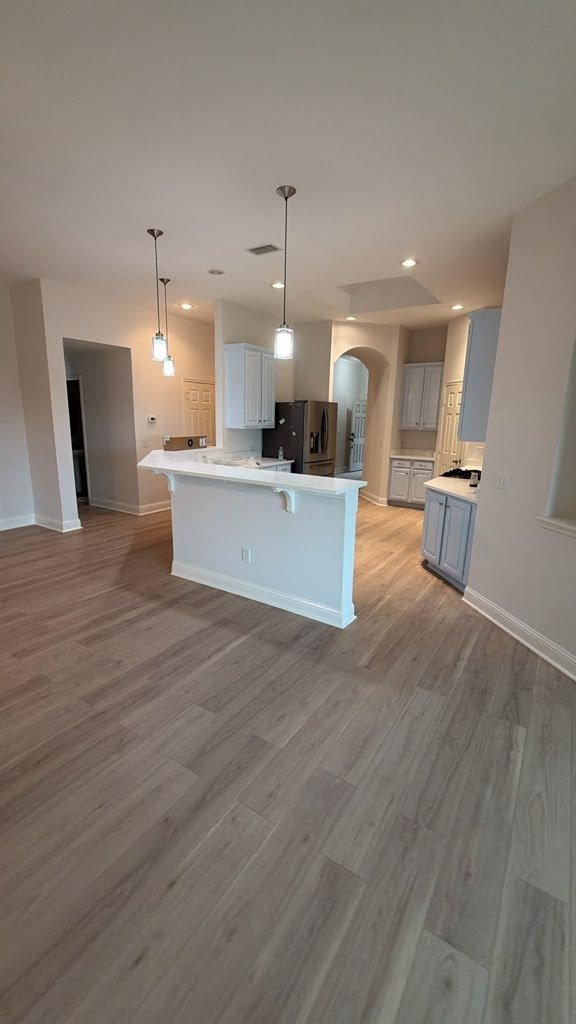
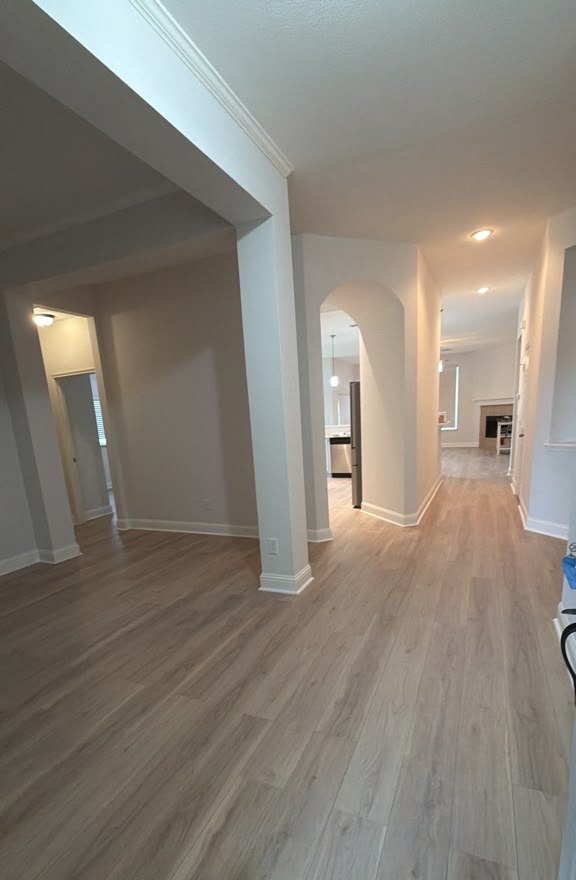
About 1,950 square feet of carpet and worn wood came out and luxury vinyl plank went in. The kitchen kept its layout and its cabinet boxes, and got new quartz, a new finish and the hardware the homeowners chose. Then the whole house was painted.
The homeowners had a house that worked and finishes that did not. Carpet and an older wood floor ran through the living areas. The kitchen cabinets were structurally sound, but the countertops, the backsplash, the sink and the hardware around them belonged to a different era. The walls carried the nail holes and hairline cracks of a long time lived in, and the living-room ceiling needed repair before it could take paint.
So the scope was written to keep what worked. The kitchen layout stayed. The cabinet boxes stayed. No walls moved and no plumbing was rerouted. The house was made to feel new again without being taken apart.
That is a different project from a renovation, and it is priced and scheduled differently. It turns on one question: where to spend. Which surfaces to replace, which to refinish, and which to leave alone. On this house the answer was floors throughout, a kitchen refinished rather than replaced, and paint on everything that would take it.
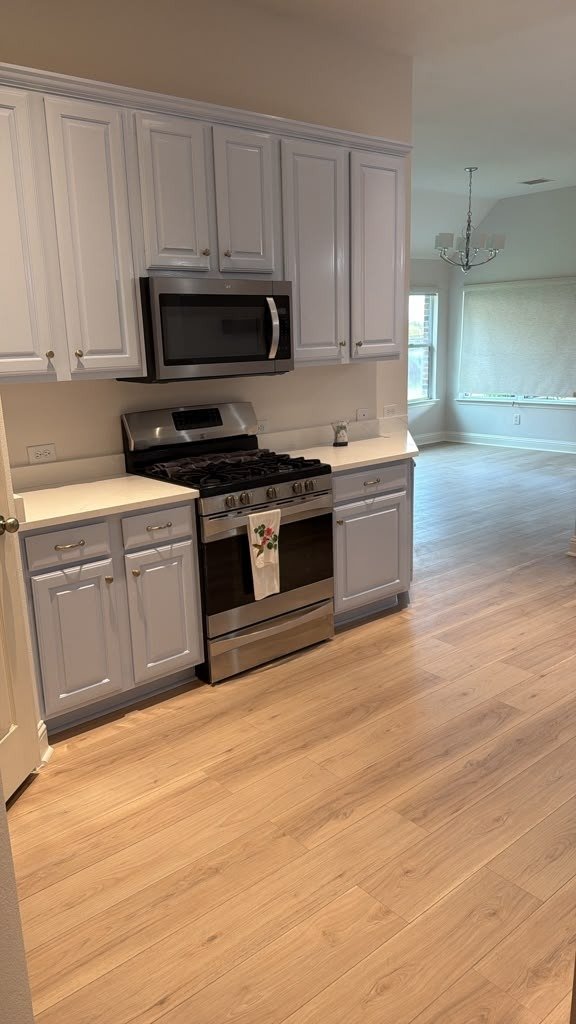
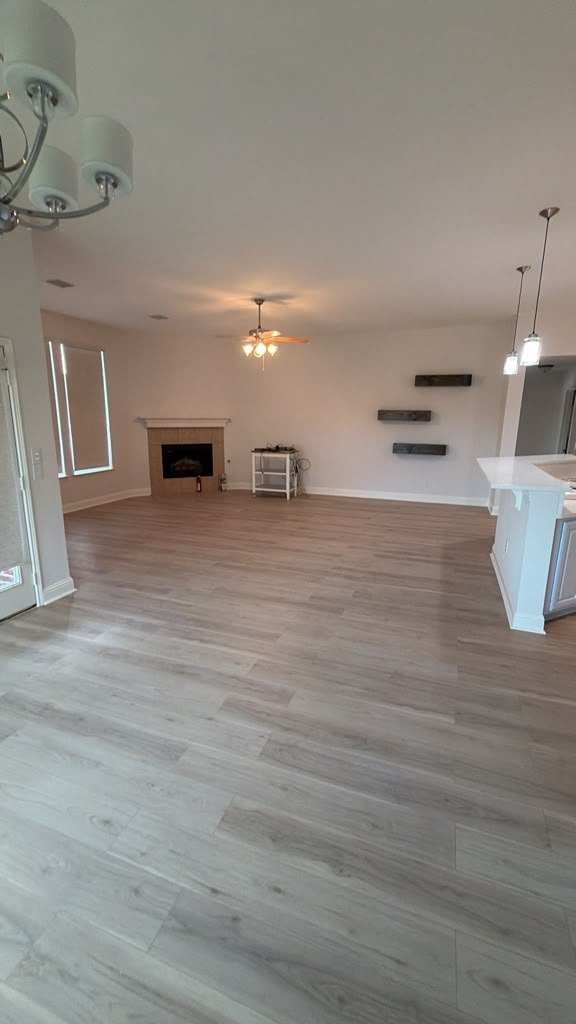
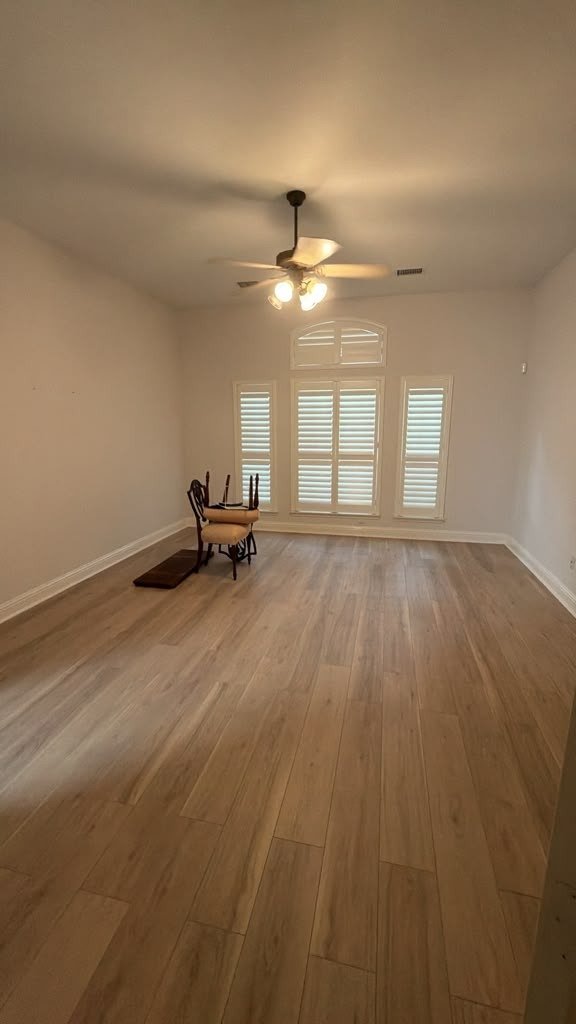
Carpet, the old wood flooring and every transition came out of roughly 1,950 square feet. The old adhesive was scraped off and the subfloor cleaned. A moisture barrier went down, overlapped and sealed to the flooring manufacturer’s requirements, before the luxury vinyl plank was installed. New shoe molding closed the line to the existing baseboards, and transition strips were set wherever the new floor meets the rooms it does not cover.
The existing countertops, backsplash, sink, faucet and hardware came out. Every cabinet door, drawer front, face frame and exposed base was sanded, prepared, primed and painted with a professional-grade cabinet finish. The boxes never left the wall. That one decision is most of the difference in cost and schedule between this kitchen and a new one.
Two quartz slabs, field-measured to the kitchen as it stood, with a new undermount sink and a new faucet. The plumbing was reconnected and the appliances reinstalled. The homeowners chose the cabinet handles and pulls; we installed them, then sealed every joint.
Drywall patched throughout and the living-area ceiling repaired and primed. Then walls across the house, the walls of both full bathrooms, every baseboard, every interior door, all the door trim and casing, the kitchen and living ceilings where repairs were made, and the back patio door on both sides with its trim, so it matched the rooms around it.
The half bath on the way to the garage got the homeowners’ own wallpaper instead of paint. They chose and supplied it; we hung it. It is a short line in the contract, and exactly the kind of detail that is cheaper to agree in writing before the job than to sort out during it.
Everything below is this project’s own record, taken from the signed contract: not a typical scope and not an estimate.
Not sure what your refresh will cost?
Answer four quick questions and get a free personalized estimate.
About the schedule. The contract set the construction window at four to five weeks for the whole scope, floors, kitchen and paint together, with furniture moved and returned and a professional clean at the end. Three bathrooms and two closets were left out of the flooring scope and kept their existing floors.
A large share of Garland’s houses went up between the 1960s and the 1990s, and many are now on their second or third owner with their first finishes. The pattern is familiar: carpet in the living areas, a kitchen with solid cabinet boxes and tired surfaces, and walls that have not had a full repaint since the house was new.
The instinct is to think in rooms: do the kitchen, or do the floors. But a kitchen remodel that stops at the kitchen doorway, or a new floor that runs up to old baseboards and old paint, each makes the untouched part look worse than it did. This project treated the surfaces as one job, so the new floor, the painted trim and the refinished kitchen read as a single decision rather than three.
The kitchen is the clearest example of where money goes further. Replacing cabinets means demolition, new boxes, a new installation and usually a new layout to justify it. Refinishing rather than replacing keeps the boxes, puts the budget into the surfaces you touch and see every day (countertops, sink, hardware and the finish itself) and leaves the plumbing and electrical exactly where they were. It is not the right call for every kitchen; if the boxes are failing, paint will not save them. When they are sound, it is the highest-return decision in the house.
The floor is where the hidden work lives. What decides whether luxury vinyl plank still looks right in ten years is not the plank. It is the scraped adhesive, the clean subfloor and the moisture barrier underneath, none of which is visible once the floor is down. On this contract the barrier was written in as its own line, so it could not quietly disappear from the job.
Planning something similar? See kitchen remodeling in Garland and home remodeling in Garland, or compare with our Plano kitchen refresh case study.
Refinishing is almost always the lower-cost route when the cabinet boxes are sound, because it takes demolition, new cabinetry and a new installation out of the job and leaves plumbing and electrical where they are. A full kitchen remodel in the Dallas-Fort Worth area generally runs $25,000 to $95,000; a refinish-and-countertop project like this one is a different product, scoped around surfaces rather than structure. The honest test is the boxes. If doors are sagging, frames are swollen or the layout is wrong, refinishing is money spent on the wrong problem. If they are solid, it is the highest-return decision in the house.
Yes. When the cabinet boxes are sound, it is often the best-value way to change a kitchen. The cabinets are checked for level and condition, the old tops come off, the slabs are field-measured to the kitchen as it stands, and the new quartz is set with a new undermount sink. On this project two slabs covered the kitchen. The one thing to settle before ordering is whether the cabinets will be refinished at the same time. If so, the finish goes on before the tops, so the two trades are not working on top of each other.
The planks themselves go down quickly. What sets the schedule is everything before them: pulling carpet and old wood flooring, scraping adhesive, cleaning the subfloor, and laying and sealing a moisture barrier. On a whole-house job that also includes kitchen and paint work, the floors are sequenced around the other trades. This contract set the whole project, floors, kitchen and paint together, at four to five weeks of construction.
Concrete slabs release moisture upward, and most North Texas houses sit on one. Luxury vinyl plank is water-resistant on its face, but moisture trapped between the slab and the plank can lift edges, feed mold and void the flooring warranty. A barrier laid over the prepared subfloor, overlapped and sealed to the manufacturer’s requirements, keeps that moisture out of the assembly. It is invisible on the finished floor, and it is the line we are least willing to drop from a quote.
A renovation changes the house: walls move, kitchens and bathrooms are rebuilt, plumbing and electrical are rerouted, and the price reflects it. In the Dallas-Fort Worth area a full home renovation generally runs $95,000 to $350,000. A refresh keeps the house as it is and replaces or refinishes the surfaces: floors, paint, countertops, cabinet finishes, hardware and fixtures. It is a shorter job with fewer trades and far less disruption, and it is the right answer when the layout already works. This Garland project is a refresh. Nothing moved; the floors through the main living areas and the surfaces you touch every day are new or renewed.
We will walk the house, tell you honestly which surfaces are worth replacing and which are worth refinishing, and put the whole scope, floors, kitchen and paint, into one fixed-price contract before work starts. Fully insured · 1-year workmanship warranty.