
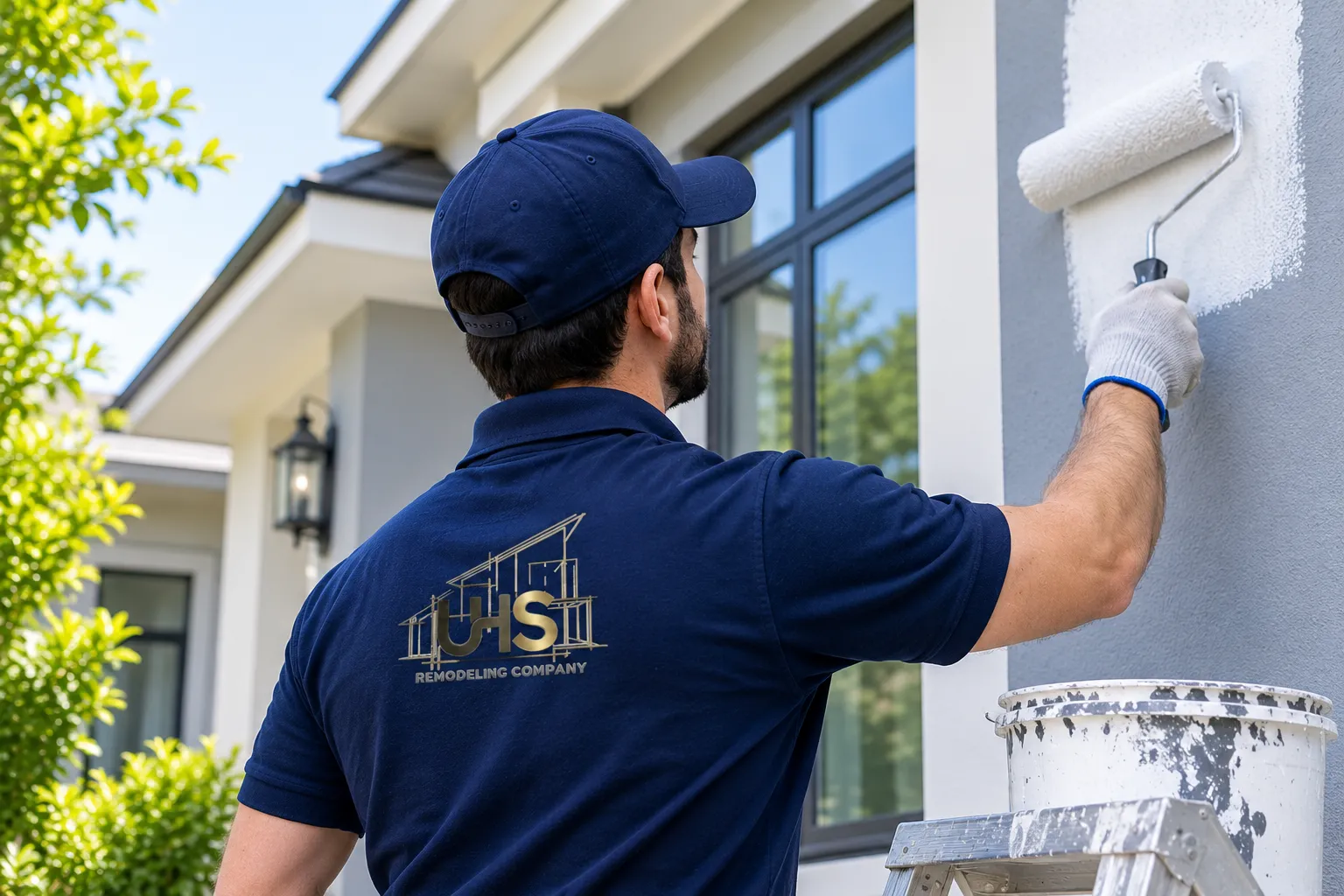
At UHS Remodeling, we talk with Plano homeowners every week who want a fresh coat of paint but feel unsure where to start. Should you paint the outside first? Which paint holds up under the Texas sun? House painting in Plano comes with its own challenges, from triple-digit summers to spring hail and strict HOA color rules.
This guide covers paint types, the step-by-step process, local rules, and the factors that drive price. We keep it practical, so you can compare quotes and pick a painting contractor with confidence. You will get plain answers and no jargon.
A good paint job protects your siding, trim, and walls. It lifts curb appeal and helps at resale. A poor one starts to peel within a couple of years, and we want you to end up with the first kind. Plano’s clay soil shifts with the seasons, so paint here has to flex without cracking.
Why homeowners hire local exterior painters
Plano homes face a tough mix of weather. Summer sun fades color, humidity feeds mildew, and clay soil moves foundations, which cracks caulk and trim. Fresh paint is the cheapest shield against all of it. When coatings fail, water reaches the wood underneath, and repairs cost far more than a repaint.
Curb appeal matters too. According to the National Association of Realtors and the National Association of the Remodeling Industry (2025), 50 percent of Realtors recommend painting the entire home before a sale. Another 41 percent suggest painting a single interior room. Buyers notice a clean finish before they see anything else.
Local rules shape the job too. The City of Plano Building Inspection Department says cosmetic projects such as painting do not need a building permit. Many HOAs still require approval of exterior colors before work starts, so check your community rules first. A local crew handles this paperwork often.
Take a 1990s brick home near Willow Bend. The brick looks fine, but the wood trim, soffits, and garage door fade fast on the south side. Many owners repaint only the trim every few years and spend far less than on a full exterior job.
Paint types and finishes for North Texas weather
Not every can on the shelf handles Texas heat the same way. Acrylic latex is the workhorse for siding and trim because it flexes, resists fading, and cleans up with water. Oil-based paint gives a hard, smooth finish on doors and cabinets, but it dries slowly and has a strong odor.
Stucco and masonry need something different. Elastomeric coatings stretch over hairline cracks and keep water out, yet they can trap moisture if applied over damp walls. Brick takes mineral stain well because the stain soaks in instead of forming a film that peels.
Sheen matters too. Flat hides wall flaws, satin works for most living areas, and semi-gloss stands up to scrubbing on trim, doors, and bathrooms. Inside, low-VOC paint cuts fumes and dries with less smell, which helps in closed-up summer homes.
Color choice affects heat as well. Lighter shades reflect more sun and fade more slowly, which suits south-facing walls. Dark colors look great but show dust, and they absorb heat that stresses the paint film. Test a sample on the sunniest wall before you commit.
Here is a quick comparison to help you match paint to surface.
| Paint type | Best for | Durability | Upkeep |
|---|---|---|---|
| Acrylic latex | Wood, fiber cement, siding | High, resists fading | Low |
| Oil-based alkyd | Doors, trim, cabinets | High, hard finish | Moderate |
| Elastomeric | Stucco, cracked masonry | High on flexible walls | Low |
| Mineral or masonry stain | Brick, stone | Long lasting, no peeling | Very low |
| Low-VOC interior latex | Walls, ceilings | Moderate to high | Low, wipes clean |
The painting process from prep to final coat
Before anyone opens a can, the age of your home matters. EPA rules require paid painters working in homes built before 1978 to be lead-safe certified. The EPA says about three-quarters of homes from that era still contain some lead-based paint, which makes older streets near downtown Plano worth a careful check.
What happens after that? Any solid house painting in Plano project follows the same order, and each step builds on the last:
- Walk the home and mark rot, peeling spots, and failed caulk.
- Power wash the surfaces and let them dry for a day or two.
- Scrape, sand, patch, and caulk every gap.
- Prime bare wood, stains, and repaired spots.
- Roll or spray two finish coats, with full dry time between them.
- Inspect the work with you, touch up, and clean the site.
A Plano painting contractor with years in the trade would tell you that prep decides how long paint lasts. Scraping, caulking, and priming matter more than the brand on the can.
Most single-story exteriors take about three to seven days when the weather cooperates. Rain or heavy humidity can add days. Interior rooms move faster, since crews mask floors, patch drywall, sand, prime, and roll two coats without worrying about the sun.
Pricing factors and choosing a painting contractor
What changes the price of a paint job
Why does one bid land at double another? Size and height set the baseline, but surface condition moves the number most. Rotted trim, peeling layers, and heavy scraping add labor hours. Paint grade, number of coats, and a big color change from dark to light add material and time.
Online pricing guides for the Plano area put exterior jobs on an average-size home roughly between $3,000 and $12,000. Whole-house interior work often runs from $2,500 to $8,500 for about 2,000 square feet. These figures vary by source, so treat them as rough guides and get written quotes.
Extras change the total, too. Two-story access, detailed trim, cabinets, and wood repair all add cost. Residential painters price these items differently, which is why itemized quotes matter.
How to pick the right painting contractor
When you compare bids for house painting in Plano, ask each company to quote the same scope. Request photos and references from local jobs. Ask whether the company carries general liability insurance and how it covers crew injuries. For homes built before 1978, ask for the EPA lead-safe certification by name.
A solid written quote should list:
- The surfaces to be painted and the prep for each
- Paint brand, product line, and sheen
- Number of coats and primer
- Repairs included, and how extra repairs are billed
- Start date, timeline, and payment schedule
- Warranty terms in writing
Should you hire a general handyman, a national chain, or a local specialist? A local company such as UHS Remodeling, which works with homeowners across Plano and nearby North Texas cities, already knows the HOA approval steps, the heat and humidity, and which products hold up on brick and fiber cement. A handyman or out-of-town crew often learns those details on your project.
Watch for red flags. A quote with one lump-sum line, a large upfront deposit, or a push to sign today deserves a pause.
Frequently asked questions
How much does house painting in Plano cost?
Costs depend on home size, surface condition, and paint grade. Online pricing guides for the Plano area put exterior jobs on an average home roughly between $3,000 and $12,000. Written quotes from two or three local painters give you the real number for your property.
How can I lower the cost of a paint job?
Bundle inside and outside work into one project so the crew sets up once. Keep colors in the same family to skip extra primer. Fix small issues like loose caulk early, because rot repair costs far more than a touch-up. Never skip prep to save money.
Do I need a permit to paint my house in Plano?
No. The City of Plano treats cosmetic work like painting as exempt from building permits. Structural, electrical, or plumbing changes do need them. Many HOAs require color approval too, so check your community rules, and call Plano Building Inspections if you are unsure.
How often should you repaint a house in Plano?
A quality acrylic job on siding and trim often lasts about six to ten years. Sun-facing walls fade sooner, and hail or heat can shorten that. Check caulk and trim each spring, and touch up cracks early before water gets in.
What is the best time of year to paint in Plano?
Spring and fall work best. Most exterior acrylics need surface temperatures above 50°F, and the label lists the limits. Summer heat dries paint too fast and leaves lap marks. Winter cold slows curing. Book early, since good painters fill their calendars in mild months.
Can you paint brick homes in Plano?
Yes, but think twice. Paint on brick can trap moisture and is hard to undo. Mineral stain or limewash soaks in and lets brick breathe. Many Plano homes pair natural brick with painted trim, which keeps upkeep low and the look classic.
Does my HOA need to approve exterior paint colors?
Many Plano subdivisions with an HOA require written approval for exterior colors, and some cover shutters and garage doors too. Submit paint samples before you buy anything. Approvals can take days or weeks, so ask your painter to start the request early.
How much does whole-house interior painting cost?
Square footage, ceiling height, wall repairs, and trim all change the price. Online guides put whole-house interior painting near $2,500 to $8,500 for about 2,000 square feet. Ceilings and trim typically add labor, so ask your painter to itemize each surface.
Is lead paint a concern in older Plano homes?
Yes, for homes built before 1978. EPA rules require paid contractors to use lead-safe practices in those homes. Ask any painter for their EPA lead-safe certification before work starts on an older house, especially in established neighborhoods near downtown Plano.
How many coats of paint does a house need?
Plan on primer where needed plus two finish coats. One coat rarely gives even color or full protection, especially when you go from a dark shade to a light one. Follow the dry time on the label between coats and skip shortcuts.
Ready to move forward? Start by walking your home and listing what you want painted, inside and out. Check your HOA rules, then ask two or three local painters for written quotes that list prep, coats, and products. If you want a team that knows Plano’s weather and approval rules, reach out to UHS Remodeling and ask about options for your property. A clear plan now saves money and stress later, and your home will look sharp for years.