
Installing wood flooring can completely transform the look and feel of a space, but the quality of the final result depends heavily on one thing: using the right tools. Even the best wood flooring materials can fail if they are installed with improper equipment or poor preparation. Gaps, uneven boards, squeaks, cracked planks, and early wear are often caused not by the flooring itself, but by missing or incorrect tools especially during larger home renovation projects where flooring is only one part of the process.
This complete guide to tools for wood flooring installation is designed to walk you through everything you need from basic measuring tools to professional-grade installation equipment. Whether you’re a DIY homeowner planning your first flooring project or a contractor aiming for consistent, high-quality results, this checklist will help you understand what tools are essential, which ones are optional, and how each tool contributes to a clean, durable installation.
Understanding Wood Flooring Installation Tools
Wood flooring installation is not a one-tool job. It involves multiple stages, each requiring specific equipment to ensure accuracy, stability, and long-term performance. These stages include measuring and layout, subfloor preparation, cutting boards, fastening or adhering planks, spacing for expansion, and finishing.
Tools for wood flooring installation generally fall into five categories:
- Measuring and layout tools
- Subfloor inspection and preparation tools
- Cutting tools
- Installation and fastening tools
- Finishing and safety tools
Understanding the purpose of each category helps prevent costly mistakes and wasted time. Skipping or substituting tools often leads to uneven floors, loose boards, or visible defects that are difficult to fix later especially when flooring is installed alongside broader home remodeling ideas.
Essential Measuring and Layout Tools for Wood Flooring
Accurate measurement and layout are the foundation of a successful flooring installation. Poor layout planning can result in crooked rows, awkward cuts near walls, or uneven spacing that affects the entire floor.
Tape Measure
A high-quality tape measure is used constantly during flooring installation. It helps measure room dimensions, board lengths, expansion gaps, and cut marks. Precision is critical, especially when planning the starting row and transitions between rooms.
Chalk Line
A chalk line is essential for marking straight reference lines across the floor. These lines guide the placement of the first row of boards, which determines the alignment of the entire installation.
Carpenter Square
A carpenter square ensures corners and cuts are perfectly square. This tool is especially important when working around doorways, cabinets, and walls that are not perfectly straight common challenges in older homes or full house renovation projects.
Laser Level or Long Level
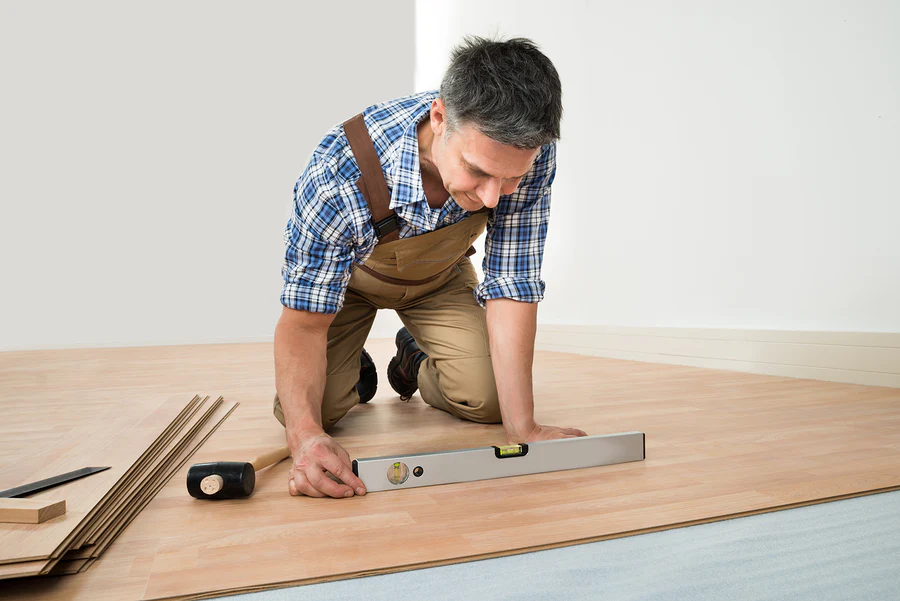
A laser level or long bubble level helps check for uneven areas in the subfloor. Identifying low or high spots early prevents movement, squeaks, and long-term damage to the wood flooring.
Subfloor Inspection and Preparation Tools
The subfloor must be clean, dry, and level before installing wood flooring. Ignoring this step can cause boards to shift, crack, or separate over time.
Moisture Meter
A moisture meter measures the moisture content of both the subfloor and the wood flooring. This tool is critical because excessive moisture can lead to warping, cupping, or buckling after installation especially in Texas homes where climate conditions matter.
Pry Bar and Scraper
These tools help remove old flooring materials, staples, nails, or adhesive residue from the subfloor. A clean surface allows new flooring to sit flat and secure.
Floor Leveling Tools
In some cases, floor patch compounds or leveling tools are required to correct uneven subfloors. A flat surface ensures consistent board contact and proper fastening, which is essential for long-term durability.
Cutting Tools Required for Wood Flooring Installation
Cutting tools shape the flooring boards to fit walls, corners, and obstacles. Clean, accurate cuts are essential for a professional appearance.
Manual Cutting Tools
Manual tools are useful for detailed or small cuts.
- Hand saw: Useful for quick cuts or tight spaces
- Jigsaw: Ideal for curved cuts around vents, pipes, or irregular shapes
- Utility knife: Often used for underlayment and minor trimming
These tools provide flexibility but are typically slower than power tools.
Power Cutting Tools
Power tools are the backbone of efficient wood flooring installation.
- Miter saw: Used for straight, angled, and crosscuts; essential for clean edges
- Circular saw: Helpful for ripping boards to width
- Table saw: Provides high precision for long, straight cuts
- Flooring saw: Designed specifically for repetitive flooring cuts
Power saws improve speed, consistency, and accuracy, making them indispensable for medium to large projects, especially when flooring is installed as part of a kitchen renovation or open-concept remodel.
Installation and Fastening Tools
Securing wood flooring properly prevents movement, squeaks, and gaps. The fastening method depends on the type of wood flooring being installed.
Flooring Nailer or Stapler
A flooring nailer or stapler drives fasteners at the correct angle and depth through the tongue of the board. This tool ensures boards are tightly secured without damaging the surface.
Rubber Mallet
A rubber mallet is used to engage the flooring nailer and gently tap boards into place without denting or scratching the wood.
Adhesive and Trowel (for Glue-Down Installations)
Engineered wood or certain hardwood floors may require adhesive. A notched trowel spreads the glue evenly to ensure proper bonding and stability.
Drill and Fasteners
A drill is often needed for pilot holes, starter rows, and finishing rows where nailers cannot fit. Proper fasteners ensure long-term holding power.
Tools for Expansion Gaps and Alignment
Wood flooring naturally expands and contracts with temperature and humidity changes. Proper spacing is critical to avoid buckling.
Expansion Spacers
Spacers maintain the correct expansion gap along walls and fixed objects. These gaps are later covered by baseboards or trim.
Tapping Block
A tapping block helps tighten boards together without damaging the tongue or groove edges.
Pull Bar
A pull bar is essential for tightening boards near walls where tapping blocks cannot be used.
Finishing Tools for a Professional Look
Finishing tools bring the installation together and give the floor a polished appearance.
Finish Nailer
A finish nailer secures trim, baseboards, and moldings cleanly and efficiently.
Coping Saw
Used to shape trim pieces for seamless joints, especially in corners.
Floor Sander and Edge Sander
Sanding tools are used for unfinished hardwood floors or minor surface corrections. They help create a smooth, even surface before staining or sealing.
Putty Knife and Wood Filler
These tools fill nail holes and small imperfections, creating a uniform finish.
Complete Tools Checklist for Wood Flooring Installation
Before starting your project, use this checklist to ensure you are fully prepared.
| Tool Category | Tool Name | Purpose |
| Measuring | Tape measure | Accurate room and board sizing |
| Layout | Chalk line | Straight reference lines |
| Inspection | Moisture meter | Prevent moisture-related damage |
| Cutting | Miter saw | Clean, precise cuts |
| Cutting | Circular or table saw | Rip and straight cuts |
| Installation | Flooring nailer | Secure boards properly |
| Alignment | Spacers | Expansion gaps |
| Alignment | Tapping block | Tight board joints |
| Finishing | Finish nailer | Trim and molding installation |
| Safety | Goggles and mask | Personal protection |
This checklist helps avoid delays and ensures professional-level results whether you’re installing floors independently or working with home renovation contractors in Plano.
DIY vs Professional Flooring Tools
Not every tool needs to be purchased. Many homeowners choose to rent specialized tools.
DIY Approach
DIY installers often buy basic tools and rent larger equipment like flooring nailers or saws. This reduces cost while still achieving good results.
Professional Approach
Professionals invest in high-quality, durable tools designed for speed, accuracy, and repeated use. These tools provide consistency across large projects.
Understanding your project scope helps decide whether renting or buying is the better option.
Safety Tools You Should Never Skip
Flooring installation involves sharp blades, heavy tools, and airborne dust. Safety equipment protects you and improves efficiency.
- Safety glasses
- Dust mask or respirator
- Hearing protection
- Work gloves
- Knee pads
Using safety gear reduces injury risk and fatigue, especially during long installations.
Common Mistakes Caused by Using the Wrong Tools
Many flooring problems trace back to tool-related errors:
- Uneven rows due to poor measuring tools
- Chipped boards from incorrect saw blades
- Loose planks from improper fastening tools
- Buckling floors caused by missing expansion spacers
Using the right tools from the start saves time, money, and frustration.
Final Thoughts
Installing wood flooring is a detailed process that rewards preparation. Using the correct tools for wood flooring installation ensures accurate cuts, secure fastening, proper spacing, and a polished finish that lasts for years. Whether you’re taking on a DIY project or planning a full remodel with a trusted flooring contractor in DFW, a complete tool checklist is the key to success.
When you invest in the right tools or rent professional-grade equipment you eliminate guesswork and reduce the risk of costly mistakes. With proper planning, safety practices, and the right equipment, your wood flooring project can deliver the professional results you expect.
FAQs
What tools are absolutely required for wood flooring installation?
Every installation needs tools for layout, cutting boards accurately, securing planks, and finishing edges. The exact tools depend on flooring type and installation method.
Can I install wood flooring without a flooring nailer?
A flooring nailer ensures correct fastener depth and angle, reducing movement and squeaks over time.
Which saw is best for cutting wood flooring?
Miter and table saws offer the precision required for professional-quality installations, especially for long and angled cuts.
Do engineered and solid wood floors use the same tools?
Engineered wood may require adhesive tools, while solid hardwood typically relies more on nailers or staples.
Should I rent or buy wood flooring installation tools?
Renting professional tools reduces cost while still delivering high-quality results for homeowners.