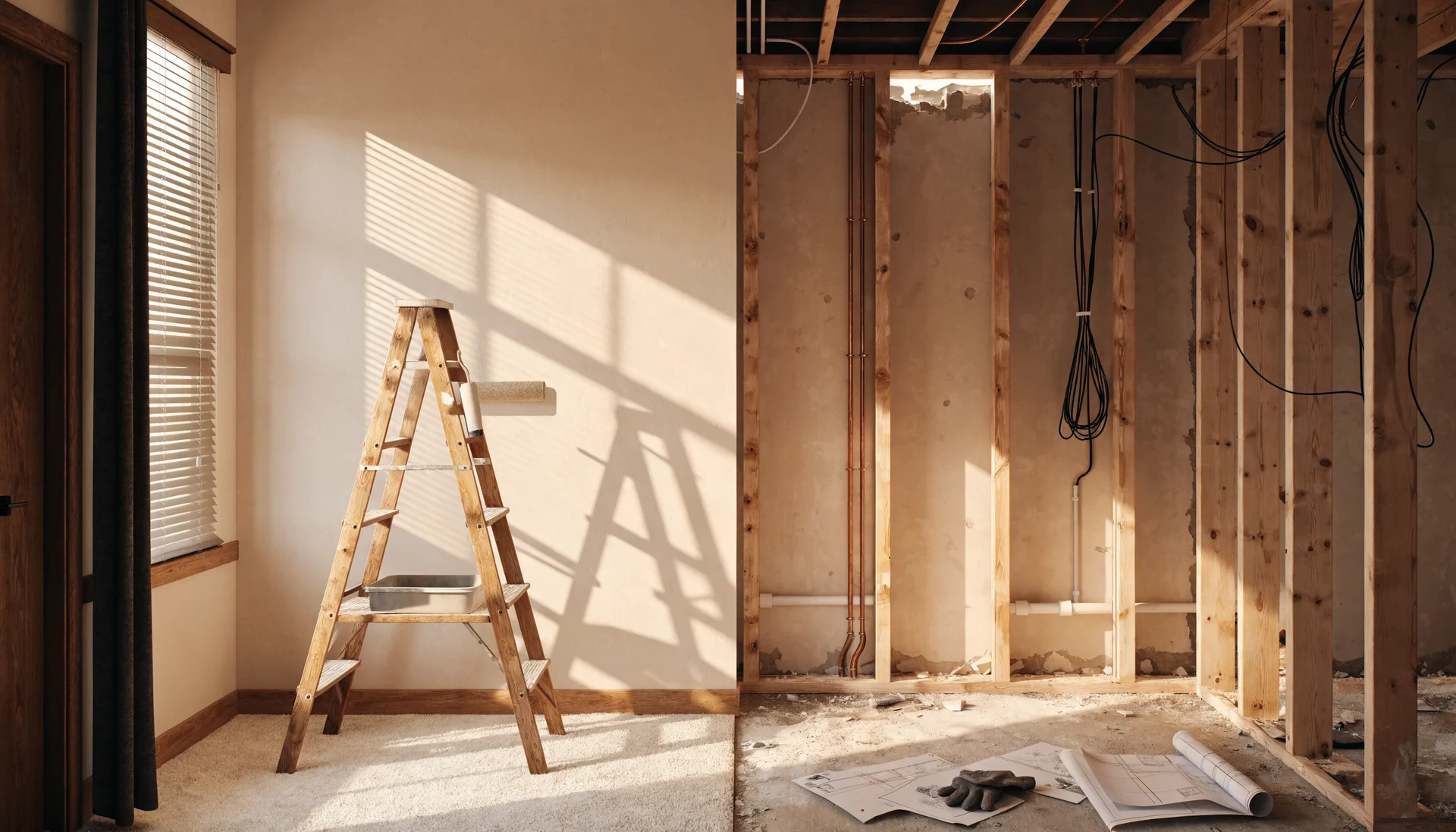


Home Renovation Permits in Plano | What You Need to Know Before Starting
The City of Plano is specific about which renovations need a permit, what the permit costs, and how long review takes. Here is the whole path, from scope to final inspection, and what skipping it costs you at resale.
Before a wall comes down or a kitchen gets rewired in Plano, TX, one question decides how the whole project ends: does this work need a permit? The City of Plano is specific about what does, and skipping the step can mean fines, a failed inspection, or a denied insurance claim years after the crew has left. We guide homeowners through the permit process on everything from a small interior update to a full structural remodel, so the renovation starts on legally sound footing. If you are at the very beginning, our guide on how to start home renovation covers first steps, budgeting, and design planning. This article covers the paperwork that has to happen before the first cut.
If the work touches structure, wiring, plumbing, or HVAC, Plano requires a permit.
Cosmetic work like paint, flooring, and cabinet swaps is exempt. Fees run from about $60 for a simple electrical permit to $500+ for structural work, review runs from 3-5 business days for electrical to 10-15 for structural, and the city inspects 2-5 times during the build. Skipping it risks fines, stop-work orders, denied insurance claims, and a failed inspection at resale.
When Plano requires a home renovation permit
The rule is simpler than most homeowners expect: you need a permit in Plano when the work touches the structural, electrical, mechanical, or plumbing systems of the house. Plano’s Development Services Department issues these permits to ensure safety, code compliance, and legal construction.
Those four systems share one trait: once the drywall goes back up, nobody can check them without opening the wall again. That is why the city wants to see them mid-build, and why every item on the lists below is an application of that single rule rather than a separate regulation to memorize.
Interior remodels that need a permit
Apply before you:
- Remove or alter a load-bearing wall
- Add or move plumbing lines
- Install a new HVAC system or ductwork
- Upgrade electrical wiring or the panel
- Convert a garage into living space
Each of these falls under the remodeling inspections the City of Plano requires. Planning a full remodel outside the city limits? See our page on home renovation in The Colony, TX.
Exterior projects that need a permit
Permits are also required for:
- Decks, patios, or balcony structures
- Re-roofing or structural roof replacement
- Fences taller than 6 feet
- Room additions or any expansion of square footage
- Garage or carport construction
What does not need a permit in Plano
Minor, non-structural work is usually exempt:
- Painting, tiling, and flooring
- Replacing cabinetry or countertops
- Cosmetic repairs
- Appliance swaps that do not alter the connections
The line between cosmetic and permit-required is thinner than it looks. Replacing an appliance is exempt; moving the plumbing or wiring that feeds it is not. When in doubt, contact Plano’s Permit Office or ask us before demolition, because a compliance mistake is far cheaper to avoid than to undo.
Plano’s permit process, step by step
Securing a building permit in Plano follows a set order. Here is what each stage asks of you, how long it usually takes, and what it costs.
Planning
Define the scope and check it against code. Notes and sketches are enough at this stage. Allow 1-2 days; there is no city fee yet.
Application
Submit the form through the eTRAKiT portal with your plans and a project description. Allow 1-3 days. The application fee runs $50-$500 depending on the project.
Plan review
The city checks your engineering or architectural drawings against the building code. Allow 3-10 days; the review is included in the application fee.
Permit issuance
Approval plus fee payment, with the fee receipt as your record. Usually 1 day; the amount varies with the project.
Inspections
The city visits during construction and files inspection reports. Expect 2-5 visits at $50+ per visit.
Notice where the time goes. Planning and application are a matter of days; plan review is where a project waits, and missing documents are the most common reason it waits longer than it should. The permits that move fastest are the ones where the scope was pinned down before anything was submitted, so the reviewer is reading a finished set of drawings rather than sending questions back.
If scoping the project or assembling the documents is the part that stalls you, our Plano home renovation experts handle the full permit process as part of the job, from the first sketch to the last inspection report.
The types of permits Plano issues
Plano assigns permits by trade or scope, so one renovation can carry several at once.
Structural permits
Required whenever you change the home’s foundation or framing:
- Wall removal
- Second-story additions
- Foundation reinforcement
Electrical and plumbing permits
Issued for:
- New electrical outlets, lighting, or breaker panels
- Water heater installation
- Plumbing rerouting
Mechanical and HVAC permits
Needed for:
- HVAC replacements or new installs
- Duct system changes
- Ventilation system upgrades
A kitchen that loses a wall, moves the sink, and reroutes the ductwork touches all three categories, and each permit has to be filed and then closed out with its own inspection sign-off. The categories matter for scheduling as much as for paperwork, because each one carries its own review window and its own inspection to close it. We track every one so nothing is left open when the project ends.
Not sure which of these applies to your house? A short conversation settles it faster than any calculator.
Permit costs and review timelines in Plano
Fees depend on the project valuation and the permit category. What to expect by type:
- Electrical: $60-$200. Review takes 3-5 business days, there is no expedited option, and the renewal fee is $25.
- Plumbing: $80-$250. Review takes 5-7 business days, no expedited option, $30 renewal fee.
- HVAC: $100-$300. Review takes 5-10 business days, no expedited option, $40 renewal fee.
- Structural: $200-$500+. Review takes 10-15 business days, expedited review is possible, $50 renewal fee.
Two things in that list matter more than the fees themselves. First, review time compounds: a structural permit alone can take 10-15 business days, and the trades cannot start until it is issued, so the permit clock belongs on the project schedule from the start. Second, the renewal fee is a reminder that a project which stalls long enough to need a renewal pays a second fee for the same permit.
Expedited review is only listed as possible for structural permits. For electrical, plumbing, and HVAC, the review window is the review window, and no fee shortens it, which is one more reason to file early rather than hope to buy time back later.
If a major upgrade is the goal, read how to increase home value with renovation while staying inside the permit rules.
How to apply for a home renovation permit in Plano, TX
The City of Plano accepts applications from homeowners and contractors two ways:
- Online: through the eTRAKiT portal
- In person: at the Municipal Center Permit Office
What you will need to apply
- Project description and scope of work
- Architectural or engineering drawings, where required
- Contractor registration and credentials
- Site plan or property survey
Once submitted, the application is reviewed, revised if the city asks for changes, and then approved. Inspections are scheduled at the foundation, framing, electrical rough-in, and final stages. Each one is a checkpoint, and a well-run project is sequenced around them rather than interrupted by them.
Bring the drawings the city asks for the first time. An application that goes back for revisions is reviewed again, and those days land on top of the review window you already budgeted. The site plan or property survey is the document homeowners most often do not have on hand, so locate it before you start the application rather than after.
I would rather wait on plan review than explain to a buyer’s inspector why a wall came out with no record behind it. The permit file is part of the finished product, and I treat it that way.

What skipping a permit actually costs
Avoiding the permit looks like a shortcut on day one. Here is what it turns into:
Code violation fines
The city can fine unpermitted work when it is discovered, and discovery tends to happen at the worst moment, mid-sale or mid-claim.
Construction stop-work orders
Work halts until the permit situation is resolved, with the crew idle and the house open.
Permit reapplication or demolition orders
Finished work can be ordered removed and the project permitted from scratch, paying for the same scope twice.
Insurance claim denials
A claim tied to an unpermitted upgrade can be denied outright.
Failed home inspections at resale
Unpermitted work surfaces in a buyer’s inspection and becomes a repair, a price cut, or a lost sale.
Lender refusal
Lenders can decline a refinance or a purchase loan over unpermitted alterations.
We document everything on our projects: permits, inspection reports, and sign-offs, so the title record stays clean and the house is resale-ready without a last-minute scramble.
Tell us what you are planning. We will walk your house, tell you what is actually possible, and put a real number on it before you commit to anything.
Or read the numbers first: home renovation services in Plano, TX.
Hiring the right contractor for permit-required work in Plano
Professional contractors are legally required to obtain certain permits on your behalf, which means the contractor you hire is also the person handling your compliance. Ask how they do it before you sign. On our projects:
- We file every required permit before work starts
- We coordinate directly with Plano inspectors on approvals
- We schedule the build around the inspection stages, which is how permit-related delays get avoided
There are two kinds of contractor on this point, and the difference between them is not paperwork skill. A contractor who files late, or leaves the permit to you, has handed you the schedule risk along with the forms. A contractor who files before the crew arrives has taken that risk on themselves, and it shows in whether the inspections land on the dates the build needs them.
Who pulls the permit, and when? If the answer is vague, the schedule will be too.
See the full scope of our home renovation services in Plano, TX.
The bottom line on Plano permits
A permit is not the obstacle to the renovation; it is the record that the renovation was done right. Our permit-ready approach keeps a Plano project inside city code, clear of avoidable delays, and through inspection without stress, while the house gains comfort, function, and market value. From a new kitchen renovation to a full addition, we manage the whole path: plans, permits, build, and final sign-off.
UHS Remodeling builds compliant, code-accurate renovations in Plano, TX and the surrounding areas. When you are ready to talk through a project, start with our Plano home remodeling team, and the permit conversation happens at the first meeting, not after demolition.
Serving North Texas: based in Plano, with dedicated crews across Plano, Frisco, Allen, Dallas, Highland Park, and Prosper, plus 9 more DFW cities. For what a renovation costs across the region, see the 2026 DFW Home Renovation cost guide.
Questions we get
Do I need a permit to remodel my kitchen in Plano?
A permit is required if your kitchen renovation in Plano includes moving walls, altering plumbing, or upgrading wiring. Cosmetic changes like painting or cabinet swaps usually don’t require permits.
How much does a home renovation permit cost in Plano?
Permit costs are based on project size and type. Simple permits like electrical or plumbing start around $60, while large structural renovations may exceed $500. Inspection or plan review fees may apply.
How long does it take to get a renovation permit in Plano?
Review time varies from 3 days for simple permits to 15+ days for complex structural work. Missing documents can delay the process.
Can I apply for a renovation permit online in Plano?
Plano offers a digital application system for submitting plans, paying fees, and scheduling inspections.
What happens if I skip getting a required renovation permit?
Failing to obtain proper permits can lead to city enforcement, forced demolition, or resale complications. It may also void your home insurance coverage for related claims.
What renovation work does not need a permit in Plano?
Minor, non-structural work is usually exempt: painting, tiling and flooring, replacing cabinetry or countertops, cosmetic repairs, and appliance swaps that do not alter the connections. The moment the work touches the structural, electrical, mechanical, or plumbing systems, a permit applies. If you are unsure, check with Plano’s Permit Office before demolition.
Who applies for the permit, the homeowner or the contractor?
Either can apply in Plano, online through the eTRAKiT portal or in person at the Municipal Center Permit Office. Professional contractors are legally required to obtain certain permits on your behalf, and the application asks for contractor registration and credentials alongside the drawings and site plan. On our projects we file every required permit before work starts and coordinate with Plano inspectors through the final sign-off.
Permits in Plano are predictable: know which systems your project touches, file through eTRAKiT before demolition, put the review days on the schedule, and keep every inspection report. The cost of doing it right is a modest fee and some waiting; the cost of skipping it shows up at the sale, the refinance, or the insurance claim.
Related from the journal



Start your Plano renovation with the permit already filed plans, permits, build, and final sign-off.
Fully insured · 500+ client reviews · fixed-price contracts · 1-year workmanship warranty.
Prefer to talk? (469) 850-7087 · or use the contact page.