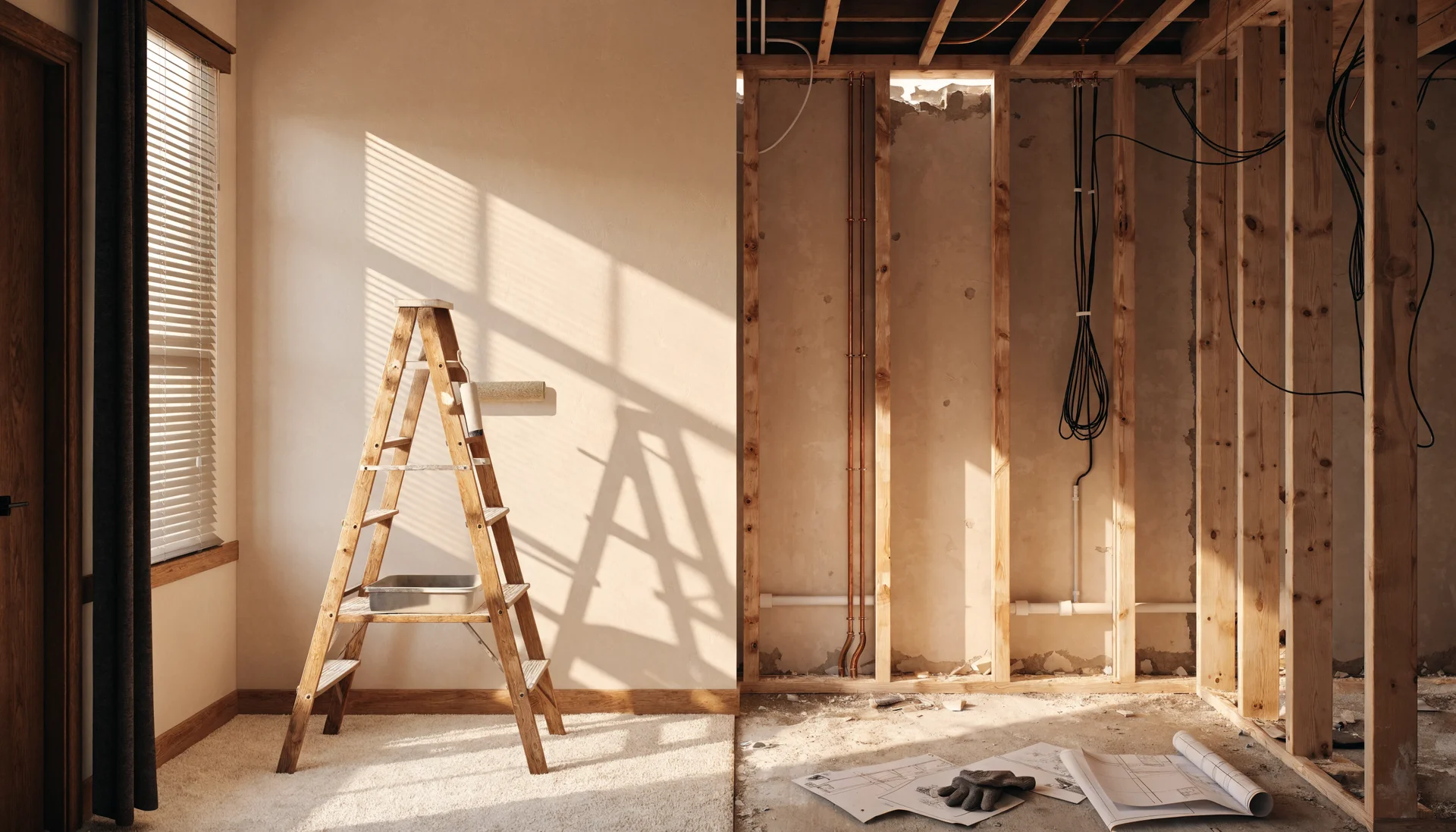


What Do Home Renovation Services in Plano Include? The Full Process, Step by Step
Design, permits, demolition, construction, inspection: here is what a managed home renovation in Plano actually covers, in the order it happens. Plus what each stage decides, what the work costs in 2026, and how to read a contractor before you sign.
A home renovation in Plano is not one job. It is design, permits, demolition, trade work, finishes, and a final inspection, stacked in an order that only works one way. Hiring a company that runs all of it means one team owns the schedule and the budget instead of a separate contractor for each task and nobody owning the calendar. This guide walks the whole sequence: what renovation services cover, what Plano’s climate and permit office add to the work, what projects cost in 2026, and how to read a contractor before you sign anything. If you already know the scope you want, start with our home remodeling services in Plano, TX, or see what a full home renovation in Plano covers end to end.
Six stages, one contract, and a permit file that has to be right.
Home renovation services run as six stages: consultation, design and material selection, permitting, demolition, construction, and the final inspection and walkthrough, handled by one company instead of a separate contractor for each task. In Plano the two local variables are the city permit for structural, electrical, and plumbing work, and North Texas heat and humidity, which decide which materials are worth specifying. Bathrooms run $8,000 to $60,000, kitchens $25,000 to $95,000, and whole-home projects $95,000 to $350,000.
What Home Renovation Services Actually Cover
Home renovation services are professional design and construction work that updates, repairs, or expands a house you already own. That covers kitchens, bathrooms, additions, whole-house upgrades, and structural changes. It also covers the parts homeowners rarely picture until they are standing in the middle of them: the permit file, the order the trades arrive in, and the inspection that closes the job out.
A design-build company manages every stage under one contract. Design planning, permitting, demolition, construction, and final inspection all run through the same office, which is the practical difference between a renovation and a long series of errands. Homeowners get complete home renovations instead of piecing together a different contractor for each task and then playing scheduler between them on a weeknight.
Most of the work falls into one of these:
- Kitchen remodeling and cabinet upgrades
- Bathroom remodeling and curbless showers
- Whole house renovations and gut remodels
- Home additions and second-story builds
- Luxury renovations with custom finishes
Why Professional Renovation Matters More in Plano
Professional work protects three things at once: the structure, the resale value, and the safety of what ends up behind the walls. Unvetted labor tends to fail in the same predictable places, with code violations, water where water should not be, and an appraisal that discounts the work instead of crediting it.
North Texas adds pressure of its own. Heat and humidity drive insulation, ventilation, and material choice, and a product that performs well in a milder climate can fail in a North Texas summer. A climate-based renovation plan specifies for temperature swings and moisture control from the beginning instead of correcting for them after the fact.
Then there is the city. Home renovation permits in Plano are required for structural changes, electrical work, and plumbing updates, and the paperwork is only cheap when it is filed correctly the first time. A contractor who files in Plano regularly knows what the reviewer will ask for before the reviewer asks.
Unpermitted work never fails the inspection you did not schedule. It fails an appraisal instead, years later, in front of a buyer.
Most renovations begin long before anyone calls a contractor. These signs your home needs remodeling are worth reading early, while a small problem is still a small problem and you are choosing the timing rather than reacting to it.

How the Process Actually Runs, Step by Step
Renovation experts work to a fixed sequence, and the sequence is what keeps the cost predictable. Each stage closes before the next one opens, so the surprises surface during planning, where they are cheap to solve, rather than halfway through construction, where they are not.
Initial consultation and home assessment
A walkthrough of the house and the scope together, with existing conditions recorded before anything gets priced.
Design planning and material selection
Drawings and selections are settled at the same time, so the estimate can name real materials instead of placeholder allowances.
Permit approval through the City of Plano
The contractor files, tracks, and answers the city. The review queue, not your calendar, decides when demolition can start.
Demolition and structural preparation
Walls open, and whatever was hiding behind them gets handled while the structure is still accessible and the fix is still simple.
Construction, installation, and finishing work
Trades run in order: rough-in, inspection, close the walls, then finishes. Skipping ahead means opening something back up.
Final inspection and walkthrough
The city signs off, then you and the project manager walk the job and write down anything still outstanding.
Knowing the order lets you plan around it rather than react to it. This whole home renovation timeline breaks down how long each phase tends to run on Plano projects.
Plenty of families stay put through the work. UHS Remodeling phases the schedule to keep the house usable while construction moves through it, which follows the same practical approach as living in your house during remodeling: seal the active zone, protect one working kitchen or bathroom, and sequence the noisy work so it lands in daylight hours.
I would rather spend another week in planning than find a surprise behind a wall on demolition day. Almost every schedule problem I see started as a decision somebody put off.
Not sure which of these applies to your house? A short conversation settles it faster than any calculator.
Benefits of Hiring Professional Home Renovation Services
Hiring the work out buys quality, predictability, and fewer expensive corrections. What separates a managed project from a self-managed one comes down to a short list:
- Code-compliant construction that meets Plano’s building codes
- Accurate budgeting, with fewer surprise costs appearing mid-project
- Access to skilled trades: electrical, plumbing, framing
- A written scope and a documented record of the work performed
- Higher resale value at closing
Updated space also moves the number on the appraisal. A well-planned kitchen or bathroom can increase home value, and the effect is strongest in competitive DFW neighborhoods where a buyer is comparing several similar houses on the same street and deciding which one they will not have to work on.
Scope matters as much as quality here, because not every upgrade returns the same attention at sale. Review which renovations buyers care about in 2026 before you settle on where the budget goes.
DIY vs Expert Home Renovation: Where the Line Sits
DIY is the right call for small cosmetic updates. Anything touching structure, plumbing, electrical, or permits belongs with a contractor and the trades who are allowed to sign for that work. Compared side by side, the difference shows up in five places:
- Permits and code. DIY means the owner researches and files. A contractor handles the filing and tracks it through approval as part of the job.
- Quality and coverage. DIY work carries no written recourse and quality that varies by weekend. Professional work is documented in writing.
- Timeline. Nights and weekends stall out. Scheduled trades give you a finish date you can plan a life around.
- Hidden problems. DIY finds them mid-project, usually with the wall already open. A contractor anticipates them during pre-construction.
- Resale value. Unpermitted work hurts appraisals. Documented work supports the value you are asking for.
The line is not really about skill. It is about what happens on the day something behind the wall turns out not to match the plan, and who is responsible for solving it.
Common Home Renovation Mistakes to Avoid
The expensive mistakes repeat themselves. Hiring uninsured or unvetted contractors, skipping permits, and underestimating the budget account for most of the projects that go sideways in Plano.
Hiring on price alone instead of experience
The lowest bid usually wins by leaving something out, and the missing scope comes back as a change order once the work is underway.
Skipping permits to save time
The weeks saved at the front get repaid at resale, when undocumented work reads to a buyer as a liability rather than an upgrade.
Choosing materials without checking climate suitability
A finish that behaves elsewhere can cup, fade, or hold moisture through a North Texas summer, and replacing it costs more than specifying it correctly did.
Underestimating the timeline and the living arrangements
A schedule nobody planned around becomes weeks of improvising meals in a house with no working kitchen.
Not asking enough questions before signing a contract
Everything you did not ask about becomes something you find out about later, on your own budget.
Two things worth reading before you sign anything: these red flags when hiring a remodeling contractor and this list of questions to ask a remodeling contractor.
What Affects Home Renovation Costs in Plano
Cost in Plano follows four things: project size, material quality, labor rates, and structural complexity. Square footage, finish grade, and how far the plumbing or electrical has to move produce the biggest swings, and the last one is the quiet driver. Moving a sink across a room is not a fixture decision, it is a slab, wall, and vent decision wearing a fixture’s clothes.
For rough planning, most bathroom remodels in Plano run $8,000 to $60,000, kitchen remodels run $25,000 to $95,000, and whole-home renovations run $95,000 to $350,000. Where a specific project lands inside its band is mostly a question of finish grade and how much of the house has to change position.
For 2026 numbers broken out by project type, read our DFW home renovation cost guide and the complete DFW remodeling cost study.
Tell us what you are planning. We will walk your house, tell you what is actually possible, and put a real number on it before you commit to anything.
Or read the numbers first: home renovation in Plano.
How to Choose the Right Home Renovation Company in Plano
The right company carries insurance, has local project history, prices transparently, and answers detailed questions before a contract exists. Screen home renovation contractors against five checks:
- Verify insurance and trade licensing
- Check local project history in Plano and across DFW
- Ask for a written, itemized estimate
- Confirm the timeline and the communication process
- Read reviews from real Plano customers
One thing to understand before you start comparing bids: Texas has no statewide general-contractor license, so insurance, local references, and reviews are your real vetting tools. Plumbing, electrical, and HVAC work should always be performed by Texas-licensed trades, and any company worth hiring will tell you who those trades are without being pressed.
An itemized estimate is the single most useful document in this process. It turns a vague line like whole-house renovation into materials, quantities, and labor you can hold next to another bid and actually compare. A number on its own tells you nothing about what was left out of it.
UHS Remodeling works across Plano and appears among the best home remodeling contractors in Plano, with itemized estimates and local project history behind the work. If you are still building a shortlist, here is how to find a reputable remodeling contractor in Plano.
Working with a tighter budget is normal, and it does not have to mean waiting. Review affordable home remodeling options in Plano to see what is realistic at different price points. For general background on the industry and its terminology, Wikipedia’s overview of home improvement is a reasonable starting reference.
The Bottom Line for Plano Homeowners
A managed renovation protects your budget, your schedule, and what the house is worth later. Working with a local design-build company like UHS Remodeling means most of the hard decisions get made during planning, while they are still cheap to change, and the finished result is specified for Plano’s climate and built to Plano’s code.
Ready to scope your own project? Browse home remodeling ideas, see what a whole-home renovation in Plano covers, or reach out to UHS Remodeling and walk us through the house.
Questions we get
How much do home renovations cost in Plano?
Most bathroom remodels in Plano run $8,000 to $60,000, kitchen remodels $25,000 to $95,000, and whole-home renovations $95,000 to $350,000. Kitchens and bathrooms are usually the largest single-room expenses. Final cost depends on square footage, material grade, and structural changes required for the project.
How long does a home renovation take?
Most single-room renovations take 3 to 6 weeks, while whole-house renovations can take 3 to 6 months. Timeline depends on permit approval, material availability, and the scope of structural work involved in the project.
Do I need a permit for home renovations in Plano?
Yes, most structural, electrical, and plumbing renovations require a permit from the City of Plano. Cosmetic updates like painting or flooring usually do not. An experienced local contractor can confirm which permits apply to your specific project.
Can I stay in my home during a renovation?
Yes, many homeowners stay in their house during renovations, especially for single-room projects. Contractors often phase the work and seal off active construction areas to reduce dust, noise, and disruption to daily life.
What is the best season for home renovation in Plano?
Fall and winter are often the best seasons for home renovation in Plano because contractor schedules are less busy and material lead times are shorter. Spring and summer remain popular but may involve longer wait times for scheduling.
What is included in full home renovation services?
Full home renovation services cover design planning, material selection, permitting, demolition, construction, and the final inspection and walkthrough. A design-build company runs all of it under one contract instead of leaving you to hire and schedule a separate contractor for each task. The work itself ranges from kitchens and bathrooms to additions, whole-house renovations, and structural changes.
What should I check before hiring a renovation company in Plano?
Verify insurance and trade licensing, check local project history in Plano and DFW, ask for a written itemized estimate, confirm the timeline and communication process, and read reviews from real Plano customers. Texas has no statewide general-contractor license, so insurance, local references, and reviews are the vetting tools you actually have. Plumbing, electrical, and HVAC work should always be performed by Texas-licensed trades.
A renovation goes well or badly during planning, not during construction. Settle the scope, the selections, and the permit before demolition day, hire on an itemized estimate rather than a headline number, and check insurance, local project history, and reviews, because Texas does not issue a statewide general-contractor license to check instead.
Related from the journal


Scope your Plano renovation before demolition day one contract, one schedule.
Fully insured · 500+ client reviews · fixed-price contracts · 1-year workmanship warranty.
Prefer to talk? (469) 850-7087 · or use the contact page.