
Are Home Renovations Tax Deductible?
What DFW homeowners can and can’t write off: capital improvements, energy and medical credits, and the records worth keeping.

Are home renovations tax deductible? For most homeowners, no. Remodeling your own primary residence is generally not deductible in the year you pay for it. But the right improvements still pay off at tax time in three indirect ways: capital improvements raise your home’s “cost basis” and shrink the capital-gains tax you owe when you sell, certain energy-efficient upgrades earn federal tax credits, and some medically necessary changes may count as deductible medical expenses. Here’s how each works, plus which DFW renovations actually add the most value.
Usually not right away, but they cut tax later.
Most home renovations are not deductible the year you do them, but capital improvements raise your home’s cost basis and can lower capital-gains tax when you sell. Some medical-necessity and energy-efficiency upgrades may qualify for credits. Always confirm with a tax professional.
§ 01Are Home Renovations Tax Deductible for Most Homeowners?
No. The IRS treats renovations to a personal residence as personal expenses, so you can’t write off a new kitchen on this year’s return. Instead, the financial benefit shows up in three places:
- Capital improvements that add to your home’s basis, lowering your taxable profit when you sell.
- Energy-efficiency tax credits for qualifying upgrades like efficient windows, doors, insulation, heat pumps, and home energy audits.
- Medically necessary improvements (an accessibility ramp or a walk-in shower prescribed for a medical condition), which may be deductible as a medical expense if they meet IRS rules.
Tax law and personal circumstances change, so always confirm the details with a CPA and the official guidance in IRS Publication 523 (Selling Your Home).
§ 02Can You Write Off Home Renovations? Repairs vs. Capital Improvements
You usually can’t write off remodeling a personal home as a deduction, but the IRS draws a hard line between a repair and a capital improvement, and that line decides whether the work helps you later.
Repairs
A repair keeps your home in working order: fixing a leak, patching drywall, repainting a worn wall. On a personal residence, repairs aren’t deductible and don’t change your basis.
Capital improvements
A capital improvement adds value, prolongs the home’s life, or adapts it to a new use: a full kitchen remodel, a bathroom renovation, a room addition, a new roof, or a whole-home renovation in DFW. These costs are added to your home’s adjusted basis.
Why basis matters: say you bought a Plano home for $400,000 and later invested $90,000 in qualifying improvements. Your adjusted basis rises to $490,000. Sell for $700,000 and your taxable gain is figured from $490,000, not your original $400,000, which can meaningfully shrink the gain. (Many homeowners also exclude up to $250,000 of gain, or $500,000 if married filing jointly, under current IRS rules.)
Keep every receipt, contract, and invoice. Documentation is what lets you prove an improvement years later. It’s a quiet advantage of fixed-price contracts: the paperwork is clean and the final number is the number, so basis tracking stays simple.

Keep every remodel receipt. A capital improvement quietly lowers the tax you owe the day you sell.— May N. · Co-Founder, UHS Remodeling
§ 03Which Energy-Efficiency Upgrades Can Earn a Tax Credit?
Unlike a deduction, a credit cuts your tax bill dollar-for-dollar. Several federal residential energy credits reward efficiency upgrades, which can include:
- ENERGY STAR-rated exterior windows, skylights, and doors
- Added insulation and air sealing
- Efficient heating and cooling equipment, including heat pumps and heat-pump water heaters
- A professional home energy audit
- Solar, battery storage, and other clean-energy property
Annual limits, eligible products, and credit percentages change year to year, so verify the current rules on IRS.gov before counting on a number. If efficiency is a priority, fold these elements into a larger remodel so the upgrade is done once, correctly, and fully permitted.
§ 04What Home Renovations Add the Most Value in DFW?
Even when a project isn’t deductible, the right renovation still returns money at resale, and for most DFW homeowners that is the number that matters. Across our completed DFW projects since 2014, the renovations that consistently move home value the most are:
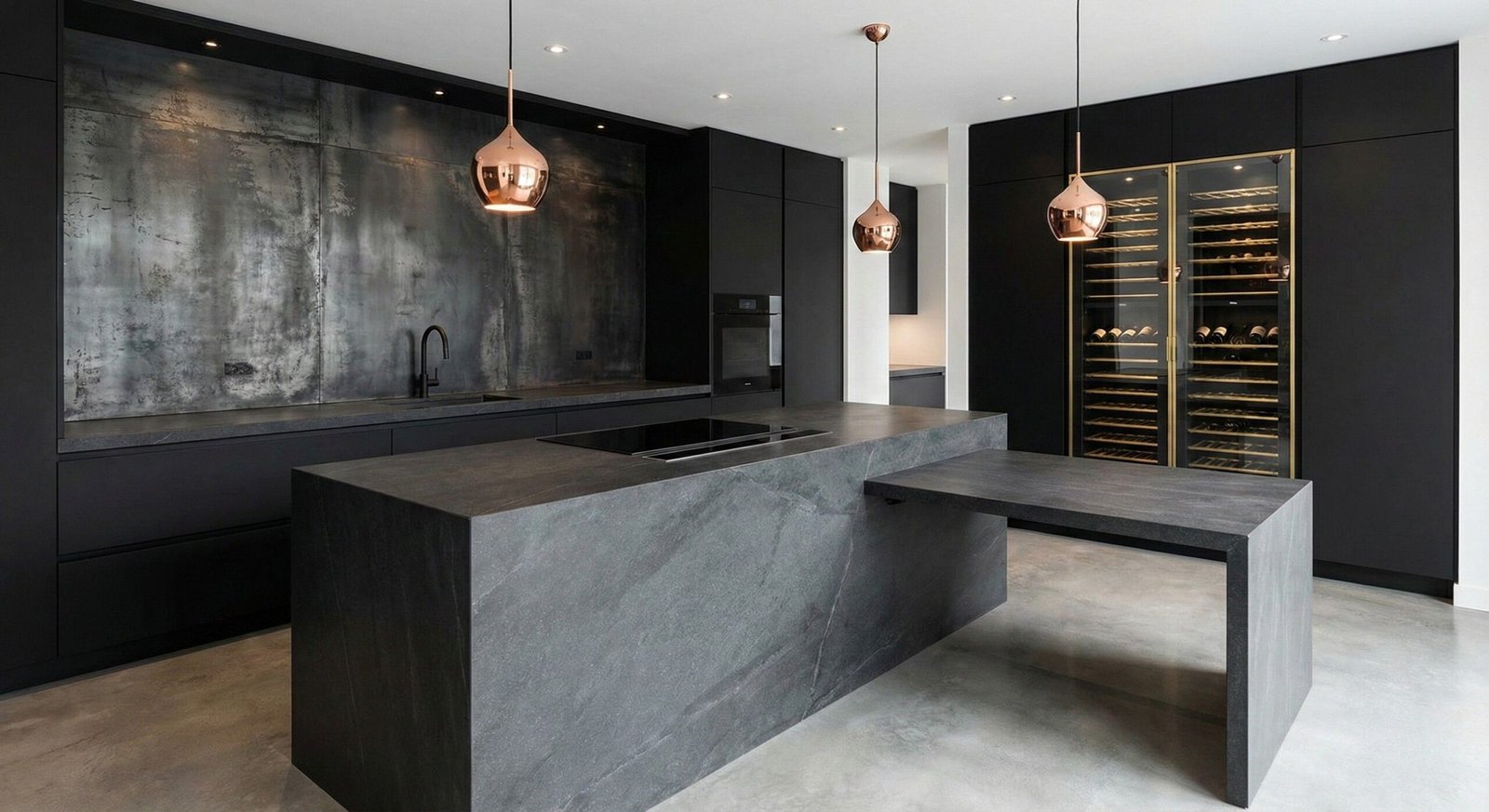
- Kitchen remodels. The kitchen is the room buyers judge first, and a mid-range refresh usually recoups more than a top-to-bottom luxury rebuild. DFW kitchens typically run $25K–$95K.
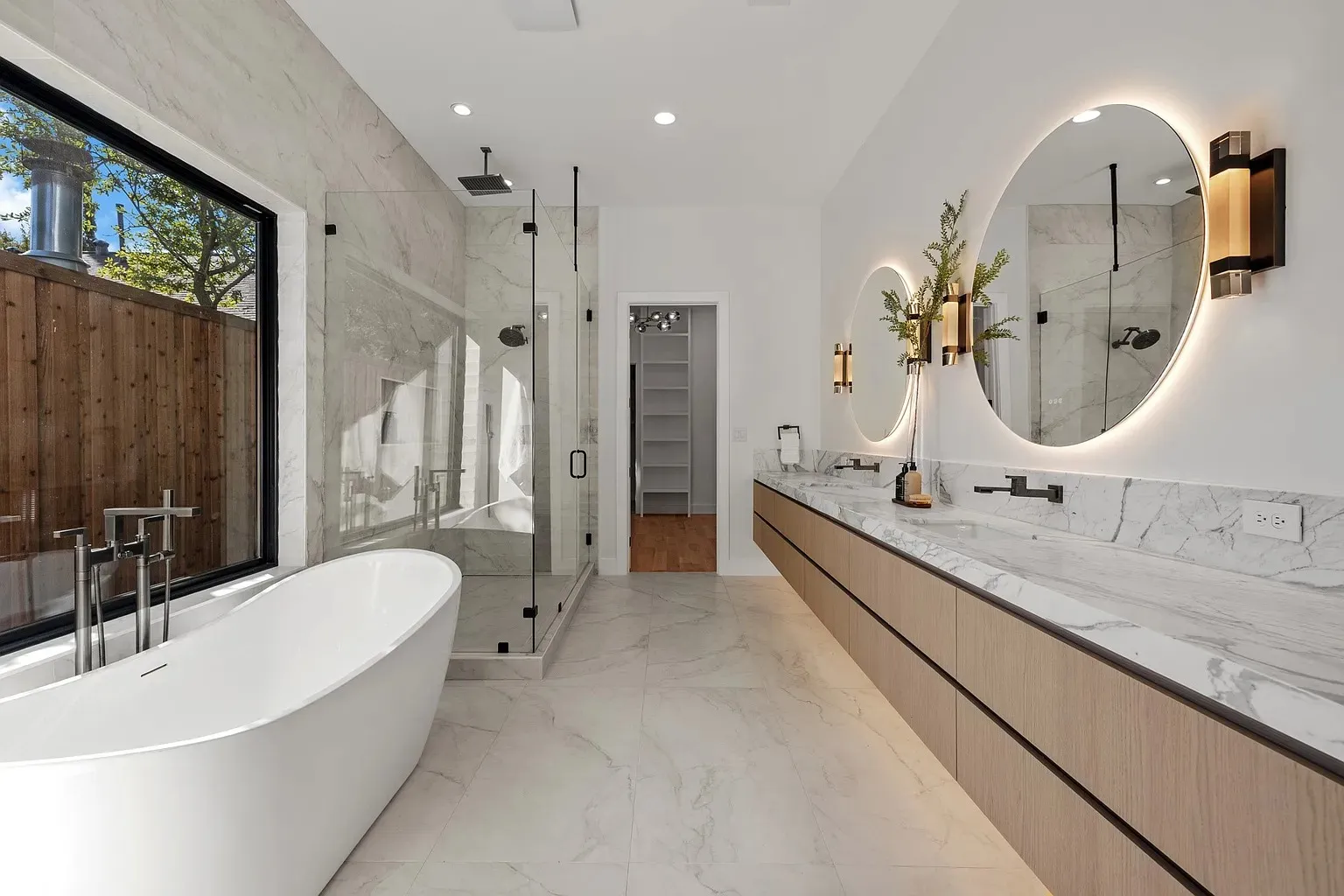
- Bathroom renovations. Buyers look at the primary bath right after the kitchen, and a dated one gets marked down in the offer. DFW baths generally range $8K–$60K, depending on size and finishes.
- Room and home additions. Adding livable square footage (a primary suite, a bonus room, an in-law space) expands both function and value. DFW additions run $120K–$400K.
- Whole-home renovations. For a house that has not been touched since it was built, redoing every room at once moves it into a different set of comparable sales than a piecemeal update would. Whole-home projects in DFW generally fall between $95K–$350K.
Want the room-by-room numbers? Our DFW remodeling cost and ROI study breaks down typical returns by project type, and you can browse value-adding home remodeling ideas to see what’s resonating with local buyers right now.
How much does a bathroom renovation increase home value?
A DFW bathroom renovation gets back a good part of its cost at resale, and a mid-range remodel usually returns a bigger share of what you spent than a high-end one. The biggest value drivers are layout improvements, quality tile and waterproofing, and modern fixtures, not the most expensive materials. Exact recovery depends on your neighborhood, comparable sales, and how dated the original bathroom was.
How much does a home addition cost?
A home addition and room addition project in DFW generally runs $120K–$400K, driven by square footage, any added bathroom or kitchen, foundation work, and finish level. Additions are capital improvements, so the documented cost is added to your home’s basis, one more reason to keep clean records.
What to document for every renovation
§ 05The Bottom Line for DFW Homeowners
Most renovations won’t lower this year’s tax bill, but the right ones still pay off: through a higher adjusted basis that reduces capital-gains tax at sale, through energy-efficiency credits, and through resale value that outlasts the project itself. The smart move is to treat documentation as part of the build: clean contracts, itemized invoices, and a fixed-price scope make basis tracking and credit claims far easier later. Every project we deliver is backed by a fixed-price contract and a 1-year workmanship warranty, so the paperwork supports both your home and your records.
This article is general information, not tax advice. Confirm your specific situation with a qualified CPA or tax professional and the current guidance on IRS.gov.
§ Q&AFrequently asked questions.
Planning a renovation? Let us scope it right, permits and records included.
Fully insured · 500+ verified five-star reviews · fixed-price contracts · 1-year workmanship warranty.
May N.
Co-Founder and design lead at UHS Remodeling, a Plano-based DFW design-build firm. She has helped guide kitchen, bath, and whole-home projects across the metroplex since 2014.
UHS Remodeling brings over a decade of experience to remodeling across 21 DFW communities, on fixed-price contracts backed by a 1-year workmanship warranty.