
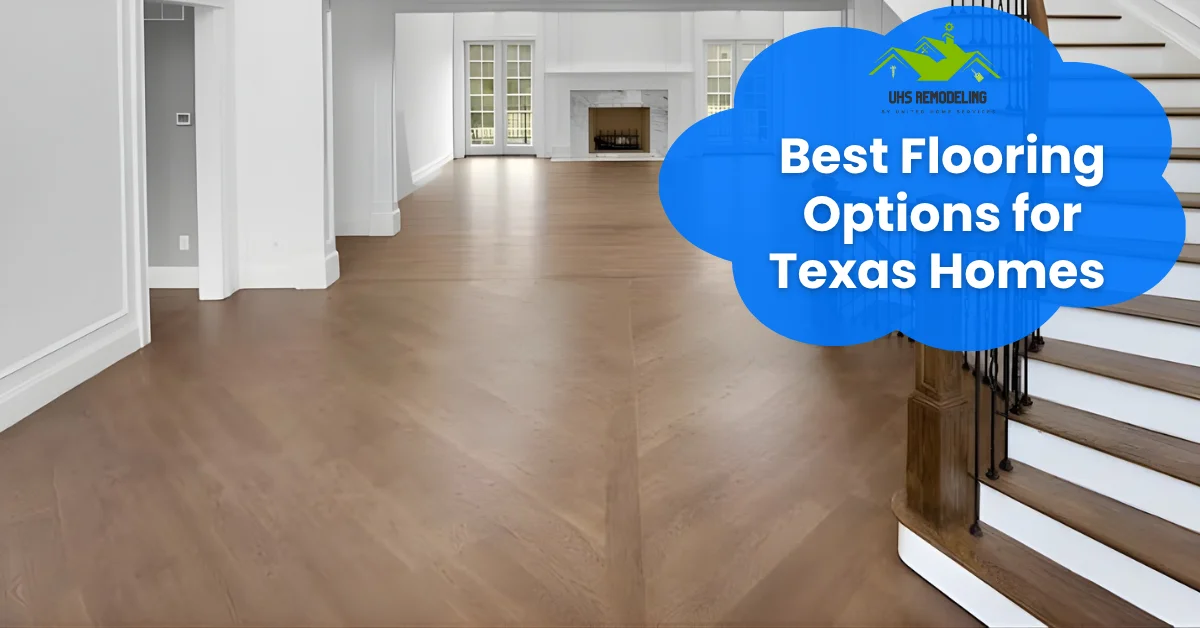
Best Flooring Options for Texas Homes (2026 Complete Guide)
Six materials, five regions and one hot, humid state. Here is which floor belongs in which Texas room, what each one costs installed, and how long it should last.
Few choices in a house shape both how it looks and how it feels to live in as much as the flooring, and in Texas the decision comes with a climate test on top of the design one. The state runs from dry, dusty plains to humid Gulf Coast cities, so the floor you choose has to be durable, energy-efficient and able to cope with the local extremes. Building new, renovating an older house or upgrading a single room: in every case, knowing how each material behaves here saves you from future repairs and protects your resale value. If the floors are one piece of a bigger project, our home renovation services in Plano cover the whole job, floors included. With cost efficiency, sustainability and low maintenance rising up more Texas homeowners’ lists every year, it pays to know which floor performs best under local weather before the samples come out.
For most Texas rooms, luxury vinyl plank. Hardwood for resale, tile for kitchens and baths.
Luxury vinyl plank wins most Texas rooms at $3-$7 per square foot installed because it is durable and moisture-resistant. Hardwood adds resale value at $8-$14 per square foot, and tile is the pick for kitchens and baths at $5-$12. Match the material to your region before you match it to your furniture.
The short answer for most Texas rooms is luxury vinyl plank (LVP), at $3-$7 per square foot installed, because it holds up to moisture and hard use. Hardwood, at $8-$14 per square foot, adds the most resale value. Tile, at $5-$12 per square foot, is the pick for kitchens and baths. UHS Remodeling installs all of them. The rest of this guide explains which material belongs in which room, what each one costs over its life, and how the answer changes between Dallas and the Gulf Coast.
Why flooring choice matters in the Texas climate
Texas geography exposes a house to real extremes: blistering 100°F summers in Central Texas, humid and salt-laden air along the Gulf Coast, dry dust across the west. That makes flooring a functional and economic decision before it is a decorative one. The wrong material warps, cracks or traps heat, and the repair bill lands on top of the lost comfort. The right one holds its shape, keeps rooms cooler and lasts long enough to count as an investment, particularly when it is planned as part of a larger home remodeling in Carrollton project instead of being picked at the end.
The four climate challenges
- Extreme heat. Causes expansion and contraction, most visibly in wood and laminate floors.
- High humidity. Leads to swelling, mold or mildew in any material that is not waterproof.
- Dust and sand. Common in the arid regions, where grit scratches and dulls a floor surface a little more every season.
- Temperature fluctuations. Work on the adhesives, the joints and the stability of the surface itself.
Heat makes it move, humidity makes it swell, grit wears it down, and a material that fails any one of those tests in your region is a repair waiting to happen.
How each material holds up
Here is how the common materials score on heat resistance, moisture resistance, expected life and upkeep:
- Tile: excellent heat resistance, excellent moisture resistance, 25+ years, low maintenance.
- Vinyl: high heat resistance, excellent moisture resistance, 15-20 years, low maintenance.
- Hardwood: moderate heat resistance, low moisture resistance, 20-25 years, medium maintenance.
- Laminate: high heat resistance, moderate moisture resistance, 10-15 years, medium maintenance.
- Carpet: low heat resistance, low moisture resistance, 8-12 years, high maintenance.
- Concrete: excellent heat resistance, excellent moisture resistance, 30+ years, low maintenance.
The pattern is hard to miss: the two materials that shrug off both heat and moisture, tile and concrete, are also the two that last longest, and both sit in the low-maintenance column. Wood and carpet buy warmth and softness at the cost of vulnerability, which is a reason to put them in the right rooms, not a reason to avoid them.
The six flooring options for Texas homes
Not every material performs equally across the state. A floor that thrives in Dallas or Fort Worth may not fare well in Houston or Galveston, so treat the six options below as a shortlist to filter by region and by room, not as a ranking. Texas homeowners need a floor that stands up to traffic, resists moisture and stays cool through the summer, and each material trades those qualities differently. If the floors are part of a full remodel, our guide to the Best Time of Year for Home Remodeling covers when to schedule the work.
Tile
Tile has stayed a favorite for its cool surface and the range of looks it offers, and it performs exceptionally under heat and humidity, which makes it the natural choice for South and Central Texas homes. It is the standout for kitchens and baths, and typical installed jobs land at $5-$12 per square foot.
Vinyl plank (LVP and LVT)
Luxury vinyl plank combines durability, affordability and moisture resistance, which is why it wins most rooms in this guide and why it suits coastal areas like Houston or Corpus Christi so well. It is a strong choice for anyone planning a whole house renovation with long-term sustainability in mind, because one material can run from the entry to the back door without a weak room in between. Expect $3-$7 per square foot installed.
Hardwood and engineered wood
Solid hardwood brings warmth and a sense of luxury, and buyers pay for it, at $8-$14 per square foot installed. Its weakness is moisture: without proper sealing, humidity works its way into the boards. Engineered wood works well in North Texas homes, with their dry winters and low humidity, when it is installed by a trusted contractor for home renovations who prepares and seals it for the local climate rather than simply laying it down.
Laminate
Laminate is the budget-friendly, heat-resistant option for dry regions, at $3-$8 per square foot. It gives the look of hardwood without the cost, and its moderate moisture resistance is exactly why it belongs in dry West Texas and North Texas rooms rather than in a Gulf Coast bathroom.
Carpet
Carpet offers comfort and insulation, which matters most in the cooler parts of the state and in the rooms where softness counts: bedrooms and family rooms. At $2-$6 per square foot it is the cheapest to lay, and at 8-12 years it is the quickest to wear out, with the highest maintenance of anything on this list.
Concrete and polished floors
Concrete has grown into a modern, energy-efficient choice, particularly for urban homes. It stays cool underfoot, needs little care and lasts 30+ years, which makes it a good fit in residential and commercial spaces alike. At $6-$12 per square foot installed, it outlasts every other material here.
What flooring costs in Texas
The headline prices above are typical installed figures for most jobs. Costs across the state run wider than that, because pricing is not only the installation: it includes maintenance over the floor’s life and how well the material resists the local climate, and every region of Texas carries its own labor and material costs. The full ranges look like this:
- Tile: $6-$15 per square foot, 25+ years, low maintenance.
- Vinyl: $4-$10 per square foot, 15-20 years, low maintenance.
- Hardwood: $8-$18 per square foot, 20-25 years, medium maintenance.
- Laminate: $3-$8 per square foot, 10-15 years, medium maintenance.
- Carpet: $2-$6 per square foot, 8-12 years, high maintenance.
- Concrete: $6-$12 per square foot, 30+ years, low maintenance.
The useful way to read that list is cost per year of service rather than cost per square foot. Carpet is the cheapest to install and the first to be replaced. Tile and concrete cost more on day one and then sit quietly for decades. Hardwood is the most expensive per foot and also the material buyers reward most at resale, which is a different kind of return.
Not sure which of these applies to your house? A short conversation settles it faster than any calculator.
Eco-friendly and energy-efficient options
Eco-conscious homeowners are turning to bamboo, cork and recycled tile to cut energy use and their carbon footprint. The energy argument is real: flooring with thermal retention properties can cut cooling costs significantly, and in a state where the air conditioner does most of the work, that is one of the few finish decisions that pays you back every summer. Tile and concrete carry the same advantage: they reflect heat instead of holding it, which keeps indoor temperatures steadier.
The right flooring for your region of Texas
Because the climate differs so much from one end of the state to the other, the recommendation changes with the address. Matching material to region is what makes a floor last and keeps the house comfortable:
- North Texas: engineered wood or laminate. Both handle dry winters and low humidity.
- Central Texas: tile or concrete. Both keep homes cool through hot summers.
- South Texas: vinyl or tile. The best choices for humidity resistance.
- Gulf Coast: vinyl or concrete. Waterproof and mold-resistant.
- West Texas: laminate or concrete. Suited to dry, dusty conditions.
For our own clients in Plano, Carrollton and the rest of North Texas, that first line is the one that matters: engineered wood in the living areas, laminate where budget leads, and tile or vinyl plank in every room that sees water.
I ask about the rooms before I ask about the color. Which ones get wet, which ones get afternoon sun, where the dog sleeps: the answers usually pick the material for us, and then we get to talk about the look.
How to choose, in the right order
Homeowners who end up unhappy with a floor almost always chose it in the wrong order: color first, everything else afterward. Reverse it and the decision gets easier at every step:
Start with your region
Use the regional list above to rule out the materials your climate will punish. In humid air, that removes solid hardwood and laminate from the wet rooms before you have looked at a single sample.
Sort the rooms by water and traffic
Kitchens and baths get tile or vinyl. Bedrooms and family rooms can take carpet or wood. High-traffic areas need a surface that shrugs off grit and footsteps, and a rug to take the worst of it.
Price the whole life, not the install
Set the installed price beside the expected lifespan and the maintenance burden. A cheaper floor replaced twice is not the cheaper floor.
Choose the installer before the material
Subfloor preparation and climate adaptation decide how a floor performs, and a good installer will steer you away from a material that will not survive your house.
The mistakes that shorten a floor’s life
The floors we get called to replace early rarely failed because the material was bad. They failed because the material was in the wrong place or went down the wrong way:
Solid hardwood in a humid room
Wood has low moisture resistance. In a bathroom, or in a Gulf Coast house without proper sealing, it swells and invites mold or mildew.
Laminate where it gets wet
Laminate resists heat well but only moderately resists moisture. It belongs in dry regions and dry rooms, not around a tub.
Buying on install price alone
Carpet costs the least to lay and the most to keep, and it wears out in 8-12 years. The cheap floor is the one that costs least over its life, not on the invoice.
Skipping subfloor preparation
Even premium materials fail on a poorly prepared subfloor. Joints open, adhesives let go and the surface loses stability with every temperature swing.
Never sealing or protecting the surface
Sealing, and area rugs in high-traffic zones, add years to a floor. Skip them and dust and sand do their slow work on the finish.
Tell us what you are planning. We will walk your house, tell you what is actually possible, and put a real number on it before you commit to anything.
Or read the numbers first: home remodeling in Plano.
Maintenance, longevity and professional installation
Routine upkeep can extend a floor’s life by years. Regular cleaning keeps grit from grinding into the finish, periodic sealing keeps moisture out of the materials that fear it, and area rugs in high-traffic zones absorb the wear that would otherwise land on the floor itself. None of it is complicated; it simply has to happen on a schedule.
Installation is where the rest of the lifespan is decided. Even premium materials need expert installation to perform, and a professional Texas flooring contractor earns the fee in two places you never see once the furniture is back: proper subfloor preparation, so the surface above stays flat and stable, and climate adaptation, so the material is ready for the humidity and temperature swings of your region. When flooring is one part of a larger project, sequencing it with the other trades is the same discipline, which is why we fold it into home remodeling in Plano rather than treat it as the last thing on the list.
Flooring insights from UHS Remodeling
Choosing a floor is an investment in comfort, durability and energy efficiency, and in Texas the climate makes the choice for you more often than the catalog does. Match the material to the region and the room, price it over its life, and have it installed by someone who prepares the subfloor properly. UHS Remodeling helps homeowners find flooring that fits their lifestyle and their part of the state, and delivers the expert installation it needs. If you are ready to upgrade your space, talk to our Plano home remodeling team about flooring built for Texas living: beautiful, durable and efficient.
Related pages from the original article: our DFW case studies, home remodel cost in DFW, home remodeling in Allen, home remodeling in Dallas, home remodeling in Frisco, home remodeling in Highland Park, home remodeling in Prosper.
Questions we get
What flooring is best for Texas heat?
Tile or polished concrete are best for heat resistance. They remain cool to the touch and don’t expand like wood or carpet in hot climates.
Is vinyl flooring good for humid areas in Texas?
Yes, vinyl is 100% waterproof and resists mold and mildew. It’s ideal for kitchens, bathrooms, and coastal homes.
What is the most durable flooring for Texas homes?
Porcelain tile and engineered wood are the most durable. Both withstand Texas’s climate variations and last over two decades.
Which flooring increases home resale value?
Hardwood and engineered wood add the most resale value. They’re timeless, elegant, and preferred by 80% of Texas homebuyers (Zillow, 2024).
Can flooring improve energy efficiency?
Yes, thermally reflective materials like tile and concrete reduce cooling costs. They help maintain consistent indoor temperatures.
How often should Texas homeowners replace flooring?
Every 15-25 years depending on material. Tile and concrete last longest; carpet and vinyl wear out faster.
What’s the best low-maintenance flooring for Texas homes?
Vinyl plank and polished concrete require minimal care. Both resist dust, moisture, and staining, which makes them ideal for busy households.
Let the climate choose first: tile or concrete where it is hot, vinyl where it is humid, engineered wood or laminate where it is dry. Then price the floor over its whole life rather than the invoice, and hire the installer before you buy the material.
Related from the journal

Choose a floor built for your part of Texas and for the rooms it has to survive.
Fully insured · 500+ client reviews · fixed-price contracts · 1-year workmanship warranty.
Prefer to talk? (469) 850-7087 · or use the contact page.