
Painting Tips to Refresh Your Home Interior in 2025
A new paint color is the fastest, most affordable way to update a home in 2025. Here is the color direction room by room, the prep and rolling method that gets a smooth finish, what a repaint costs, and when to hire it out.
Refreshing a home interior in 2025 no longer means an expensive renovation or a truckload of new furniture. A change of paint color alters how a room reads, how it handles light, and how comfortable it feels to live in. Plenty of homeowners planning updates start by reading about how to increase home value with renovation to work out where paint fits in a larger plan. With smart color choices, current techniques, and proper preparation, painting is the most cost-effective way to update a home. This guide covers the 2025 color direction room by room, a step-by-step application method, the DIY-versus-professional decision, what a repaint costs, and where paint belongs when it is part of a bigger project.
Warm neutrals, proper prep, two thin coats.
The 2025 direction is Natural Calm: earthy beige, terracotta clay, soft olive gray and warm taupe in living rooms; low-saturation shades like dusky blue and warm cream in bedrooms. Clean, fill, sand, prime and let it dry, then roll a W pattern in two thin coats. Do one room yourself; hire a crew for the whole house.
Why paint is the fastest refresh you can make
Interior design in 2025 puts emotional comfort, sustainability, and soft minimalism first. Instead of remodeling large sections of the house, the kind of work a whole home renovation timeline is built around, painting lets a homeowner change a space almost immediately. A new color changes how natural light reflects off the walls, makes a small room feel more open, and calms a living area that has started to feel busy.
Color psychology plays a major role this year. Warm, earthy tones help people relax; pastel shades add brightness without overwhelming the eye. The finish matters as much as the color: matte, satin, and eggshell each reflect light differently, so the same shade carries a different visual depth depending on the sheen. Add low-VOC paint, a neutral palette, and a single accent wall, and you have most of what a 2025 interior refresh is made of.
The 2025 color direction: Natural Calm
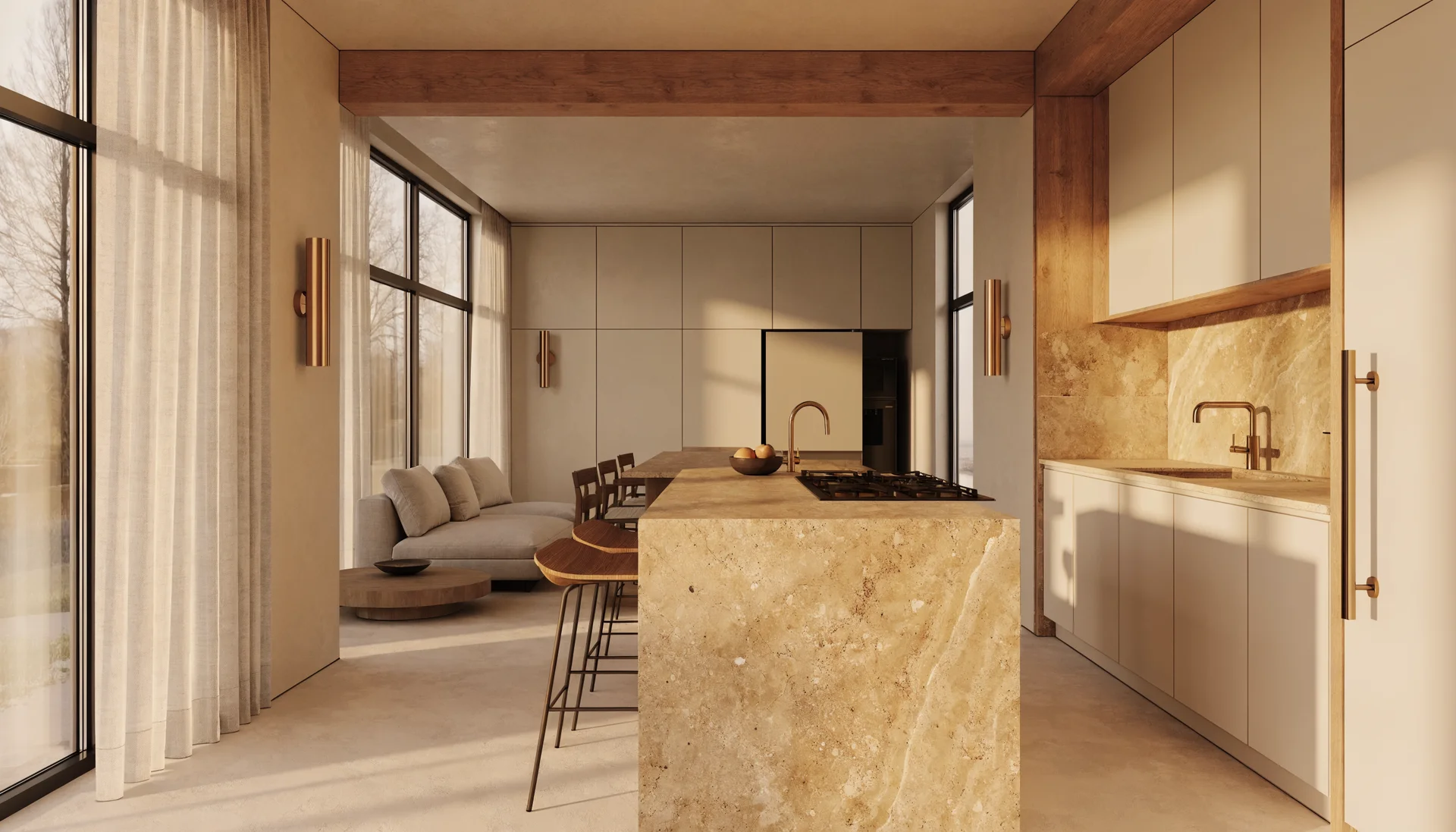
Designers describe the 2025 color direction as “Natural Calm”: soft, nature-inspired shades that sit comfortably with wood, stone, and neutral decor. The same palettes show up in full-house updates, including home remodeling in Garland, where the flow of color from one room to the next does much of the work of making an interior feel open, modern, and comfortable. The same themes suit a homeowner repainting a single room as well as one planning a full-house change, because the shades hold together across rooms instead of competing. Below are the recommended directions for each space.
Living rooms
Living rooms are usually the brightest rooms in the house, and warm, grounded tones keep that brightness comfortable for everyday living rather than glaring. The recommended shades for 2025:
- Earthy beige
- Soft olive gray
- Terracotta clay
- Dusty sand
- Warm taupe
Pair them with a matte finish for a clean, soft texture, and let natural decor such as plants and woven materials carry the rest of the room.
Test your shade with a sample swatch on two separate walls before you commit. Light changes the tone throughout the day.
Bedrooms
Bedrooms want calming tones that reduce visual noise and support better sleep. The designer favorites this year:
- Lavender smoke
- Desert rose
- Cloud white
- Dusky blue
- Warm cream
These colors work through low saturation and soft reflectance, so the room reads as quiet rather than bright. One thing to avoid: harsh whites. They reflect artificial light straight back at you and strain the eyes at night, in the one room meant for rest. That is why the bedroom list leans on smoke, rose, and cloud tones rather than a pure white.
Accent walls
An accent wall adds personality without repainting the whole room, and it is the easiest place to try something bolder than the main palette. The accent ideas trending in 2025:
- Geometric patterns with thin metallic highlights
- Micro-cement or textured stone paint
- Gradient (ombre) walls using two tones
- Bold color blocks behind a TV or headboard
Accent walls suit living rooms, hallways, dining spaces, and home offices. Pick the wall the room already faces, the one behind the TV, the headboard, or the dining table, and let the other walls stay quiet.
I never let a client choose a color from a chip under store lighting. We put the swatch on the wall it will actually live on and look at it in the morning and again in the evening before anyone commits.
Tools, prep, and the order that matters
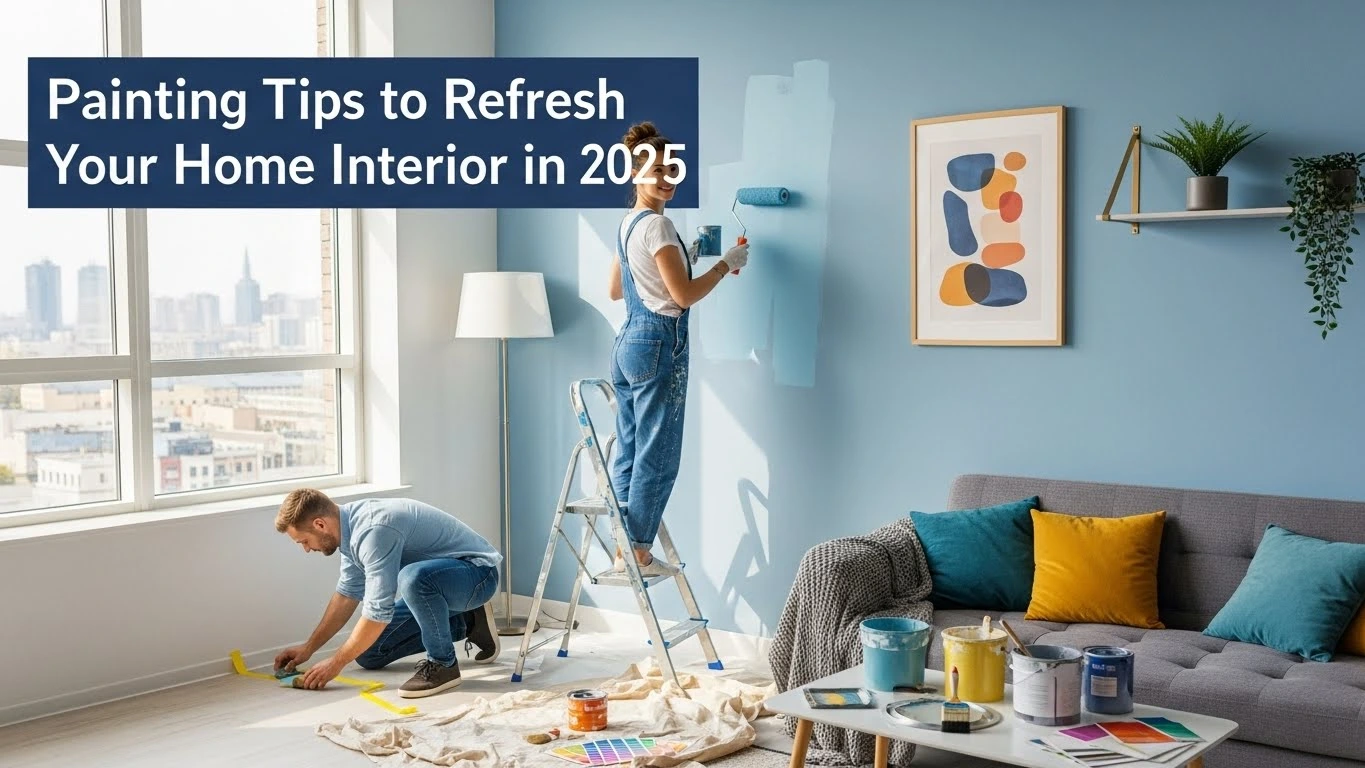
Beginners can get a professional-looking result with systematic preparation and the right tools, and the process fits in a weekend. Gather everything before you open a can:
- Primer
- Interior paint (matte or eggshell)
- Rollers and brushes
- Paint tray
- Drop cloth
- Sandpaper (120-220 grit)
- Masking tape
- Ladder
Better tools earn their price on the wall. Premium rollers and brushes reduce streaking and keep the texture even across walls and ceilings, which is exactly where a cheap roller gives itself away.
Preparation decides how well the paint sticks and how long it lasts, and it is the part most DIY jobs rush. Work through it in this order:
Clean the walls
Wash them down with a mild detergent solution so the paint bonds to the wall rather than to dust and grease.
Fill cracks and nail holes
Use wall compound on every crack and nail hole; a fresh coat of paint hides none of them.
Sand lightly
A light pass with the sandpaper levels the patches and leaves a smooth surface for the primer.
Prime
Apply a primer coat. Quality primer is what lets you get away with fewer finish coats later.
Let it dry completely
Dry walls give better adhesion and prevent a patchy finish. This is the step nobody wants to wait for, and the one that shows if you skip it.
Not sure which of these applies to your house? A short conversation settles it faster than any calculator.
Rolling technique for a smooth finish
Visible roller marks are the giveaway of a rushed job, and the W-pattern method is how painters avoid them. It is not complicated; it just has to be done in order.
Cut in the edges
Use a brush on the corners and along the ceiling joints, where a roller cannot reach cleanly.
Roll a large W
Load the roller and lay the paint on in a big W shape across the section of wall you are working.
Fill without lifting
Fill in the pattern without lifting the roller off the wall. Every lift and re-landing is a mark waiting to dry.
First thin coat, then dry
Apply one thin coat and let it dry fully. Resist the urge to load the roller heavier to finish faster.
Second coat
Apply the second thin coat the same way. Two thin coats are better than one thick layer, every time.
DIY or hire a painter?
DIY painting is satisfying and easy on the budget; professionals bring years of experience and equipment you will not buy for a single room. Neither answer is wrong, but they fit different jobs. The differences, side by side:
- Cost: DIY is low-budget; a professional painter costs more.
- Time: DIY is slow; a crew is fast.
- Quality: a DIY finish can vary; a professional delivers a smooth, uniform finish.
- Tools: basic rollers and brushes versus airless sprayers and professional-grade equipment.
- Best fit: DIY for small rooms and accent walls; professionals for an entire house or textured finishes.
The recommendation is simple. If you are refreshing one room, do it yourself; the tools are cheap and the stakes are low. For a full-house repaint, professionals save you the time and deliver the better result, especially on textured finishes. Time is where the two approaches part most sharply: one room is a realistic weekend on your own, while a whole house is the point where a crew’s speed and sprayers are worth paying for.
What interior painting costs in 2025
The cost of painting in 2025 moves with room size, paint quality, and labor rates. Approximate averages:
- Single room: $120-$800
- Living room: $500-$2,000
- Whole house repaint: $2,000-$7,000
Premium low-VOC paints cost slightly more, but they improve indoor air quality and last longer, so the extra spend comes back over the life of the job. A few ways to keep the number down:
- Buy paint during seasonal sales.
- Use a multi-room color palette instead of a different color for every room.
- Invest in quality primer; it reduces the number of finish coats you need.
If the repaint is part of larger updates, home renovation services in Plano can coordinate the color flow across rooms, so the paint decision and the remodel decision are made together instead of one after the other.
Tell us what you are planning. We will walk your house, tell you what is actually possible, and put a real number on it before you commit to anything.
Or read the numbers first: home remodeling in Plano.
The mistakes that show on the wall
Most disappointing paint jobs fail on the same handful of shortcuts, and every one of them is visible once the room is back together:
Choosing the color from one wall at one time of day
Light changes the tone through the day; a swatch on two separate walls is the only honest test.
Harsh white in a bedroom
It reflects artificial light back at you and strains the eyes at night.
Painting walls that are still damp
Paint does not bond well to a wet surface; the result is poor adhesion and a patchy finish.
Skipping primer to save a step
You pay it back in extra finish coats, and the finish is never as even.
One thick coat instead of two thin ones
Two thin coats are better than one thick layer, and the difference shows as soon as the paint dries.
Lifting the roller mid-pattern
Every place the roller leaves the wall and lands again becomes a visible roller mark.
Where paint fits in a bigger remodel
A new palette delivers emotional comfort, better light, and a clean, modern look within a day or two, and in 2025 that is still the fastest, most affordable change you can make to a home. Warm neutral tones, proper preparation, and a disciplined two-coat application do most of the work, with or without a professional crew. Done well, a repaint gives the house a modern identity for 2025 without a single wall coming down.
When a repaint is part of a larger project, though, the color decision belongs with the layout and finish decisions, not after them, which is why home remodeling in Plano that includes new paint should settle the palette alongside everything else. UHS Remodeling is based in Plano with dedicated crews across Plano, Frisco, Allen, Dallas, Highland Park and Prosper, and 9 more DFW cities. For what a larger project runs, see the 2026 DFW home remodeling cost guide.
Questions we get
What is the best color to refresh a home interior in 2025?
Designers recommend earthy color palettes like terracotta clay, beige sand, and sage green, because they create a comfortable, natural feeling indoors. These colors blend well with wood, stone décor, and soft lighting.
Is DIY interior painting worth it in 2025?
DIY painting lets homeowners control color selection and reduce labor costs. It’s ideal for accent walls or bedroom refreshes. For full-house painting, professional painters offer better finish quality, faster turnaround, and advanced tools.
How long does interior paint last?
With proper wall preparation, primer, and quality paint, most interior walls stay fresh for 5-8 years. Rooms with high sunlight may fade faster, while low-use spaces last longer.
Which paint finish is best for interior walls: matte, satin, or eggshell?
The tool list calls for interior paint in matte or eggshell, and the warm living-room shades are paired with a matte finish for a clean, soft texture. The finish you choose, matte, satin, or eggshell, also changes the visual depth of the color, so sample the sheen as well as the shade.
How much does it cost to paint a room in 2025?
A single room runs about $120-$800, a living room $500-$2,000, and a whole-house repaint $2,000-$7,000, depending on room size, paint quality, and labor rates. Premium low-VOC paint costs slightly more but improves air quality and lasts longer. Buying during seasonal sales and using a quality primer to reduce coats both bring the number down.
Do I need to prime interior walls before painting?
Yes. Preparation determines how well paint sticks and how long it lasts: clean the walls with a mild detergent solution, fill cracks and nail holes with wall compound, sand lightly, apply a primer coat, and let it dry completely. Quality primer also reduces the number of finish coats you need.
How do I avoid roller marks when painting a wall?
Cut in the corners and ceiling joints with a brush, then roll the paint on in a large W shape and fill the pattern without lifting the roller. Apply one thin coat, let it dry, then apply the second; two thin coats give a smoother finish than one thick layer.
Paint remains the fastest and most affordable way to refresh a home in 2025. Pick warm neutral tones, test the swatch on two walls, prep the surface properly, and roll two thin coats. A single room is a weekend job; a full-house repaint at $2,000-$7,000 is where professionals earn their fee.
Related from the journal

Making paint part of a bigger change to the house? plan the color with the layout, not after it.
Fully insured · 500+ client reviews · fixed-price contracts · 1-year workmanship warranty.
Prefer to talk? (469) 850-7087 · or use the contact page.