
Bathroom Remodel Mistakes DFW Homeowners Keep Making
The expensive bathroom mistakes are sequence mistakes: waterproofing skipped, fans undersized, fixtures bought before the layout exists, wet walls moved by accident. Here are the seven we see most across DFW, and the order of decisions that prevents every one of them.
The bathroom remodel mistakes that cost DFW homeowners real money are almost never taste mistakes. They are sequence mistakes: waterproofing and ventilation treated as afterthoughts, tile chosen before the layout is settled, fixtures bought before anyone has drawn a plan, and a wet wall moved without understanding what that decision costs on a slab foundation. Every one of them is avoidable, and every one of them is avoidable at the same moment: before demolition, while a decision still costs nothing to change.
Every expensive bathroom mistake is a decision made in the wrong order.
Waterproofing, ventilation, niche framing and plumbing location all live inside the wall, so they must be settled before the wall closes, not discovered after. Plan the layout first, buy fixtures to fit it, and price any wet-wall move before you fall in love with it: on a DFW slab, each relocated fixture adds $2,000–$8,000.
We remodel bathrooms across 21 DFW cities, and the projects that go wrong tend to go wrong the same seven ways. This guide walks through each mistake, why North Texas conditions make some of them worse here than elsewhere, and the order of decisions that prevents all of them. If you are starting a project in Collin County, our page on bathroom remodeling in Plano, TX shows how these decisions get settled before a fixed price is signed.
What to Avoid When Renovating a Bathroom: The Seven Mistakes
When homeowners ask what to avoid when renovating a bathroom, the honest answer is a short list that has barely changed in a decade. What changes is which mistake a given household is about to make. Almost all of them trace back to decisions made in the wrong order.
Skipping or skimping on waterproofing
The membrane behind the tile is the part of the shower you will never see and the part that decides whether the remodel lasts. Tile and grout are not waterproof on their own; the assembly behind them is what keeps water out of the framing. A skipped or badly lapped membrane looks identical to a correct one on walkthrough day.
Undersizing the exhaust fan
North Texas summers are long and humid, and a bathroom that cannot clear its own moisture grows problems behind the walls. The working rule is 1 CFM per square foot, with a 50 CFM minimum for small bathrooms. Larger rooms or tub spaces need more, not the builder-grade unit that happens to fit the old opening.
Chasing trend tile
The heavily patterned tile that dominates a photo feed reads differently on your wall in year four. Trend-forward choices belong on surfaces that are cheap to change (paint, hardware, mirrors), not on the waterproofed assembly that costs the most to redo.
No niche or blocking planned
A shower niche, a grab-bar future, a floating vanity: all of them need framing and blocking inside the wall, planned before the wall closes. Deciding you want a niche after the tile is up means demolition, not a change order.
Buying fixtures before the layout
A freestanding tub bought on sale decides your floor plan for you. Fixtures are sized and roughed-in to a layout; when the purchase comes first, the layout bends around it and the compromises show up in clearances, door swings and drain placement.
Underestimating wet-wall moves
Moving the plumbing wall is the single most expensive decision in most bathroom remodels. On DFW slab foundations, relocating a fixture adds $2,000–$8,000 per fixture. It can absolutely be worth it. It should never be an accident of a layout drawn without pricing it.
Ignoring grout and maintenance realities
Every tile choice is also a maintenance choice. Small mosaic tile means more grout lines; light grout in a heavily used shower means a cleaning schedule. Neither is wrong, but choosing them without knowing what they ask of you is how a finished bathroom becomes a nagging one.
The rest of this guide takes the mistakes in the order the building sequence meets them: water first, surfaces second, layout and budget last, because that is where the biggest numbers hide.
Waterproofing and Ventilation: DFW Humidity Does Not Forgive
Start with the two mistakes that North Texas punishes hardest. Our climate runs hot and humid for a long stretch of the year, which means a bathroom here carries a heavier moisture load than the same bathroom in a dry market. The waterproofing behind the tile and the ventilation above the shower are the two systems that manage that load, and both are invisible when the job is done, which is exactly why they are the two most tempting places for a low bid to save money.
Waterproofing is a sequence, not a product: a properly sloped pan, a continuous membrane, sealed penetrations and correct laps, all inspected before a single tile goes on. Once the tile is up, verifying any of it means tearing it back off. That is why the moment to ask a contractor how they waterproof a shower is before the contract is signed, not after the grout cures.
Every one of the seven mistakes is cheap to prevent while the walls are open and expensive to fix after they close. If a decision touches waterproofing, blocking, wiring or plumbing, it belongs on paper before demolition, not in a hallway conversation mid-build.
Ventilation fails quieter. An undersized exhaust fan still spins and still makes noise; it just leaves moisture in the room, and the evidence accumulates slowly: a mirror that stays fogged, paint that bubbles, a ceiling stain a year later. Sizing is not guesswork: the working rule is 1 CFM per square foot of bathroom, a 50 CFM minimum for small rooms, and 150+ CFM for larger rooms or jetted-tub areas. Our bathroom exhaust fan sizing guide walks through the calculation, the duct-run losses that undermine it, and the signs an existing fan is not keeping up.
Trend Tile, Grout Lines, and the Bathroom You Clean
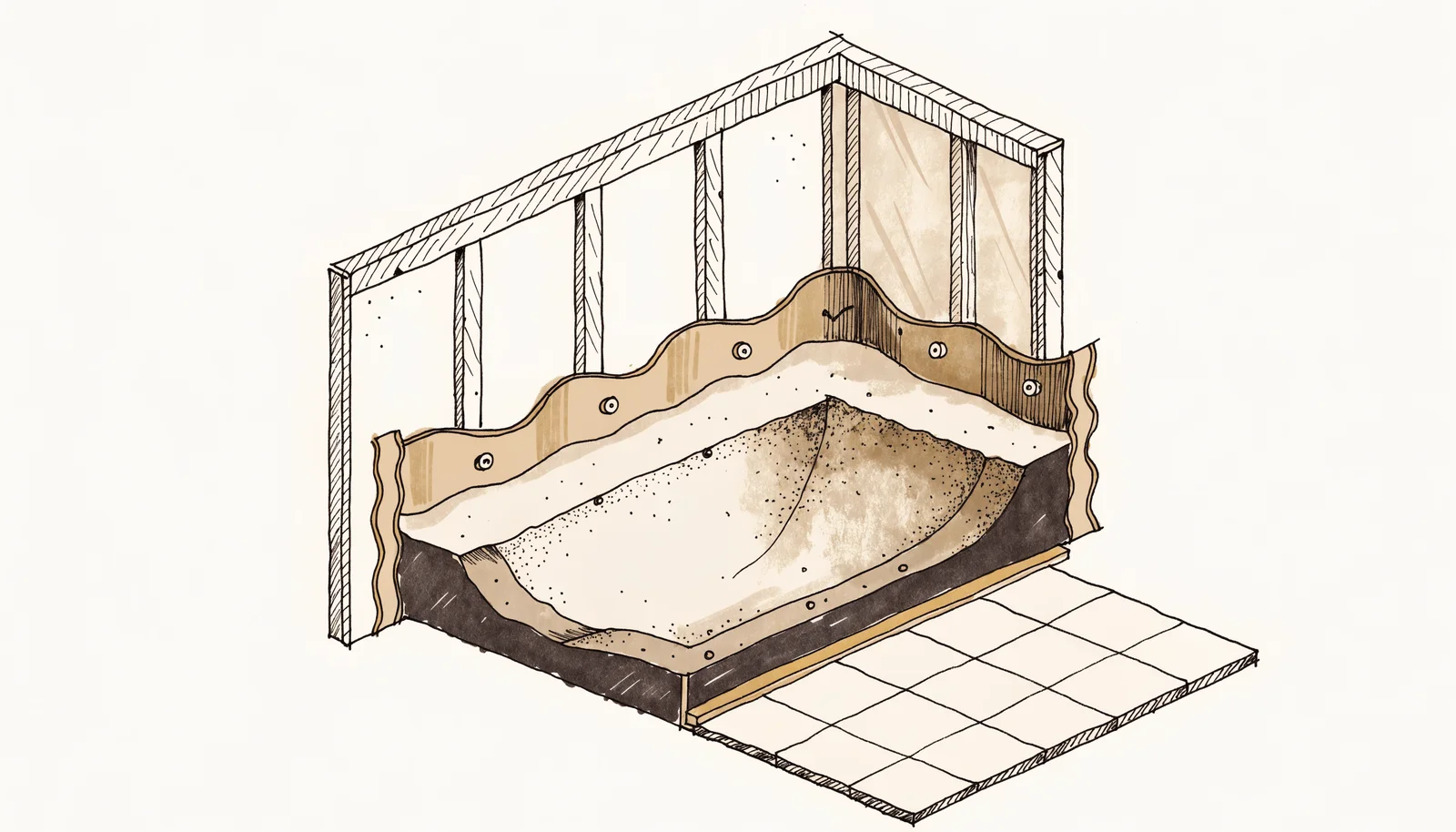
Tile is where most homeowners spend their decision energy, and it is where two of the seven mistakes live. The first is chasing the trend. A bold pattern is a strong flavor: striking in a photograph, polarizing in year four, and installed on the most expensive-to-change surface in the room. The durable move is the one designers keep coming back to. Keep the waterproofed, tiled surfaces calm and long-lived, and express the trend in the things you can swap in an afternoon: paint, lighting, hardware, textiles, the mirror.
The second is ignoring what the tile asks of you afterward. Grout is the honest part of a tile wall. More lines mean more cleaning, and lighter grout shows more of everything. A large-format tile with tight lines and a darker grout is a fundamentally different ownership experience than a small mosaic with bright white joints, even at the same budget. Neither choice is wrong. Making it by accident is the mistake.
Not sure which of these applies to your house? A short conversation settles it faster than any calculator.
Plan the Niche and the Blocking Before the Wall Closes
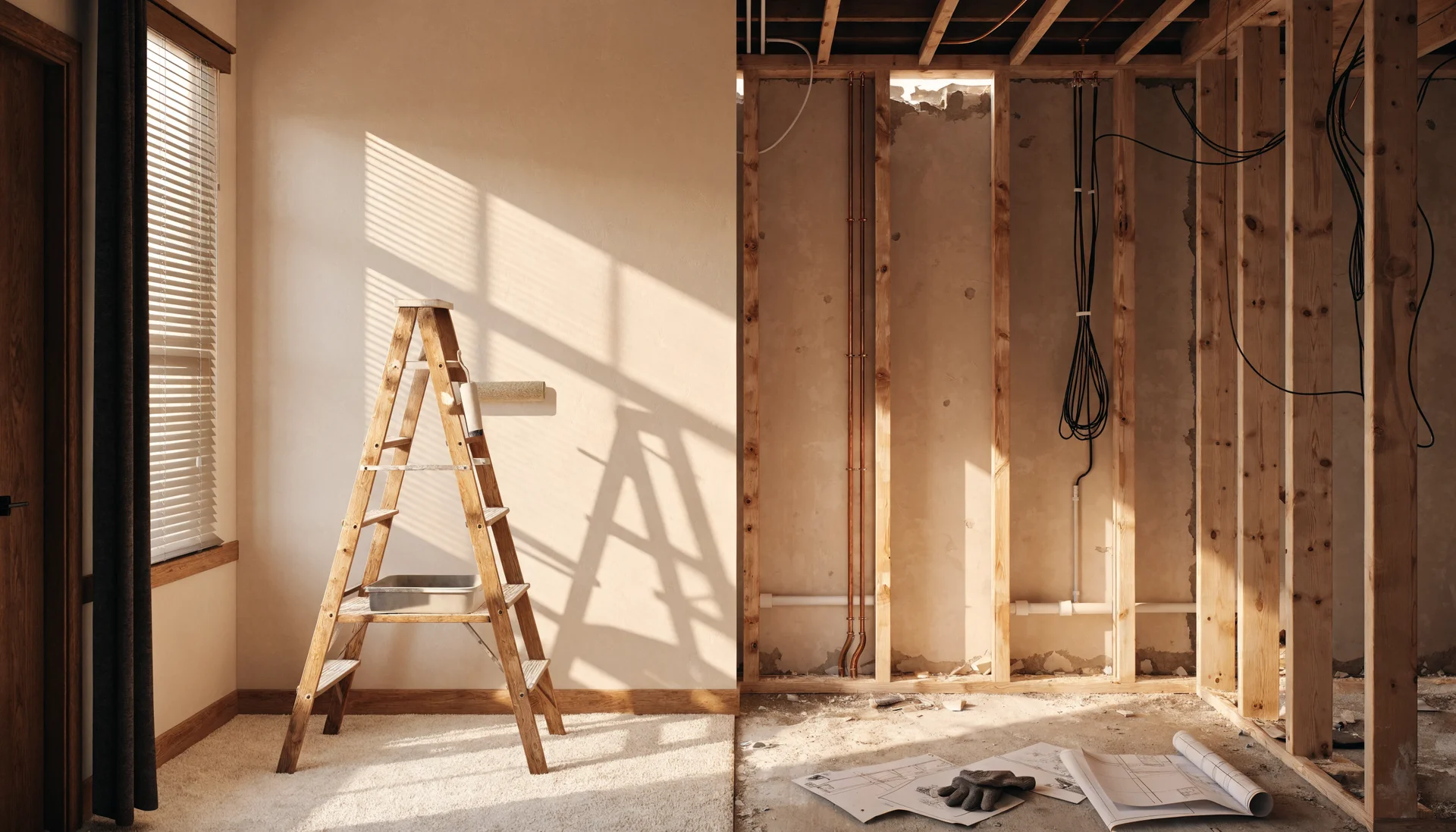
Some of the least glamorous lines on a bathroom plan are the ones that separate a finished-feeling remodel from a compromised one: the shower niche, the bench, the blocking for a grab bar you may want in fifteen years, the backing for a floating vanity or a heavy mirror. All of them are framing decisions. All of them have to exist inside the wall before the waterproofing and tile seal it shut.
This is why the design phase matters more than the demolition phase. On our own projects the drain and niche placement are specified at the design stage, before permits are pulled, precisely so that nothing structural is being invented while the tile setter waits. Our DFW bathroom remodel planning guide lays out the full decision sequence. If you take one thing from it, take this: anything that lives inside the wall gets decided first.
Why Buying Fixtures First Backfires
The fixture-first mistake deserves its own section because it feels so much like progress. A tub on clearance, a vanity that matches the inspiration photo, a shower system ordered early to beat a lead time: each purchase feels like momentum. But fixtures are dimensioned objects that connect to rough-in plumbing at exact points. When they arrive before the layout exists, the layout is designed around them, and the costs surface as clearance problems, awkward door swings, a drain that lands where the joist runs, or a return shipment with a restocking fee.
The professional order is the reverse: layout first, then fixture selection to fit it, then rough-in built to the selected fixtures’ specifications. Selections still happen early (on our Plano projects, design and selections run four to six weeks before construction), but they happen inside a plan, not ahead of one.
The Most Expensive Part: Moving the Wet Wall
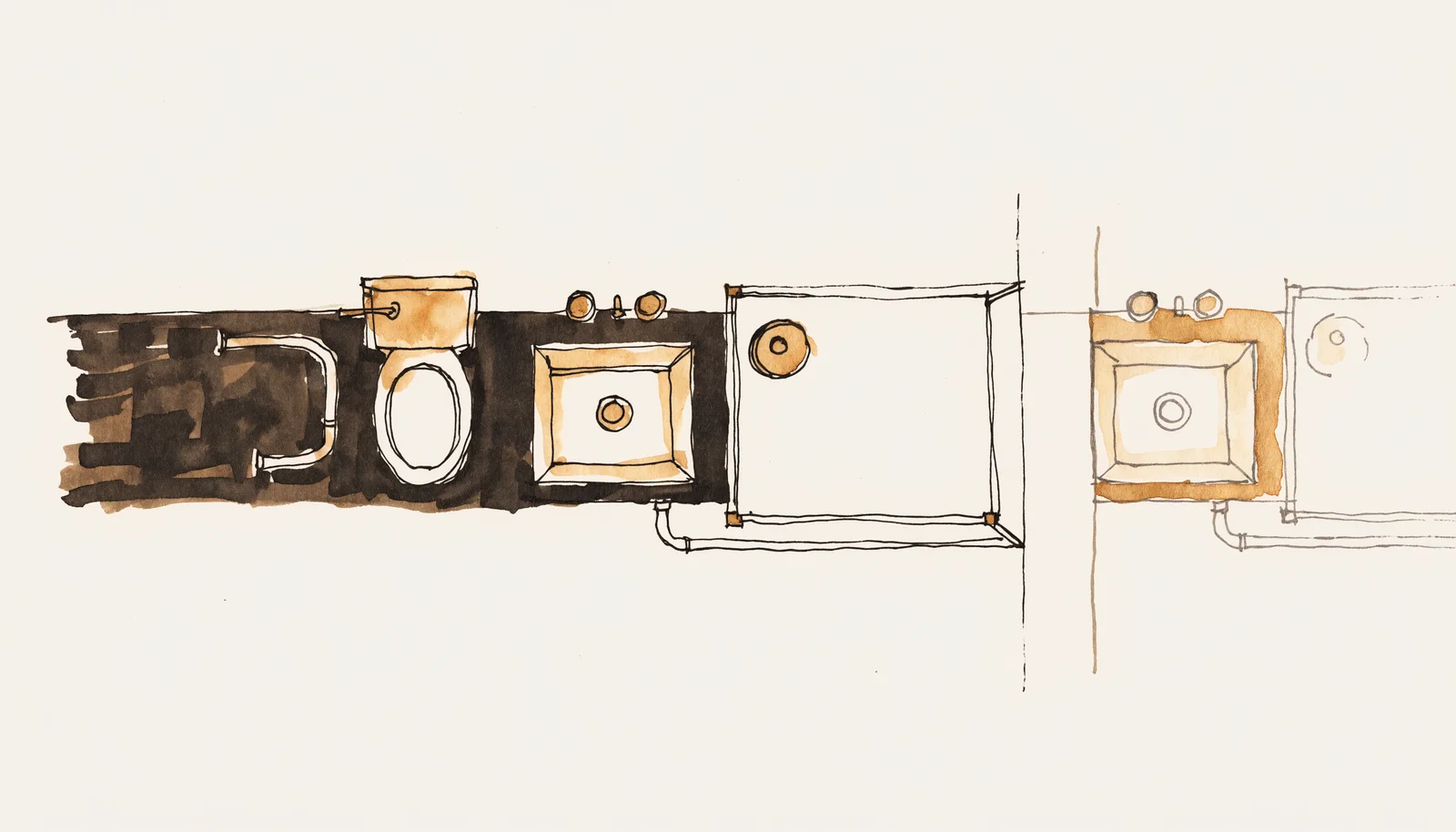
Ask what the most expensive part of a bathroom remodel is and the answer in this market is consistent: labor and plumbing, and above all, plumbing you relocate. Slab foundations are common across DFW, which means moving a toilet, sink or shower drain is not a matter of rerouting pipe in a crawlspace; it means cutting concrete. On a slab, relocating a fixture adds $2,000–$8,000 per fixture, and keeping the toilet, sink and shower where they stand typically saves $3,000–$6,000 on a Plano project.
That does not make wet-wall moves a mistake. Some layouts are genuinely worth it: reclaiming an unused garden-tub footprint for a walk-in shower often is. The mistake is making the move unknowingly: falling in love with a floor plan without ever seeing the line item it creates. Price the move and the keep-it-in-place version side by side, then decide. The full breakdown of where bathroom money goes is in our Dallas bathroom remodel cost guide.
A bathroom remodel with us runs $8,000–$60,000 depending on size, scope and finish tier: small guest baths at $8,000–$14,000, full primary-bath guts with relocated plumbing at the top of the range. If your number is near the floor, our guide on whether $10,000 is enough for a bathroom remodel in DFW shows what that budget honestly buys.
Tell us what you are planning. We will walk your house, tell you what is actually possible, and put a real number on it before you commit to anything.
Or read the numbers first: bathroom remodeling in Plano, TX.
In What Order Should You Renovate a Bathroom?
Every mistake above is prevented by the same thing: the right sequence. Here is the order a well-run bathroom remodel actually follows, and where each of the seven mistakes gets caught.
Layout and scope first
Settle the floor plan, including whether any fixture moves and what that costs, before buying anything. This is where the wet-wall decision and the fixture-first mistake are both caught, while they are still free.
Selections inside the plan
Choose tile, fixtures, vanity and finishes to fit the layout, with maintenance realities on the table next to the samples. Trend-chasing and grout regret get filtered here.
Permits, demo and rough-in
Permits pulled, demolition done, plumbing and electrical roughed in to the exact fixtures selected. Niche, bench and blocking are framed now. This is the last chance to add them cheaply.
Waterproofing, then tile
The membrane system goes in and gets checked before tile covers it. Ventilation is ducted and sized to the room, not to the old opening.
Fixtures, punch list, walkthrough
Fixtures installed to their rough-ins, every fixture water-tested, and a walkthrough that confirms quality rather than discovers problems.
Sequence is also the honest answer to the timeline question: a typical bathroom build runs six to ten weeks on our Plano projects, with design and selections running four to six weeks before that. A remodel that skips the front weeks does not finish earlier; it moves the decisions into the build, where they cost more and hold up trades.
How to Avoid All Seven on Your Own Project
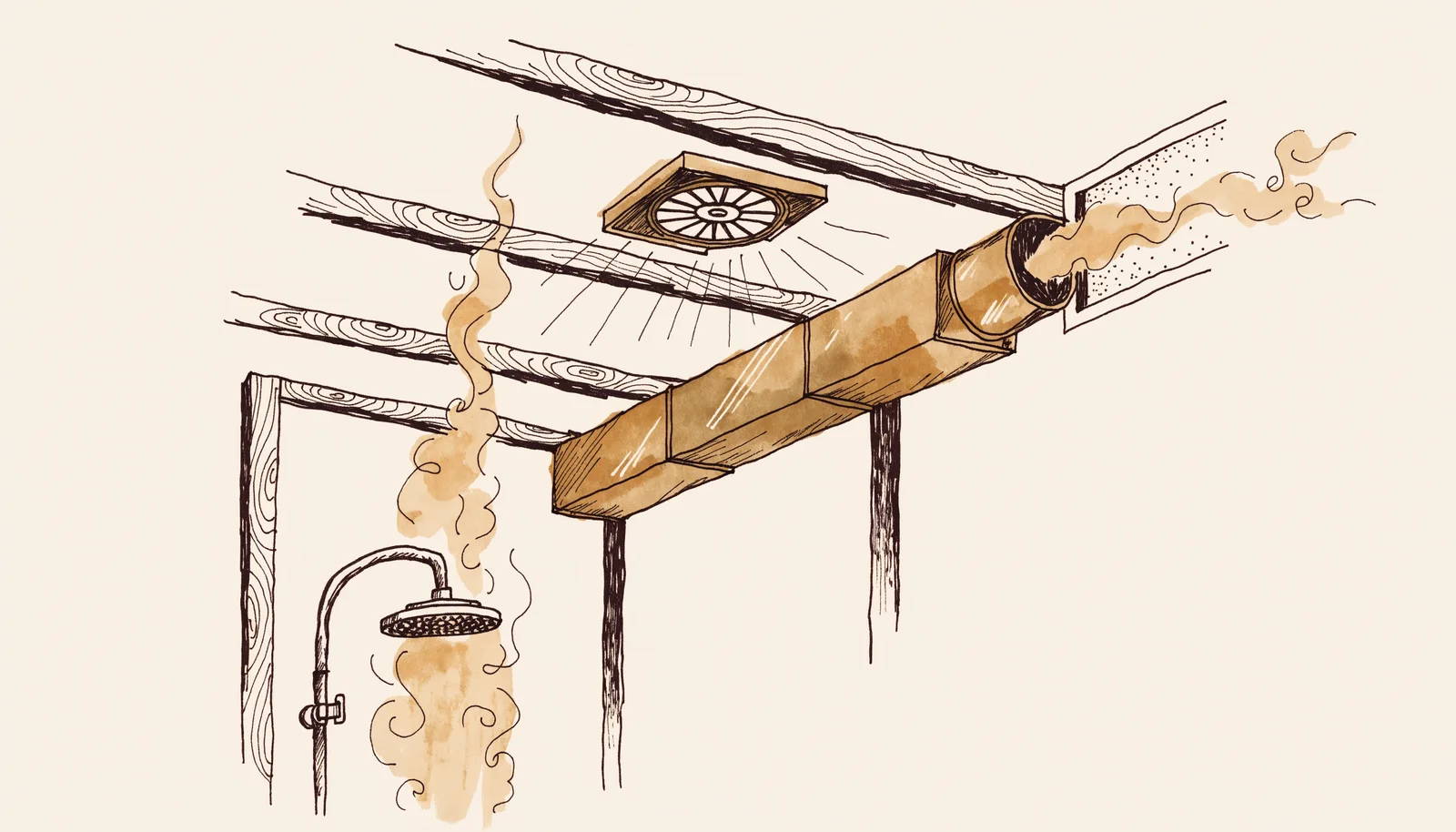
Reading a mistakes list is easy; the useful step is turning it into questions you ask before signing. How will the shower be waterproofed, and who inspects it before tile? What size exhaust fan is specified, and where does it duct? Where are the niche and blocking on the plan? What does the layout cost if the plumbing stays put, and what does the move add? A contractor with a real process answers all of these from the plan, because the plan is where those answers were settled.
That is how we build them. Every project carries a fixed price agreed before demolition, a 1-year workmanship warranty, and a payment schedule that starts with a deposit sized to the project and then tracks construction milestones. That way the plan, not the change order, is where the money is decided. If you are weighing a project anywhere in the DFW area, start with our Plano bathroom remodeling page to see how the design-first sequence works in practice, and bring us the layout question before you buy the first fixture.
Questions we get
What to avoid when renovating a bathroom?
Avoid the seven recurring mistakes: skipping or skimping on shower waterproofing, undersizing the exhaust fan, chasing trend tile on permanent surfaces, failing to plan the niche and in-wall blocking before the walls close, buying fixtures before the layout is settled, moving the wet wall without pricing it first, and ignoring the grout and maintenance realities of the tile you choose. Nearly all of them are sequence errors (decisions made in the wrong order), and all are cheapest to prevent before demolition begins.
What is the most expensive part of a bathroom remodel?
Labor and plumbing, and especially relocated plumbing. On the slab foundations common across DFW, moving a toilet, sink or shower drain means cutting concrete, which adds $2,000–$8,000 per relocated fixture. Keeping the fixtures on the existing wet wall typically saves $3,000–$6,000. A layout change can still be worth it. The point is to price both versions before choosing, not after demolition.
In what order should I renovate a bathroom?
Layout and scope first, then selections chosen to fit that layout, then permits, demolition and rough-in, then waterproofing followed by tile, and finally fixture installation, water-testing and a walkthrough. The order matters because everything inside the wall (plumbing, blocking, niche framing, the waterproofing membrane) must be decided and inspected before tile seals it shut.
What is a realistic budget for a bathroom remodel?
In our DFW market, bathroom remodels run $8,000 to $60,000. Small guest-bath refreshes sit near $8,000–$14,000, mid-range remodels land in the middle of the span, and a full primary-bath gut with a curbless shower, new tile and relocated plumbing reaches the upper range. The two biggest swings inside that span are whether any plumbing moves and the finish tier of the tile and fixtures.
Can I renovate a bathroom for $10,000?
Yes, if the scope is honest about what $10,000 buys: a small bathroom, fixtures kept in their existing locations, and mid-grade finishes. Small guest baths in our market run $8,000–$14,000, so $10,000 sits inside that band. What it does not buy is relocated plumbing or a layout change: on a slab foundation, a single moved fixture can consume most of the margin on its own.
Seven mistakes, one cause: sequence. Settle the layout before buying fixtures, frame the niche and blocking before the walls close, waterproof before tile, size the fan to the room, and price a wet-wall move before committing to it. A bathroom planned in that order gets built once; the other kind gets built one and a half times.
Related from the journal
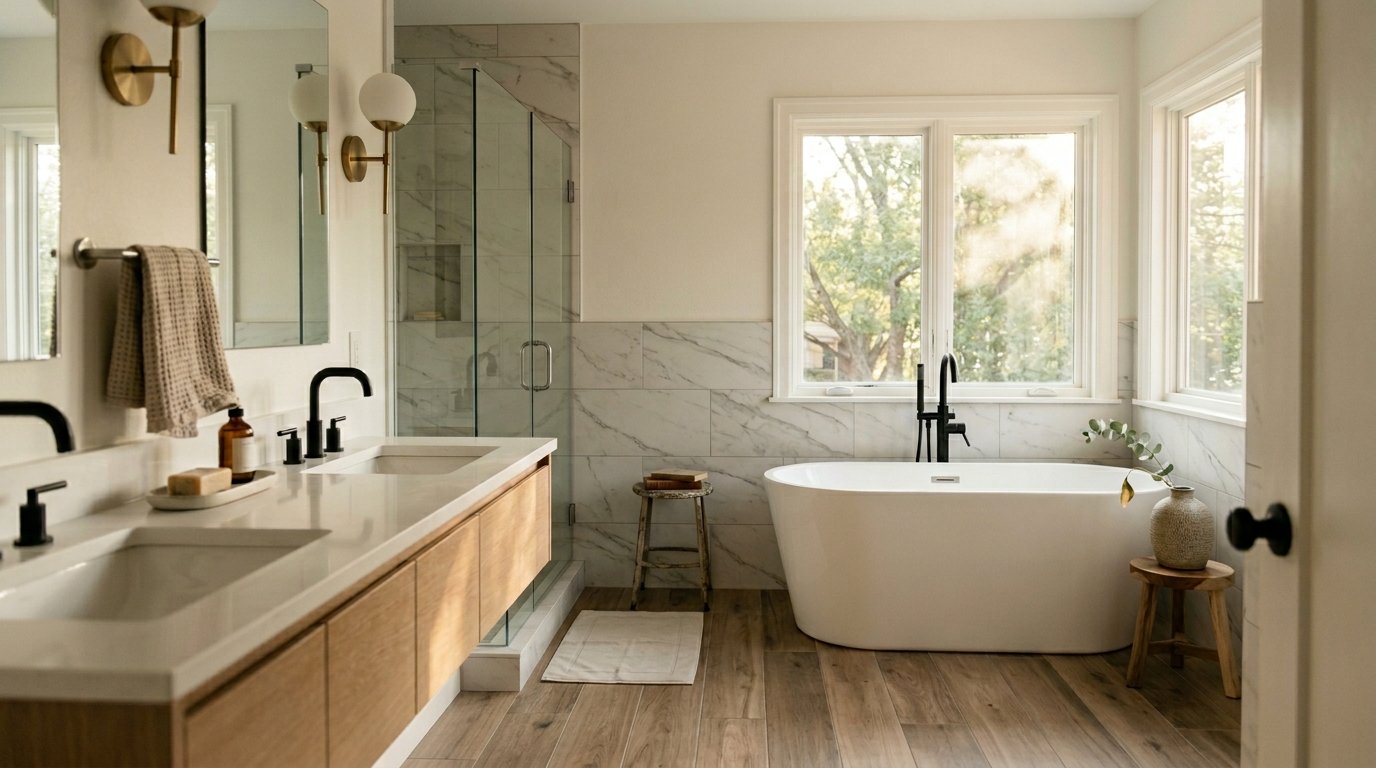
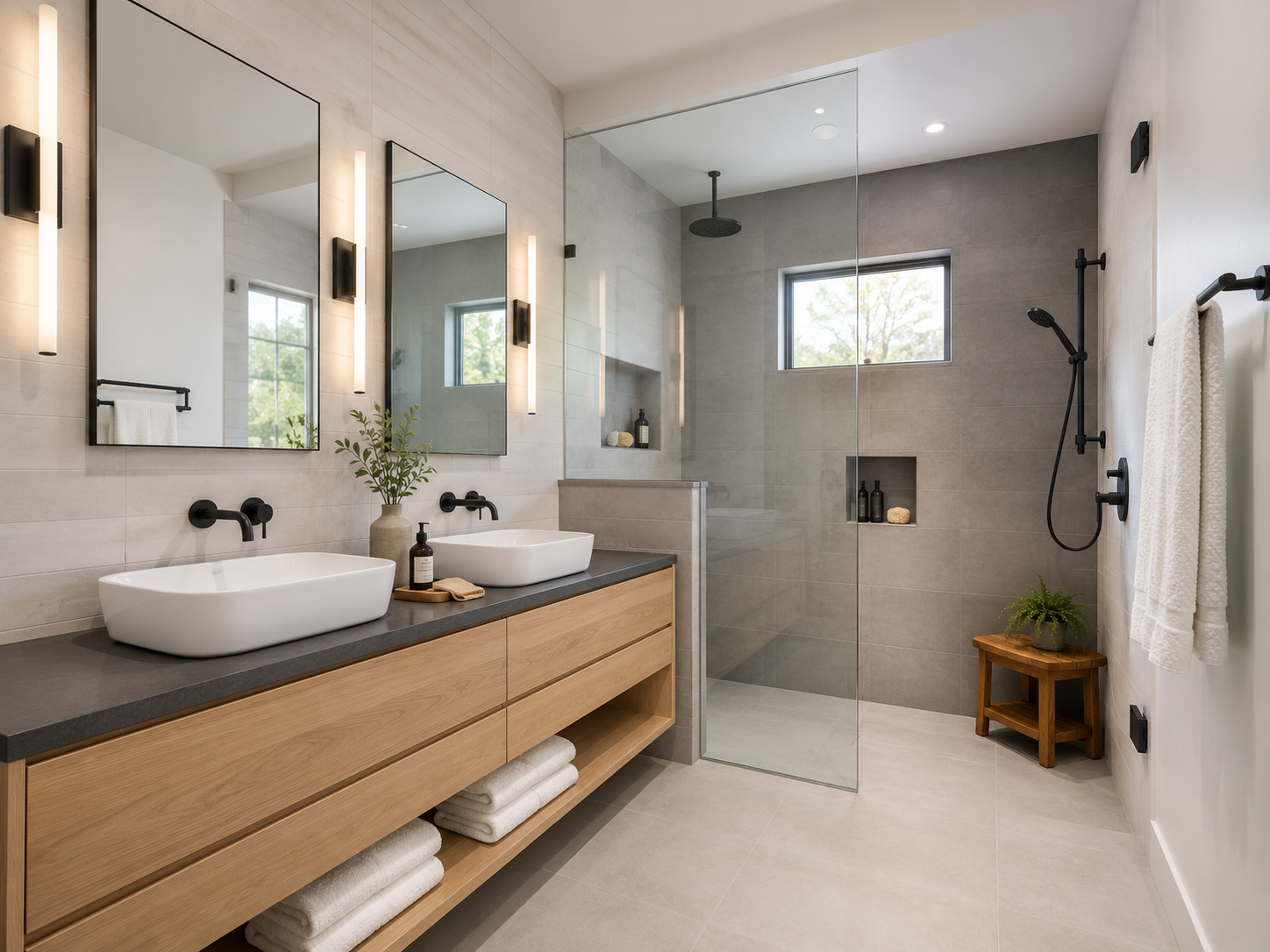

Plan the bathroom once, build it once with a fixed-price plan for your DFW bathroom.
Fully insured · 500+ client reviews · fixed-price contracts · 1-year workmanship warranty.
Prefer to talk? (469) 850-7087 · or use the contact page.