

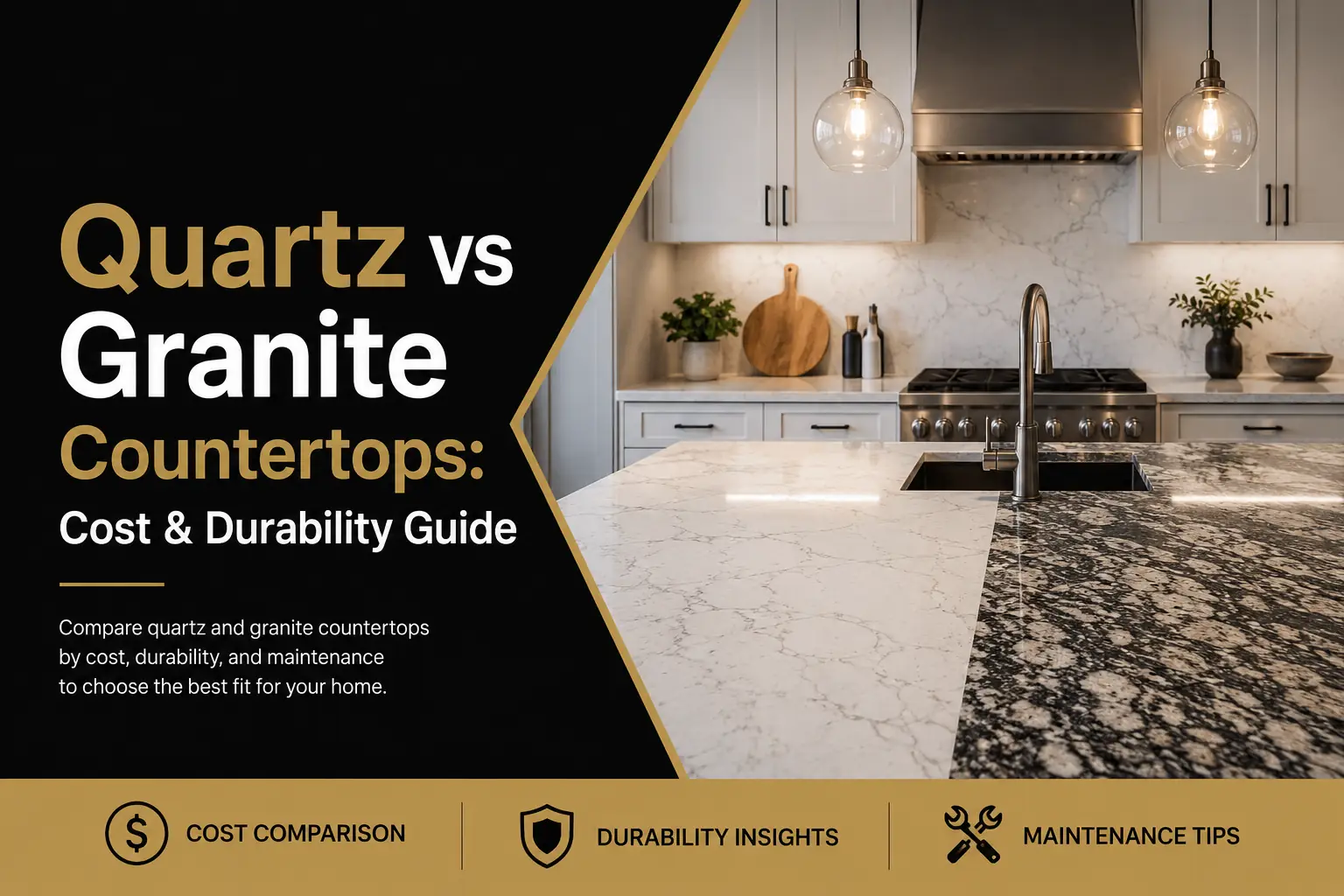
Quartz vs Granite Countertops Comparison: Durability, Maintenance, and Cost Guide for Modern Homes
Quartz is engineered, non-porous and never needs sealing; granite is natural, one-of-a-kind and handles heat better. Here is how the two compare on durability, upkeep and installed cost per square foot, and why the installer matters as much as the slab.
Every kitchen countertop renovation reaches the same fork: quartz or granite. Both are premium surfaces, both last decades with proper care, and they perform differently enough under daily use that the wrong pick shows up in everyday cooking and cleaning. This quartz vs granite countertops comparison covers the real differences in durability, maintenance, and cost so you can choose the right countertop material before spending thousands on new surfaces, in a kitchen, a bathroom, a resale upgrade, or a luxury renovation.
Quartz for low upkeep and stain resistance; granite for heat and one-of-a-kind stone.
Quartz is engineered, non-porous and never needs sealing, which makes it the usual pick for busy households and bathrooms. Granite is natural stone, takes heat better and needs periodic sealing. Installed, quartz runs $60-$120 per square foot and granite $50-$150, and the quality of the installation decides whether either one lasts.
At UHS Remodeling, the question we hear most often is which of the two performs better in a busy household. The honest answer depends on how you cook, how much upkeep you will tolerate, the look you are after, and what you can spend. If the countertops are one line in a larger project, our guide to kitchen resale ROI explains how premium countertop upgrades add value to your home, and our kitchen remodeling in Plano, TX page shows what a full kitchen project involves.
What granite and quartz countertops actually are
Before comparing performance and countertop cost, it helps to know what each surface is made of, because almost every difference downstream traces back to that.
Granite countertops
Granite is natural stone, extracted from quarries around the world. Large slabs are cut, polished, fabricated, and installed for each specific project. Because it is a natural material, every slab carries its own patterns, veining, mineral deposits, and color variation. No two are alike.
- Completely natural stone surface
- Distinctive colors and patterns
- Excellent heat resistance
- Each slab is one-of-a-kind
- Requires periodic sealing
Quartz countertops
Quartz is an engineered surface: crushed quartz minerals bound with resins and pigments. Unlike granite, it is non-porous and highly consistent from slab to slab, which is why so many homeowners pick it for high-quality performance with less upkeep.
- Engineered countertop material
- Low-maintenance surface
- Wide range of colors and patterns
- Consistent appearance
- Highly stain resistant
Quartz vs granite countertops, side by side
Here is the comparison at a glance, quartz first and granite second on every line.
- Material type: engineered stone versus natural stone.
- Appearance: uniform patterns versus unique patterns.
- Maintenance: low maintenance versus periodic sealing.
- Heat resistance: moderate versus excellent.
- Stain resistance: very high versus moderate with sealing.
- Scratch resistance: high on both.
- Average countertop cost: $60-$120 per square foot installed versus $50-$150 per square foot installed.
- Natural variation: minimal versus significant.
- Best for: busy households versus a luxury natural-stone look.
Two of those lines do most of the deciding: maintenance and heat resistance. Scratch resistance is a draw, and the two cost ranges overlap. The rest of this guide is largely about what those two lines mean once the counters are in and being used, and about the part of the decision the table cannot show, which is who fabricates and installs the slab.
Durability: which is better, granite or quartz?
Durability is usually the deciding factor, and the answer is not one-sided. Both are premium surfaces. They simply resist different things and fail in different ways.
Where quartz wins
- Non-porous construction resists stains
- Less likely to harbor bacteria
- Minimal maintenance requirements
- Strong resistance to scratches
- Well suited to active families
Quartz is particularly popular in modern kitchen countertop renovations because it pairs durability with easy cleanup. Families with children lean toward it for a plain reason: spills wipe up quickly and there is no sealer schedule to remember.
Where granite wins
- Exceptional heat resistance
- Natural beauty that lasts decades
- Strong resistance to chips and scratches
- Well suited to serious cooking environments
- High-end luxury appearance
Granite still wins the premium-appearance argument for many homeowners, because natural stone carries authentic movement and mineral depth that a manufactured pattern cannot fully duplicate.
One caution applies to both. Quartz is highly durable, but improper installation or a heavy impact can still crack it, and granite can chip or stain when it is neglected. With proper care, both materials last several decades, and they last longest when they are professionally fabricated and installed with correct structural support and sealing.
I ask how a family cooks and how they clean before I show them a single slab. The surface that fits the household beats the surface that photographs best, every time.
Not sure which of these applies to your house? A short conversation settles it faster than any calculator.
Quartz vs granite cost: what homeowners should expect
Whether granite costs more than quartz depends on slab quality, rarity, edge profiles, fabrication complexity, and installation requirements, which is why the two price ranges overlap so heavily.
Cost breakdown
Quartz vs granite cost typically runs between $50 and $150 per square foot installed. Exotic granite usually costs more than standard quartz, but premium designer quartz can exceed many granite selections.
- Entry-level quartz: $60-$80 per square foot installed
- Luxury quartz: $90-$120+ per square foot installed
- Standard granite: $50-$90 per square foot installed
- Exotic granite: $100-$150+ per square foot installed
What moves the final number
- Cutouts for sinks and cooktops
- Custom edge profiles
- Backsplash integration
- Demolition of old surfaces
- Kitchen or bathroom layout complexity
The per-square-foot figure is the start of the estimate, not the end of it. Granite pricing also moves with slab thickness and fabrication requirements, which is why a standard granite can come in under a premium quartz while an exotic slab lands well above an engineered option with simpler installation needs. Ask for the installed number, with the cutouts and edges priced in, before comparing the two. If you are budgeting a larger remodel, this article on renovation pricing explains where countertop upgrades sit inside overall remodeling expenses.
Maintenance and cleaning: sealing, soap, and what to keep away
Maintenance is where many homeowners start leaning toward quartz, and it is worth being precise about why.
Quartz maintenance
Very little. Because the material is non-porous, it does not require sealing. Cleaning is mild soap and water.
Granite maintenance
Granite requires sealing to protect against moisture and staining. Depending on the slab and how hard the household uses it, that may mean annually or every few years. The stone is porous, so oils, wine, and acidic substances can penetrate it once the sealer wears thin. Skip the sealing, and the stone starts to show it:
- Oil stains
- Water absorption
- Bacterial buildup
- Discoloration
- Reduced long-term performance
Routine sealing and professional maintenance keep granite from discoloring or taking on moisture; the sealing simply has to happen on schedule. There is a health angle too. The EPA indoor air quality guide notes that clean, properly sealed household surfaces contribute to a healthier indoor environment.
Cleaners that damage both surfaces
Aggressive chemicals can permanently damage granite and quartz alike. Keep these off either surface:
- Bleach-based cleaners
- Acidic solutions
- Ammonia-heavy products
- Abrasive scrubbers
- Industrial degreasers
Over time they weaken sealers, dull finishes, discolor quartz resins, and damage polished surfaces. The Natural Stone Institute cleaning guide recommends pH-neutral products made for natural stone and engineered countertop surfaces. On quartz, day-to-day cleaning is mild soap and water; on granite, the sealer does the protecting and the cleaner must not strip it.
DIY countertop installation: why it so often fails
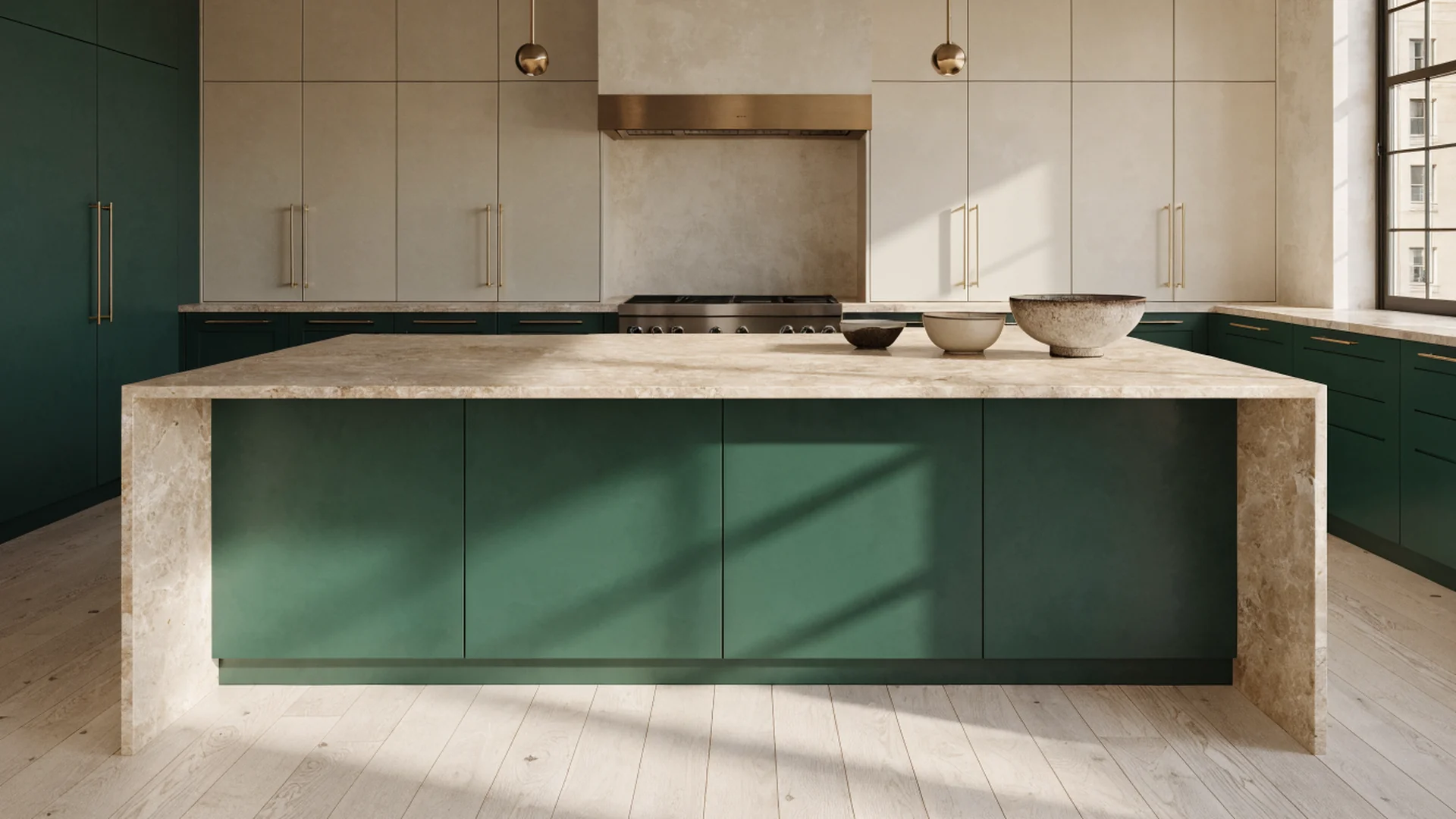
Plenty of homeowners research DIY countertop installation hoping to save on labor. Online videos make it look simple. Professional fabrication and installation involve specialized tools, structural knowledge, and precision measurements, and the gap between the video and the job is where slabs get ruined.
What homeowners usually attempt
- Self-measuring countertops
- Installing prefabricated slabs
- Cutting sink openings
- Applying sealers independently
- Replacing backsplashes
DIY can work for small cosmetic projects. Countertop installation is a different category, because once a granite slab or a quartz counter is cut incorrectly, the correction is extremely expensive. There is no trimming a cutout back, and there is no un-cracking a slab that was carried in wrong.
How a professional install actually runs
Professional countertop teams fabricate and install with laser measurements, industrial cutting equipment, reinforced supports, and precision leveling systems. Most homeowners underestimate how much of that sequence is technical:
Demolition of the old surfaces
The existing counters come out. Demolition is its own line in the estimate, not something folded into the slab price.
Laser measurement
The tops are measured with laser equipment rather than a tape, so sink and cooktop cutouts and seams land where they should.
Fabrication
Slabs are cut on industrial equipment, with the cutouts, custom edge profiles, and any backsplash integration handled before the stone arrives at the house.
Supports and leveling
Reinforced supports go in where the slab needs them, and precision leveling sets each piece so seams align and nothing sits uneven.
Sealing
Granite gets its sealer applied properly at the end. Quartz needs none.
What goes wrong when it is done by hand
Cracked slabs during transport
The stone breaks on the way in, and a slab costing thousands of dollars is gone before it is ever set.
Improper seam alignment
A seam that does not meet cleanly is visible for the life of the counter.
Cabinet support failure
Engineered surfaces need strong cabinet support. Without it the cabinets shift and the slab above them takes the structural stress.
Uneven installation
Without accurate leveling the surface sits out of true, and the stone carries that stress over time.
Incorrect sink cutouts
A cutout in the wrong place or at the wrong size ruins the slab it was cut from.
Poor sealing application
Granite sealed badly is granite that stains, absorbs water, and discolors.
One mistake can ruin an entire slab costing thousands of dollars, and with natural stone the replacement may never match the original colors and patterns.
Research published by Utah State University Extension makes a related point: countertop material selection should weigh durability, maintenance expectations, and long-term household functionality, not appearance alone. The same logic applies to who installs it.
Signs you need professional countertop remodeling
Some countertop problems are cosmetic. These are not, and they are the point at which to call an experienced remodeler rather than reach for a cleaner or a sealer kit:
- Cracked countertops
- Loose or separating seams
- Cabinet shifting beneath counters
- Persistent staining
- Water damage near sinks
- Outdated kitchen countertop layouts
- Poorly installed previous surfaces
Countertop replacement is often one piece of a larger remodel. If the whole kitchen feels dated, these kitchen trends are a useful starting point for a more cohesive plan, and our Plano kitchen remodeling page lays out how a full project runs from layout to finish.
Tell us what you are planning. We will walk your house, tell you what is actually possible, and put a real number on it before you commit to anything.
Or read the numbers first: kitchen remodeling in Plano, TX.
Which surface for which space
Kitchens
Quartz is usually the pick for busy kitchens because it resists staining and asks for less maintenance. Granite keeps its following among homeowners who put natural beauty and heat resistance first, and who cook seriously enough to use that heat resistance. A household with children and a household that cooks on high heat every night are asking the counter for different things, and the table above answers each of them differently.
Bathrooms
Quartz generally performs better in bathrooms because it stands up to moisture and humidity more effectively.
Luxury homes
Both add value to your home. Luxury buyers, though, tend to prize the uniqueness of natural stone: the dramatic veining and rare mineral movement that no engineered slab repeats.
Resale
Professionally installed, either surface helps at sale. Quartz appeals to buyers who want a low-maintenance kitchen they never have to seal; granite draws the buyer who appreciates natural stone and a pattern that exists nowhere else. In both cases the added value depends on the installation being done professionally, which is why the fabricator belongs in the resale calculation alongside the slab.
How UHS Remodeling approaches a countertop project
At UHS Remodeling, every countertop project is planned around long-term performance rather than rushed production. Functionality, precision installation, and material quality come before speed, which is why homeowners trust the team with surfaces they will live on for decades.
- Professional fabrication and installation
- Premium, high-quality materials
- Guidance on choosing between quartz and granite
- Accurate measurements and planning
- Customized kitchen or bathroom remodeling solutions
- Transparent project communication
- A long-term durability focus
Because installation affects durability, appearance, and home value as much as the material does, the fabricator matters as much as the stone. Quartz gives you convenience and consistency; granite gives you natural-stone beauty and heat resistance. Pick by lifestyle, maintenance preferences, cooking habits, and design goals, then have it fabricated and set by people who do it for a living. If the countertops are the first move in a bigger renovation, our guide to renovation planning covers the preparation that should happen before construction starts, and our kitchen remodeling service in Plano is where a countertop question usually turns into a full kitchen plan.
Questions we get
Is quartz better than granite for busy kitchens?
Quartz countertops are often better for busy households because they resist stains, require less maintenance, and do not need sealing. Granite countertops offer stronger heat resistance and natural beauty, but they require ongoing care to maintain long-term performance and appearance.
Which is better granite or quartz for resale value?
Both granite and quartz countertops can add value to your home when professionally installed. Quartz appeals to buyers seeking low maintenance surfaces, while granite attracts homeowners who appreciate natural stone and unique patterns in luxury kitchen countertop designs.
Is granite more expensive than quartz?
The cost of granite depends on rarity, slab thickness, and fabrication requirements. Standard granite may cost less than premium quartz, while exotic granite slabs can become significantly more expensive than engineered quartz countertop options with simpler installation requirements.
What is the difference between quartz and granite countertops?
Granite countertops are made from natural stone cut directly from quarries, while quartz countertops are engineered using crushed minerals and resins. Granite offers natural variation and heat resistance, whereas quartz provides consistency, stain resistance, and lower maintenance requirements.
Do quartz countertops crack easily?
Quartz counters are highly durable, but improper installation or heavy impact can still cause cracking. Professional installation is essential because engineered surfaces require strong cabinet support, accurate leveling, and proper seam placement to avoid structural stress over time.
Can granite countertops stain permanently?
Yes, granite countertops can stain if they are not properly sealed. Oils, wine, and acidic substances may penetrate porous natural stone surfaces. Routine sealing and professional maintenance help protect granite slabs from discoloration and moisture-related damage.
How long do quartz and granite countertops last?
Both materials can last several decades with proper care. Granite and quartz comparison studies consistently show strong long-term durability, especially when surfaces are professionally fabricated and installs are completed using correct structural support and sealing techniques.
Both surfaces last decades when they are fabricated and installed properly. Choose quartz for convenience and consistency, granite for natural-stone beauty and heat resistance, and keep bleach, acid and ammonia away from both. Then spend as much care on who sets the slab as on which slab it is.
Related from the journal

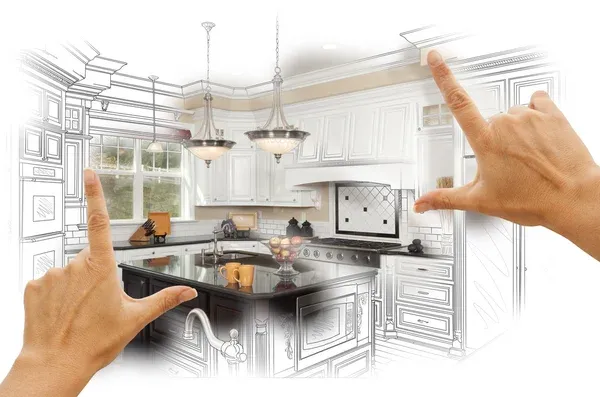
Choose the slab with the people who will set it quartz or granite, fabricated and installed right.
Fully insured · 500+ client reviews · fixed-price contracts · 1-year workmanship warranty.
Prefer to talk? (469) 850-7087 · or use the contact page.