
Drywall vs Plaster Cost Remodeling 2026: Which Is Cheaper & Better for Your Home?
Drywall is cheaper and faster; plaster lasts longer and costs far more per square foot. Here is where the gap comes from, when each one makes sense, and why DIY on either tends to end with a call to a pro.
Drywall or plaster is one of the first decisions in a remodel that touches every room, and it is a cost decision before it is a design one. The choice sets what you pay for walls and ceilings, how long those surfaces last, and what they cost to fix later. At UHS Remodeling we walk homeowners through it early, because choosing wrong means paying for corrections after the paint is already on.
Drywall is cheaper. Plaster is tougher, slower and costs more.
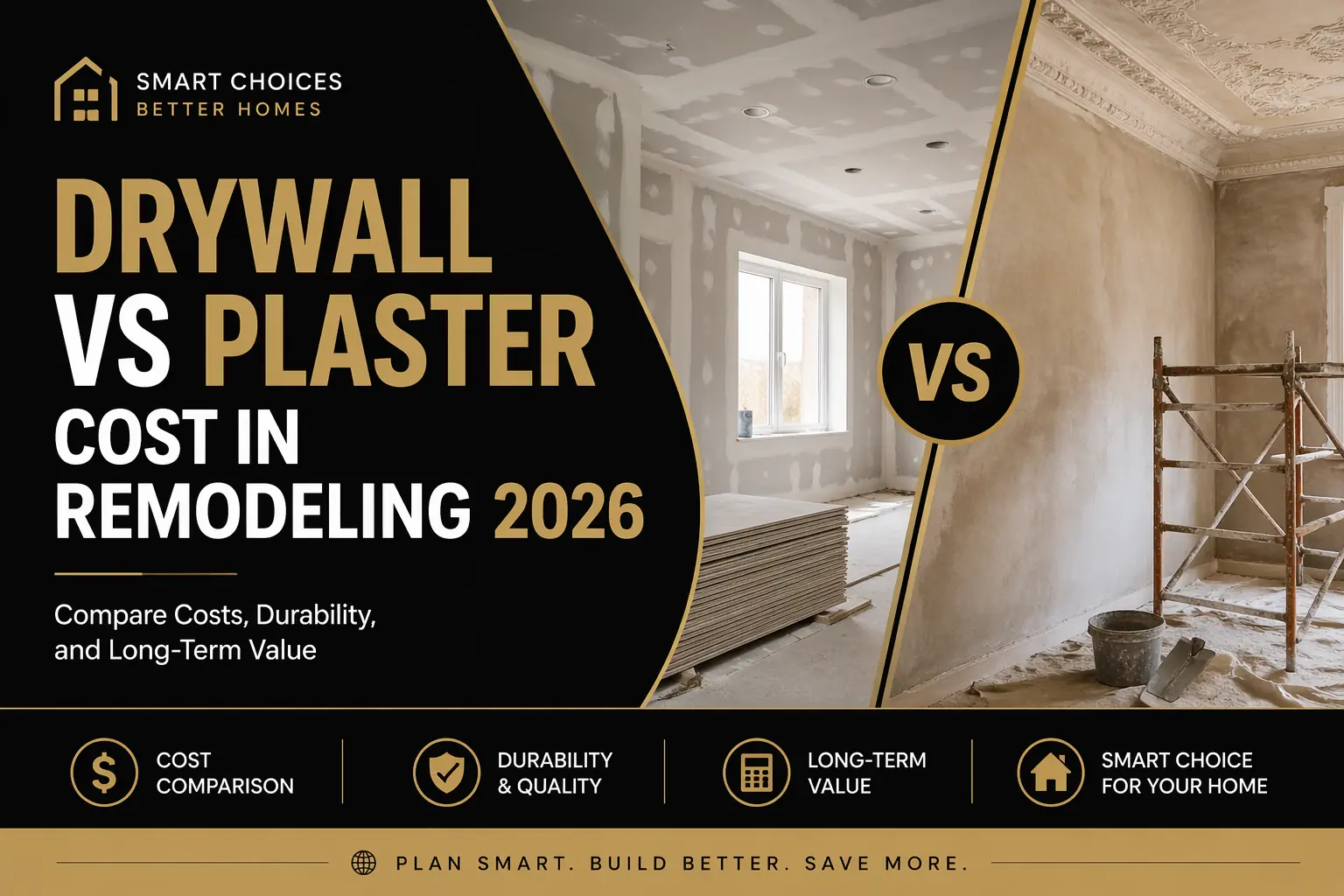
Drywall runs $1.50 to $3 per square foot against $6 to $15 for plaster, and most of that gap is labor and drying time. Drywall is the right call for most remodels; plaster earns its price on high-end or historic homes where the finish and the durability justify it.
Where the cost gap comes from
The difference starts with the material and with how it goes on the wall. Drywall is prefabricated board attached to the wall studs, then finished with joint compound over the seams. Plaster is built up in place: multiple layers of a sand-and-water mix applied over lath, each one drying before the next goes on.
Material cost is only part of the story. Labor is where plaster pulls away, because plastering takes skill, time and several drying stages, while a drywall crew hangs and tapes a room fast. There is also a comfort angle that rarely makes it into the estimate: the EPA indoor air quality guide points out that building materials can also affect long-term indoor comfort, which is one more thing to weigh alongside the price per square foot.
Board and plaster mix both cost money, but the distance between the two finishes is mostly skilled hours and drying time.
Drywall vs plaster, factor by factor
Here is how the two compare on the factors that decide both the price and what it is like to live with the walls afterward.
- Material cost: drywall low, plaster high.
- Labor cost: drywall moderate, plaster very high.
- Cost per square foot: drywall $1.50 to $3, plaster $6 to $15.
- Installation time: drywall fast, plaster slow.
- Durability: drywall moderate, plaster high.
- Repair ease: drywall repair is easy, plaster repair is difficult.
- Fire-rated options: available for drywall; plaster has excellent natural fire resistance.
Read the per-square-foot line together with the repair line. Drywall costs less going in and less to patch. Plaster costs more going in, holds up better, and costs more again on the day it finally needs a repair. When we price walls and ceilings inside a larger home remodeling project in Plano, TX, that per-square-foot line is what moves the estimate more than anything else in the room.
Pricing reviewed June 2026 by the UHS Remodeling team.
Why drywall wins more often in Texas
In Texas, drywall is the more affordable choice because labor costs are lower and installation is faster. Plaster is usually reserved for high-end or historic properties, where the look and the durability justify the higher investment. That is not a knock on plaster; it is a description of where the extra money buys something you can see.
What about ceilings?
For ceilings, drywall is the common choice because it is lighter and easier to install overhead. Plaster ceilings look the part, but they need more maintenance and skilled labor to install and repair properly.
Is sheetrock the same thing as drywall?
Sheetrock is a type of drywall, so anything said about drywall here applies to it. Plaster is the traditional method applied in layers. Sheetrock goes up quicker; plaster gives a premium, durable finish with better soundproofing.
How each material goes on the wall
Both methods look simple from the outside, which is why so many homeowners try them. The sequence for each:
Drywall: cut and hang
Panels are cut to size and mounted to the wall studs.
Drywall: tape and finish
The seams are sealed with joint compound and sanded smooth before paint.
Plaster: mix and base coat
The compound is mixed and a base layer is applied over the lath.
Plaster: finish coat and drying
A smooth coat of plaster goes on top. Each layer has to dry before the next, which is where the time goes.
Notice that the drywall sequence has one finishing step and the plaster sequence has layers that each need to dry. That is the whole labor story from the comparison above, fast against slow and moderate against very high, told in steps instead of prices.
Guides like our renovation planning article make the same point for both materials: surface preparation and finishing technique are critical. The board or the mix is the easy part. What the wall looks like under raking light late in the afternoon is decided by the prep and the finish.
Not sure which of these applies to your house? A short conversation settles it faster than any calculator.
Why DIY drywall and plaster jobs fail
The failures are predictable, and they tend to show up after the paint, when fixing them costs more than doing the job right would have. The installation needs precision, and large walls and ceilings are where any lack of it becomes obvious.
Wall studs out of alignment
Board and lath both follow the framing, so an uneven stud line turns into an uneven wall that joint compound cannot hide.
Uneven surfaces
Dips and humps that were not flattened before finishing show through the final coat, on drywall and plaster alike.
Poor finishing
Drywall seams become visible, and plaster cracks when it is not applied correctly.
Wrong finishing materials
Research from Penn State Extension found that improper finishing materials reduce durability and performance, so the wall fails early even if it looked fine on the first day.
This is where professional expertise stops being optional.
Dust, additives and air quality
Some of the risk is not cosmetic. Traditional plaster mixes can contain additives that affect air quality if they are applied incorrectly, and improper sanding of drywall joint compound releases dust particles that can affect your health. The National Association of Home Builders emphasizes proper material handling for exactly this reason: safe remodeling practice is part of the job, not an add-on to it.
Signs you need professional help
Some wall problems are cosmetic. These are not, and each one tends to get more expensive the longer it waits:
- Visible cracks in plaster walls
- Uneven drywall seams or bubbling
- High moisture damage
- Poor energy efficiency
- Repeated drywall repair issues
If you notice these, it is time to bring in a professional. Ignoring them often leads to structural damage and higher costs later. And before you hire anyone, read our list of bad contractor signs so you do not trade one problem for a more expensive one.
Tell us what you are planning. We will walk your house, tell you what is actually possible, and put a real number on it before you commit to anything.
Or read the numbers first: home remodeling in Plano, TX.
Why homeowners hire UHS Remodeling for walls and ceilings
Our team specializes in drywall and plaster work for remodels across Plano and Dallas. If your walls are part of a bigger scope, our Plano home remodeling page shows what a full project with us covers. What you get from us on the walls themselves:
- Accurate square-foot cost estimates
- Drywall and plaster finishes
- Energy efficiency upgrades
- Expert handling of walls and ceilings
The square-foot estimate is the one to ask for first. With drywall at $1.50 to $3 and plaster at $6 to $15, the drywall-or-plaster decision is most of the number, so a vague quote on walls is a vague quote on the whole job.
I tell homeowners to put plaster only where they will see it and touch it every day, because that is where the extra labor pays them back. Everywhere else, a well-finished drywall wall disappears into the room, and disappearing is the whole point of a wall.
If you are still comparing contractors, our guide to finding a contractor covers what to check so the project is done right the first time.
Drywall or plaster: the bottom line
Price is only part of the drywall-versus-plaster call. Long-term value, durability and performance count just as much. Drywall gives you affordability and speed, and it is the right answer for most remodeling projects. Plaster gives you strength and a premium finish, and it earns its cost on high-end and historic properties where the look and the longevity justify it.
If you want a result that adds to your home’s value instead of creating a repair list, hand the work to professionals. Our home renovation guide walks through the rest of the project, and our home remodeling in Plano, TX page shows how walls and ceilings fit into a full-scope job.
Ready to upgrade your walls and ceilings with confidence? Contact UHS Remodeling to schedule a consultation and get an estimate built for your home.
Questions we get
Plaster vs drywall: which lasts longer?
Plaster walls typically last longer due to their dense composition and resistance to damage. However, drywall is easier to maintain and repair. The choice depends on whether you prioritize longevity or flexibility in remodeling.
Drywall vs plaster cost remodeling Texas differences?
In Texas, drywall is more affordable due to lower labor costs and faster installation. Plaster is often reserved for high-end or historic properties where aesthetics and durability justify the higher investment.
Plaster wall vs drywall for ceilings?
For ceilings, drywall is more common because it is lighter and easier to install. Plaster ceilings offer elegance but require more maintenance and skilled labor for proper installation and repair.
Difference between sheetrock and plaster?
Sheetrock is a type of drywall, while plaster is a traditional method applied in layers. Sheetrock is quicker to install, whereas plaster provides a premium, durable finish with better soundproofing qualities.
Drywall vs plastering: which is better for remodeling?
Drywall is better for most remodeling projects due to cost efficiency and speed. Plastering is better for custom finishes and historic restoration where craftsmanship is a priority.
How much more does plaster cost than drywall per square foot?
Drywall runs $1.50 to $3 per square foot and plaster runs $6 to $15. Material is part of the difference, but most of the gap is labor: plastering takes skill, time and several drying stages, while drywall goes up fast. The UHS Remodeling team checked these figures in June 2026.
Can I install drywall or plaster myself?
Many homeowners try, because both look straightforward: drywall is cut, mounted and sealed with joint compound, while plaster is mixed, applied as a base layer and finished with a smooth coat. Most DIY attempts fail on stud alignment, uneven surfaces and poor finishing, which shows up later as visible seams or cracks. Large walls and ceilings are where precision matters most, and where a professional earns the difference.
Price is only part of the call; long-term value, durability and performance count as much. Drywall gives you affordability, speed and easy repairs. Plaster gives you strength, a premium finish and better soundproofing, at a far higher labor cost. Either way, the prep and the finishing decide how the wall looks, which is why DIY on both so often ends in a repair bill.
Related from the journal

Get a square-foot estimate for your walls and ceilings drywall or plaster, priced for your home.
Fully insured · 500+ client reviews · fixed-price contracts · 1-year workmanship warranty.
Prefer to talk? (469) 850-7087 · or use the contact page.