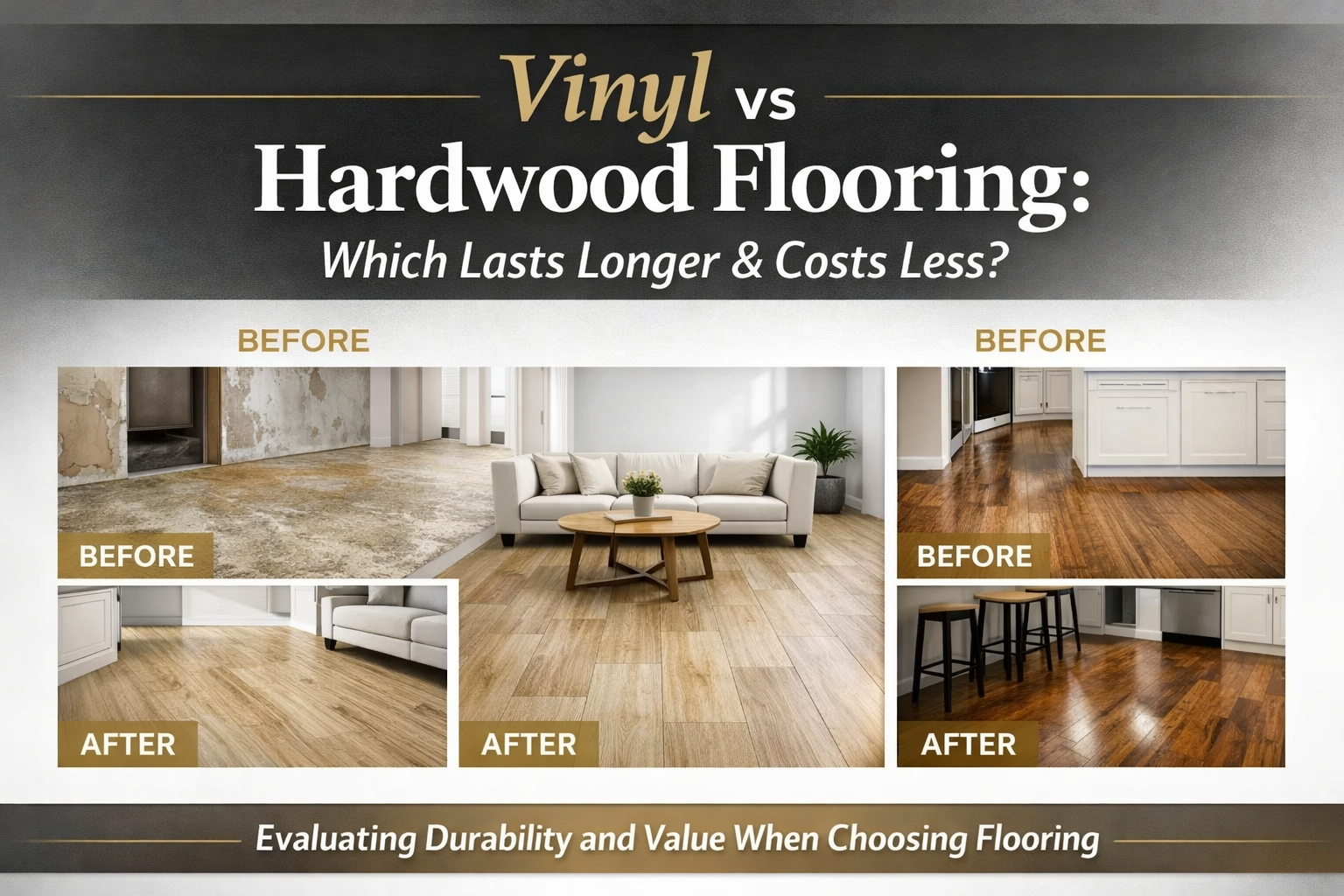

Choosing between vinyl vs hardwood flooring cost and durability is one of the biggest decisions homeowners face during renovation. While both options offer unique benefits, the wrong choice can lead to expensive repairs, premature wear, and poor return on investment. At UHS Remodeling, we help homeowners make smart flooring decisions that balance cost, performance, and long-term value.
Whether you’re upgrading for resale or improving comfort in busy households, understanding how luxury vinyl planks LVP compare to hardwood flooring is critical before you invest.
What Impacts Flooring Cost and Durability?
Several factors influence the real-world performance of vinyl vs wood floor installations. Homeowners often underestimate how environmental conditions and usage patterns affect longevity.
- Material type: Hardwood offers natural wood beauty, while vinyl is a synthetic material engineered for durability.
- Moisture exposure: Areas like kitchens bathrooms experience high moisture that impacts wood performance.
- Foot traffic: High traffic areas demand scratch resistance and easy maintenance.
- Installation quality: Poor installation increases long-term durability and maintenance costs.
- Cost per square foot: Prices vary significantly depending on materials and labor.
For a broader understanding of flooring options, explore best flooring options.
Vinyl vs Hardwood Flooring: Cost Breakdown Per Square Foot
Luxury Vinyl Flooring (LVP)
Luxury vinyl flooring vs hardwood comparisons often favor vinyl when budget is tight. Vinyl typically ranges between $2 to $7 per square foot, with installation costs adding another $2–$5.
- Water-resistant and ideal for high moisture areas
- Affordable upfront investment
- Low maintenance
Hardwood Flooring
Hardwood flooring delivers timeless elegance and strong resale value. However, costs are higher, typically ranging from $8 to $12 per square foot installed.
- Made from real wood
- Long lifespan (20–50 years)
- Higher installation costs
Engineered Hardwood
Engineered hardwood sits between both options, offering better moisture resistance than solid wood at a moderate price. The engineered flooring cost per square foot typically ranges from $6 to $10.
DIY Flooring Installation: What Homeowners Try First
Many homeowners attempt DIY installation to save money, especially with flooring LVP products marketed as “easy install.” Common DIY approaches include:
- Click-lock vinyl plank systems
- Glue-down vinyl installations
- Floating engineered hardwood floors
- Basic floor board replacements
Some homeowners even rely on online tutorials or guides like flooring tools to complete projects themselves.
Why DIY Flooring Installation Often Fails
While DIY seems cost-effective, it often leads to expensive mistakes. Flooring installation requires precision, subfloor preparation, and moisture control—areas where DIY typically falls short.
- Uneven subfloors: Causes gaps and premature wear
- Improper moisture barriers: Leads to warping or mold
- Poor alignment: Reduces aesthetic appeal
- Incorrect expansion gaps: Results in buckling
Many homeowners end up paying more to fix mistakes than hiring professionals initially. Learn how to avoid costly errors in contractor mistakes.
Environmental Impact and Material Safety
Flooring materials affect indoor air quality and sustainability. According to the U.S. Environmental Protection Agency, some flooring products emit volatile organic compounds (VOCs) that impact health.
EPA indoor air quality guide explains how synthetic materials like vinyl can release emissions if low-quality products are used.
Meanwhile, research from academic institutions highlights how natural wood products may offer better sustainability when sourced responsibly:
Professional organizations like the National Wood Flooring Association also emphasize proper installation and maintenance for long-term performance:
When You Need Professional Flooring Services
There are clear signs you should avoid DIY and hire professionals like UHS Remodeling:
- Large areas over 500 square foot
- Subfloor damage or uneven surfaces
- Installation in kitchens bathrooms
- High-end engineered hardwood or solid wood
- Desire for long-term ROI and resale value
Planning a full remodel? Start with renovation planning to align flooring with your overall design.
Why Homeowners Trust UHS Remodeling
Choosing the right contractor matters as much as choosing the right flooring. UHS Remodeling combines craftsmanship, experience, and local expertise to deliver lasting results.
- Accurate cost estimates per square foot
- Expert installation for vinyl, hardwood, and engineered flooring
- Guidance on luxury vinyl vs engineered hardwood
- Focus on durability in busy households
- Proven results across Texas including Dallas, Plano, Frisco, and Allen
Explore transformation ideas in remodeling ideas.
FAQs – Vinyl vs Hardwood Flooring Cost and Durability
1. Is luxury vinyl flooring better than hardwood for durability?
Luxury vinyl planks LVP are highly resistant to scratches, moisture, and wear, making them ideal for high traffic areas. However, hardwood offers long-term durability through refinishing, giving it a longer lifespan despite being more sensitive to moisture.
2. What is the cost difference between vinyl and hardwood flooring?
Vinyl typically ranges from $2–$7 per square foot, while hardwood can reach $12 per square foot installed. Engineered hardwood falls in between. Vinyl is cheaper upfront, but hardwood often provides better resale value over time.
3. Which flooring is best for kitchens and bathrooms?
Vinyl is the better option for kitchens bathrooms due to its resistance to high moisture. Hardwood can warp or swell if exposed to water, making it less suitable unless properly sealed and maintained.
4. Does engineered hardwood last as long as solid hardwood?
Engineered hardwood offers good durability but typically doesn’t last as long as solid hardwood. Its lifespan depends on the thickness of the top wood layer and maintenance, making it a middle-ground option.
5. Is vinyl flooring environmentally friendly?
Vinyl is a synthetic material and may have environmental concerns related to production and disposal. However, low-VOC options are available. Hardwood sourced responsibly offers better sustainability and environmental impact benefits.
6. Can DIY flooring installation save money?
DIY can reduce upfront costs, but mistakes often lead to expensive repairs. Improper installation affects durability and maintenance, making professional installation a safer long-term investment.
7. Which flooring adds more home value?
Hardwood flooring adds more resale value due to its timeless elegance and natural wood appeal. Buyers often prefer real wood, making it a strong investment for long-term property value.
Conclusion: Make the Right Investment in Vinyl vs Hardwood Flooring Cost and Durability
When comparing vinyl vs hardwood flooring cost and durability, the right choice depends on your lifestyle, budget, and long-term goals. Vinyl offers affordability and moisture resistance, while hardwood delivers unmatched beauty and long-term value.
However, the biggest factor isn’t just the material—it’s the installation. Poor workmanship can ruin even the best flooring.
If you want flooring that lasts, looks premium, and adds value to your home, it’s time to consult professionals. Contact UHS Remodeling today to schedule your flooring consultation and get expert guidance tailored to your home.