
DIY vs Pro in a DFW Remodel: What You Can Legally Do Yourself in Texas
The DIY line in Texas is not drawn by skill — it is drawn by permits and trade licensing. Here is which side of it your project sits on, what the city actually inspects, and the honest math on where doing it yourself saves money and where it doubles the bill.
DIY vs professional remodeling is rarely an all-or-nothing decision, and treating it as one is how homeowners end up on the wrong side of it in both directions — paying a crew to roll paint, or opening a wall that turns out to hold the roof up. In Texas the line between the two halves is drawn more clearly than most people expect, and it is not drawn by skill. It is drawn by permits and trade licensing: the city decides which work it wants to inspect, and the state decides which trades must be licensed to touch it. Everything on one side of that line is genuinely yours to do; everything on the other side was never really a savings opportunity to begin with.
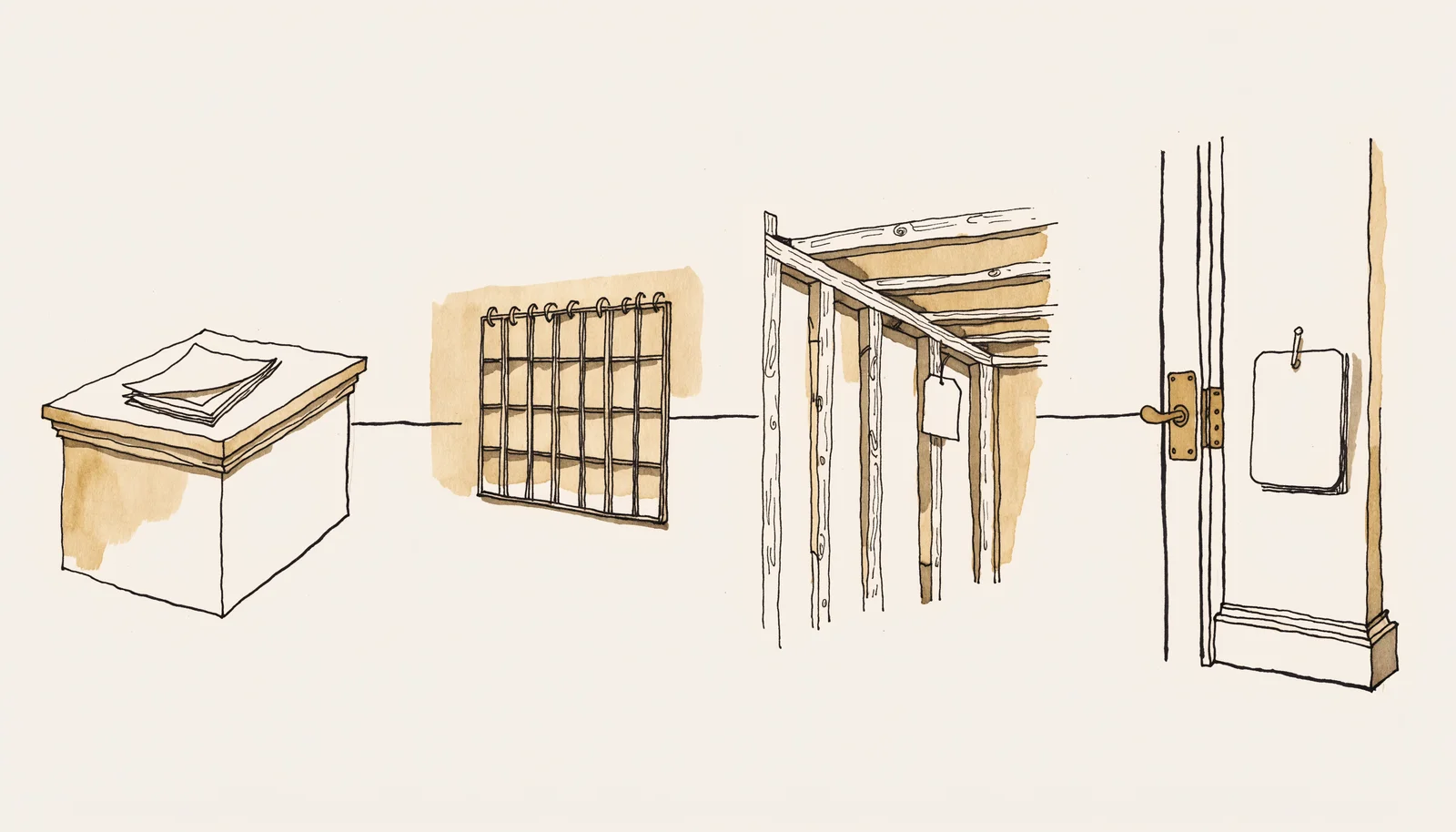
DIY the surfaces. Hire licensed trades for everything behind them.
Paint, flooring, cabinet and countertop swaps and like-for-like fixture replacement are legally yours to do across DFW. Moving plumbing, new wiring or panels, HVAC, structural changes and anything that adds square footage requires city permits — and in Texas, where no general-contractor license exists, the real protection is Texas-licensed trades on the regulated work.
This guide walks the line from both sides: what you can safely and legally do yourself in a DFW remodel, what requires permits and licensed trades, and the honest cost math — where DIY saves real money, and where a failed attempt means paying for the same scope twice.
What You Can Safely DIY in a Texas Remodel
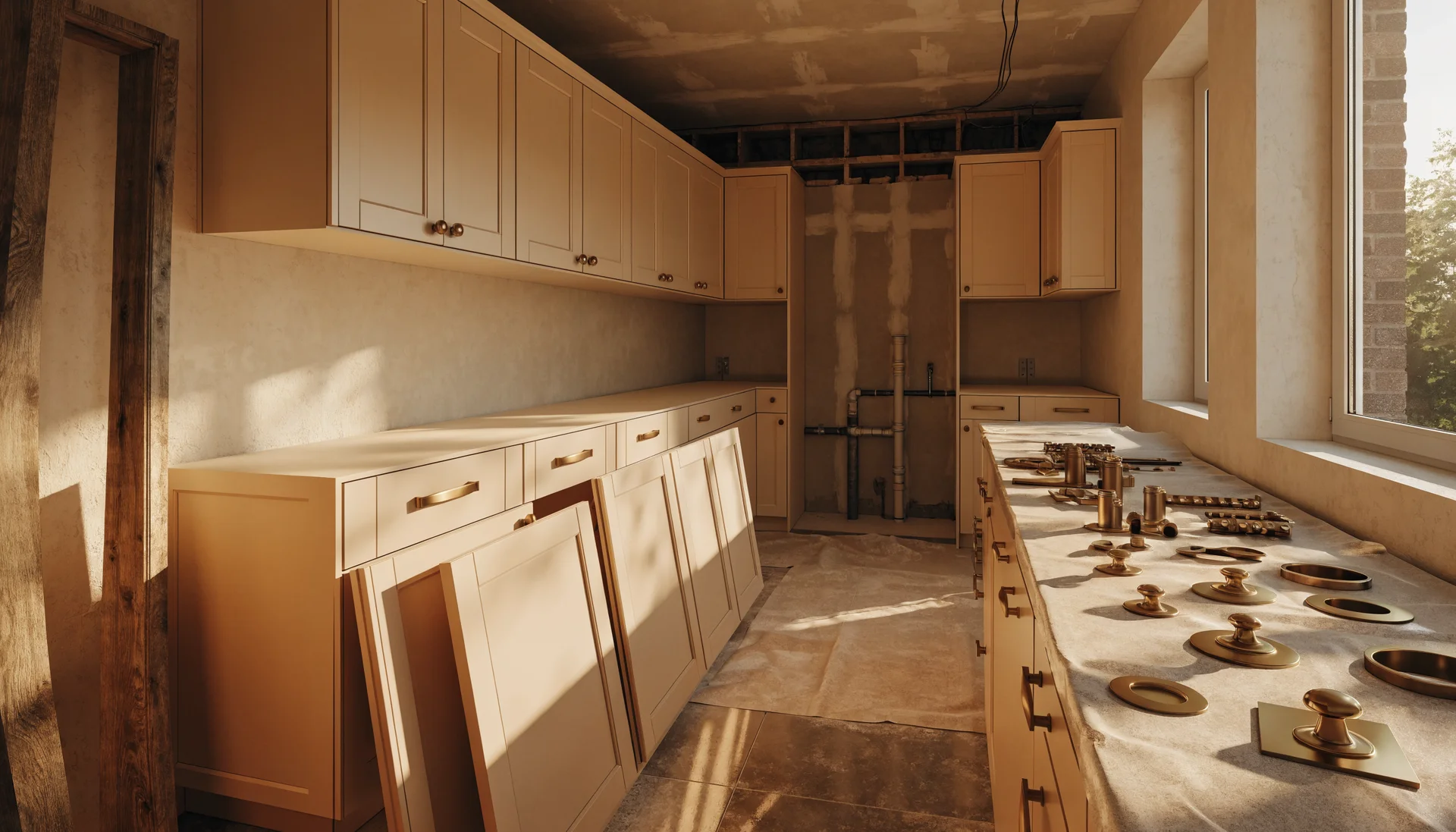
The work a homeowner can take on without a permit is the work that stays on the surface. Per the City of Plano’s exemptions — and the pattern holds across DFW — painting, tiling and flooring, replacing cabinetry or countertops, cosmetic repairs, and appliance swaps that do not alter the connections behind them do not require a permit. Add cabinet hardware, interior doors, trim and shelving to the same family: if the water, wiring and structure behind the finish are untouched, the city has no reason to look at it.
The same logic covers the most popular DIY line item of all: a like-for-like fixture swap. A new faucet on the same supply lines, a new light fixture on the same box, a new toilet on the same flange — no permit, because nothing behind the wall moved. The moment a line relocates, the answer flips, which is the single most useful test in this whole subject. Our Plano renovation permit guide lists both columns in full.
Demolition deserves its own caution. Pulling cabinets, prying tile in a dry area, or stripping flooring is honest, unlicensed labor and a legitimate way to take a line item off a professional bid. Opening walls is not the same activity — a wall can be load-bearing, and it can carry wiring or plumbing you cannot see from the finished side. Removing or altering a load-bearing wall requires a permit in Plano, full stop, so the rule we give homeowners is simple: demo down to the surface, never through it, until someone qualified has looked.
There is no statewide general-contractor license in Texas — anyone can call themselves a remodeler. What the state does license is the regulated trades: plumbing, electrical and HVAC. That distinction — not the business card — is what protects the homeowner.
The Permit Line: What the City Wants to Inspect
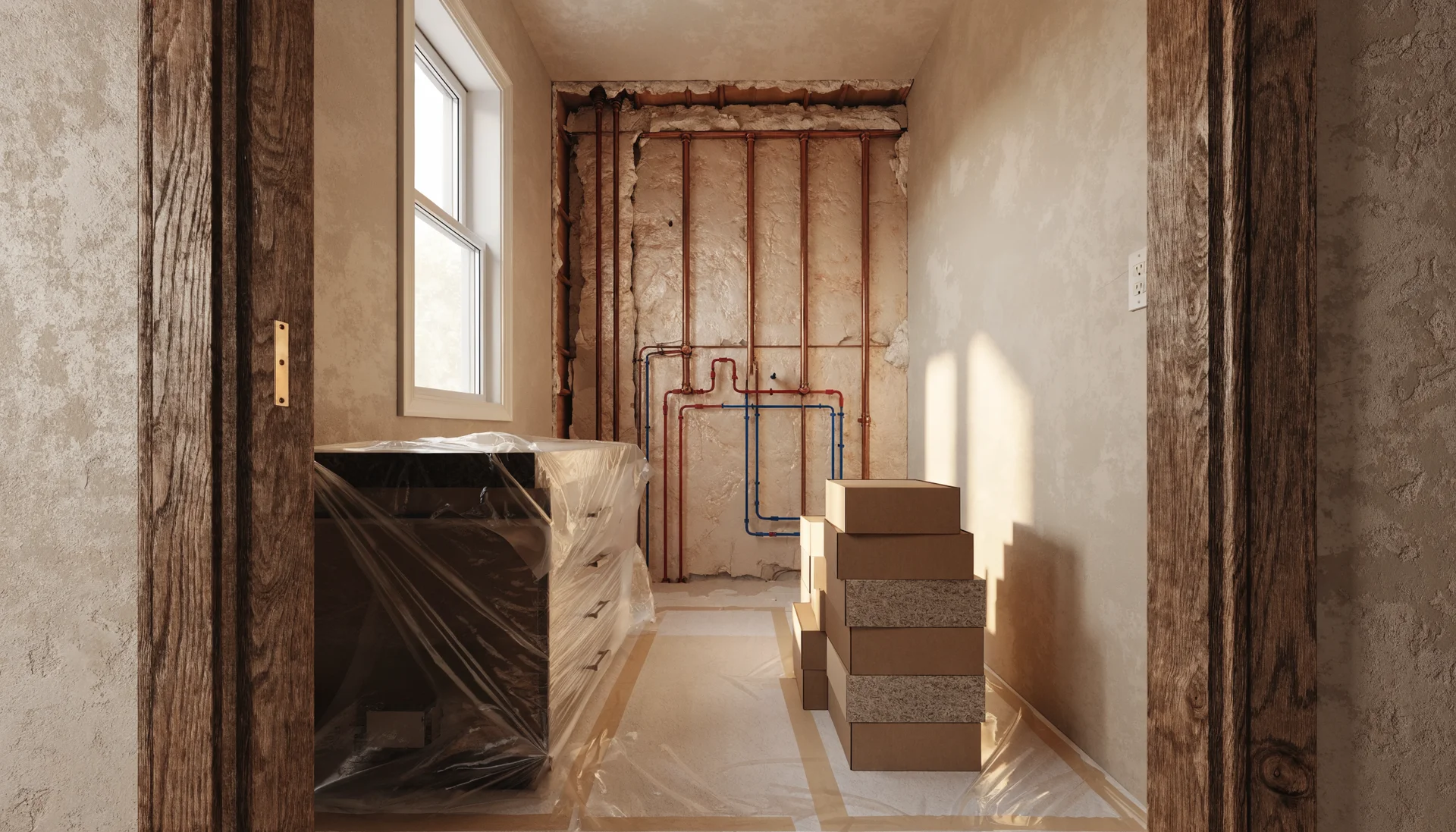
Across DFW, the permitted list is remarkably consistent, because it tracks the things that burn houses down, flood them, or drop them: removing or altering load-bearing walls, adding or moving plumbing lines, new HVAC systems or ductwork, electrical panel upgrades and new wiring runs, garage-to-living-space conversions, decks and balcony structures, and any project that adds square footage. If your remodel touches one of those, a permit is required whether a professional does the work or you do.
The full city-by-city picture — timelines, fees and quirks from Dallas to Allen — lives in our DFW remodeling permit guide, and it is worth reading before you scope anything, because the permit calendar is part of the project calendar. In Plano, review runs roughly three to fifteen business days depending on the trade: 3–5 for electrical, 5–7 for plumbing, 5–10 for HVAC, 10–15 for structural work.
The fees are the smallest number in the whole project. Plano permit costs run about $60–$200 for electrical, $80–$250 for plumbing, $100–$300 for HVAC and $200–$500+ for structural work. Nobody has ever wrecked a remodeling budget on permit fees; plenty of people have wrecked one avoiding them.
The Work That Is Never DIY
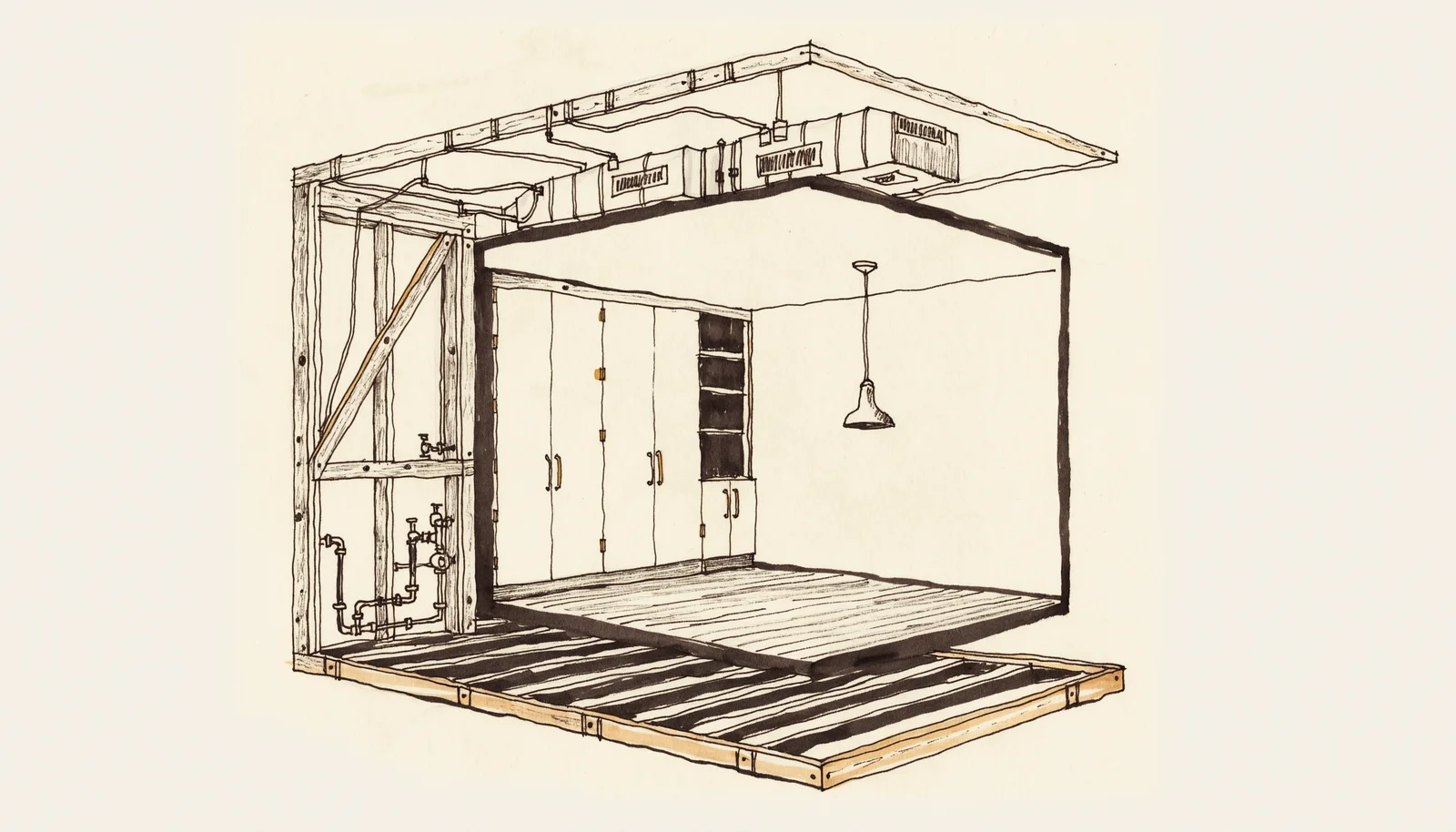
Four scopes sit past the line no matter how capable you are, because the failure mode is not cosmetic. New wiring runs and panel upgrades are permitted work that must pass a city rough-in inspection before the walls close. Moving supply or drain lines is permitted plumbing work — and in North Texas that often means working in or under a slab. Structural changes ride the longest review track in Plano for a reason. And gas is its own category entirely — the one scope no homeowner should take on.
Note what this list is not. It is not “everything hard.” Tiling a floor is hard and legal to DIY; swapping a panel is routine for an electrician and not a homeowner project. The line is regulatory, not a judgment of your competence — and the inspection regime exists precisely because this work disappears behind drywall, where nobody can check it later without demolition.
Not sure which of these applies to your house? A short conversation settles it faster than any calculator.
How a Permitted Project Actually Runs in Plano
Homeowners who have never pulled a permit tend to imagine a single stamp. It is a sequence, and each step has a clock:
Application and plan review
The scope is submitted to the city — in Plano, online through the eTRAKiT portal or in person at the Municipal Center Permit Office — and review takes three to fifteen business days depending on the trade involved.
Permit issued, clock running
Once issued, the permit is not open-ended. In most DFW cities it lapses if construction does not begin within 180 days.
Inspections at each covered-up stage
The city inspects at foundation, framing, electrical rough-in and final stages — each visit timed to happen before that layer of work is sealed behind the next one. Expect roughly 2–5 inspector visits depending on scope.
Final sign-off
The last inspection closes the permit and creates the paper record a future buyer’s inspector will want to see.
Many DFW master-planned communities — especially in Plano, Frisco, McKinney and Allen — require Architectural Control Committee review on top of the city’s, which commonly adds 2–6 weeks. It applies to DIY projects exactly as it does to professional ones.
The Honest Cost Math of DIY vs Professional Remodeling
Start from the real ranges. The professional projects we build run $25K–$95K for kitchens, $8K–$60K for bathrooms, $95K–$350K for whole-home remodels. DIY does not compete with those numbers — it trims them, and it trims them most where the work is labor-heavy, low-risk and on the visible surface.
Painting is the clearest win: almost pure labor, fully reversible, zero permits. Finish demolition — cabinets out, dry-area tile up, flooring stripped — is the second, provided it stops at the surface. Hardware, fixtures swapped like-for-like, closet systems, trim touch-ups: all real, keepable savings. On a bathroom refresh at the bottom of the range, taking paint and demo off a bid is the difference between a project you fund comfortably and one you postpone. What DIY cannot do is move the big numbers, because the big numbers were never in the brushwork — they are in cabinetry, counters, licensed trades and structure. Our bathroom remodel cost guide breaks down where the money actually sits, and the honest summary is that the DIY-able share of a full remodel is the thin end of the budget.
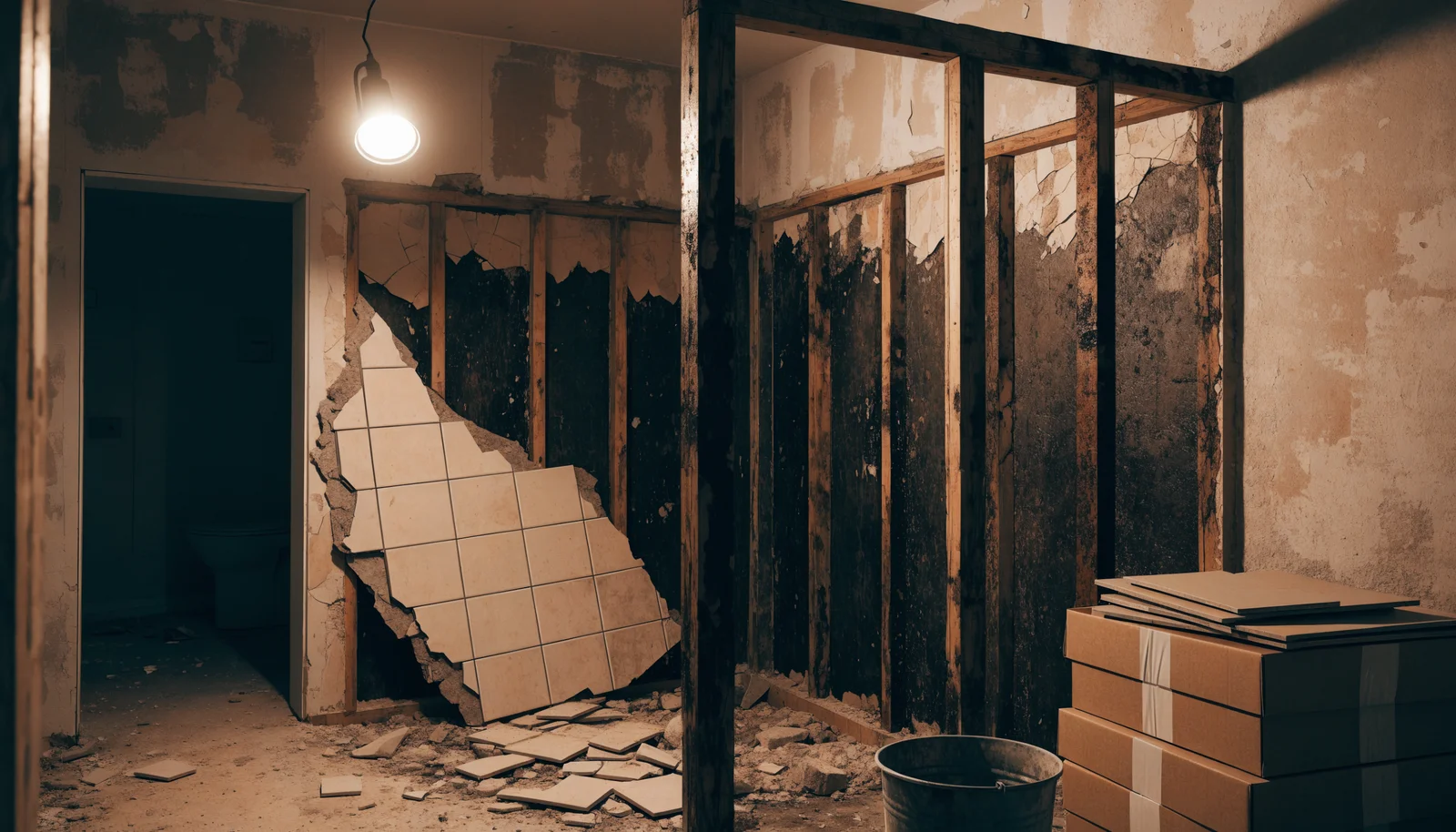
The other side of the ledger is what a failed attempt costs, and here the arithmetic is unforgiving: you pay for the materials twice, you pay to demolish your own work, and then you pay the professional rate you were trying to avoid — on a compressed schedule, because by then the household is living in the project. That is how a saved line item becomes the most expensive item on the job.
Where Failed DIY Doubles the Bill
Five patterns show up again and again, and every one starts as a reasonable-sounding savings:
Tile in wet areas
Dry-area tile is fair DIY territory. A shower is a waterproofing assembly that happens to have tile on it — if the membrane behind the tile is wrong, the finish looks perfect until the wall behind it is not, and the fix is full tear-out.
Moving a drain to improve the layout
The layout upgrade that turns a cosmetic refresh into permitted plumbing work — often slab work in this region. Priced honestly from the start, it is a scope decision; discovered mid-DIY, it is a stalled bathroom.
DIY electrical behind the walls
Unpermitted wiring is the classic case where consequences outlast the project: among the risks Plano lists for unpermitted work are insurance claim denials on unpermitted upgrades and failed inspections at resale.
Opening a wall that holds the house up
Load-bearing walls rarely announce themselves. Altering one without a permit and an engineered plan risks the one category of damage that costs more than the whole remodel.
Skipping the permit to save time
Unpermitted work can mean stop-work orders, fines, forced tear-out and complications when you sell. The review window it dodged was days; the exposure it created is permanent until corrected.
There is one more asymmetry worth naming: warranty. Professional work done under contract comes with accountability in writing — ours carries a 1-year workmanship warranty, and our remodeling warranty guide explains what that should cover. DIY work carries no warranty but the one you extend yourself, and no third party will ever stand behind it.
Tell us what you are planning. We will walk your house, tell you what is actually possible, and put a real number on it before you commit to anything.
Or read the numbers first: home remodeling in Plano, TX.
The Hybrid Approach: DIY the Edges, Hire the Core
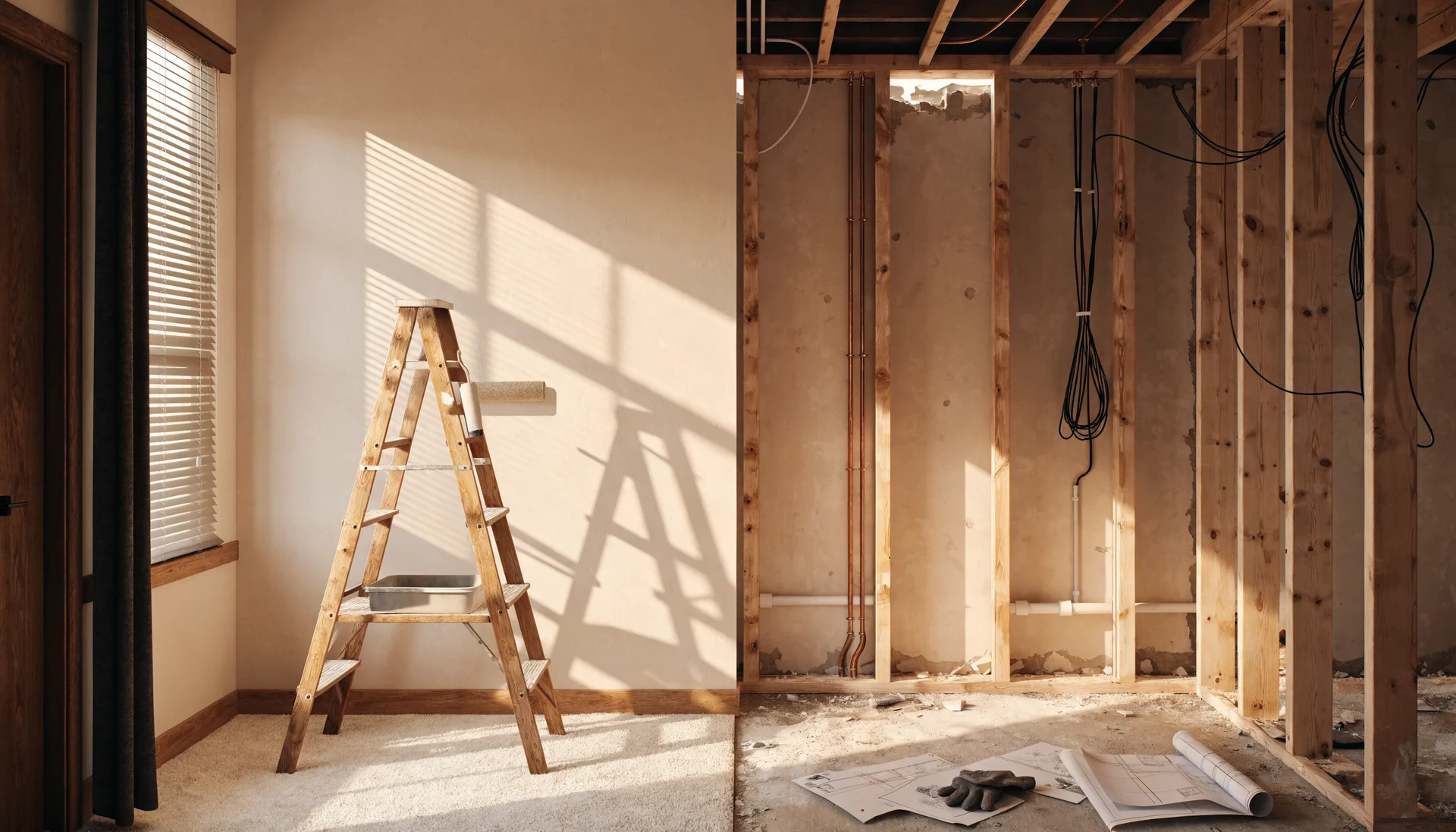
The best answer for most handy homeowners is not choosing a side — it is drawing the line deliberately and putting it in the contract. Tell the contractor up front which scopes you are keeping: paint, finish demolition, hardware, maybe the flooring in dry rooms. A good contractor will price the job without those line items and, just as important, will sequence around you — your demo weekend has to finish before the trades mobilize, and your paint has to wait until after texture and trim.
What makes the hybrid work is honesty in both directions. The contractor owes you a bid that genuinely removes the work you are taking, not one that shuffles it. You owe the schedule your finished scope on time, because a licensed plumber rebooked around an unfinished DIY demo costs more than the demo saved. Put the split in writing, and the hybrid is the best of both sides of this argument.
Where a Professional Earns the Fee on a Plano Project
Strip away the surface work a homeowner can keep, and what remains is the actual job: scoping, permits, licensed trades, sequencing and accountability. That core is what you are hiring, and it is where full-service home remodeling in Plano, TX either earns its fee or does not. On our projects the permit paperwork and city inspections are ours to manage, and payment is staged across the project in milestones of 10/20/20/20/20/10 rather than taken up front.
So keep the roller. Keep the pry bar, in dry rooms, down to the surface. Hand off the walls, the water, the wiring and the gas — not because you could not learn, but because the permit system, the licensing rules and the insurance fine print all price that work as if it must be done once, correctly, by someone accountable for it. If you are weighing which side of the line your project falls on, our team quotes Plano remodeling projects with the DIY scopes separated out, so you can see exactly what your own labor is worth before you commit a single weekend to it.
Questions we get
What remodeling work can I do myself without a permit in Texas?
Surface work: painting, tiling and flooring, replacing cabinetry or countertops, cosmetic repairs, and appliance or fixture swaps that do not alter the connections behind them. The reliable test is whether anything behind the finish moves — a like-for-like faucet swap needs no permit, while relocating the supply lines under it does. Cities across DFW draw the line in nearly the same place.
Do I need a permit for a bathroom remodel in Allen, TX?
Not for a cosmetic remodel — new tile, vanity, paint and like-for-like fixture swaps. You do need one the moment the project moves plumbing lines, adds or upgrades wiring, or alters walls. Allen’s review runs roughly 5–10 days for simple permits and 15–30 days for additions; our DFW remodeling permit guide covers each city’s process and timelines in detail.
Can I renovate my bathroom for $5000?
Not as a professional remodel — full bathroom projects in our range run $8K–$60K. What that budget buys is a DIY-led refresh: paint, hardware, a like-for-like faucet and light swap, perhaps new flooring you install yourself. That is a legitimate project, but it works precisely because it stays on the surface and leaves the plumbing, wiring and layout exactly where they are.
What happens if you remodel without a permit?
The documented consequences are stop-work orders, code violation fines, forced tear-out of finished work, insurance claim denials on unpermitted upgrades, and failed inspections when you sell the house. The permit review it skipped costs days and a fee measured in hundreds of dollars; the exposure it creates stays with the house until the work is opened up and corrected.
Can I do my own electrical work in a Texas remodel?
New wiring runs and panel upgrades are permitted work in Plano and across DFW, and they must pass a city rough-in inspection before the walls close. Plano lists insurance claim denials on unpermitted upgrades and failed inspections at resale among the documented consequences of skipping the permit.
Is it cheaper to DIY a remodel than hire a professional?
For surface scopes, genuinely yes — painting, finish demolition and hardware are labor-heavy line items a homeowner can remove from a bid and keep the savings. For regulated scopes, the savings are an illusion: the work requires permits and inspections regardless of who performs it, and a failed attempt means buying materials twice, demolishing your own work, and then paying the professional rate anyway.
The permit list is not a judgment of your competence — it is the city naming the work that must be done once, correctly, by someone accountable for it. Keep the labor-heavy surface scopes and the savings are real. Cross the line into wiring, plumbing, gas or structure, and a failed attempt costs the materials twice, the tear-out, and the professional you were avoiding.
Related from the journal
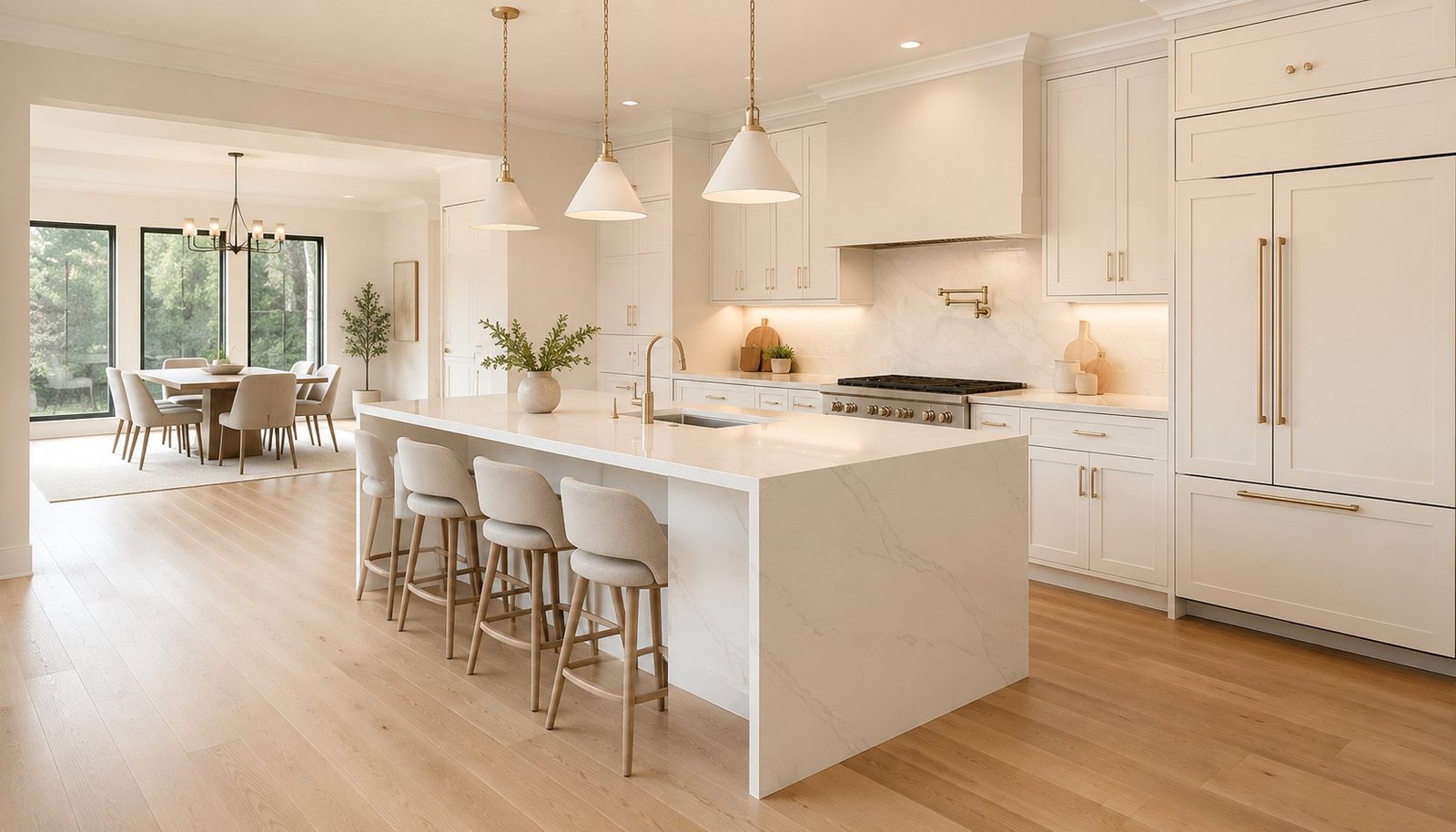


Keep the roller. Hand off the walls. with the DIY scopes priced separately, so you can see what your own labor is worth.
Fully insured · 500+ client reviews · fixed-price contracts · 1-year workmanship warranty.
Prefer to talk? (469) 850-7087 · or use the contact page.