
Matte vs Glossy Kitchen Cabinets: Durability, Cleaning & Style Guide for Modern Homes
Matte hides fingerprints and softens the light; gloss bounces it around the room and shows every smudge. Here is how each finish behaves in a working kitchen, where DIY refinishing goes wrong, and when to hand the job to a crew.
Choosing between matte and glossy kitchen cabinets is one of the bigger decisions in a modern kitchen, and it is not a color decision. The finish sets how the doors handle light, fingerprints, grease, scratches and daily cleaning, and it shapes the atmosphere of the whole room once the boxes are hung. Homeowners tend to spend their energy on the color chip. The surface underneath it is what they end up living with, and it is where the long-term impact on durability, maintenance and resale value actually sits.
Matte for forgiveness, gloss for brightness; the material under the finish decides how long either lasts.
Matte cabinets hide fingerprints, cut glare and suit darker palettes, but can show grease in cooking zones and make a small kitchen feel darker. Glossy cabinets reflect light and wipe clean quickly, but show fingerprints, scratches and streaks. Either finish lasts when the material and the installation are good; poor DIY preparation shortens the life of both.
At UHS Remodeling we hear the same question from busy households: do matte kitchen cabinets or high gloss kitchen cabinets hold up better? The answer depends on the light your kitchen gets, how much you cook, what the cabinets are made of, how many people live in the house and the style you want. Glossy finishes bring brightness and visual depth. Matte finishes bring warmth and a softer, more contemporary look. This guide lays out how each one behaves in a working kitchen, where DIY refinishing goes wrong, and when the job belongs with a kitchen remodeling crew in Plano rather than a weekend and a roller.
Color is what you pick from a chip. Finish is what you wipe down, light and look at every day for years.
What actually separates a matte finish from a glossy one
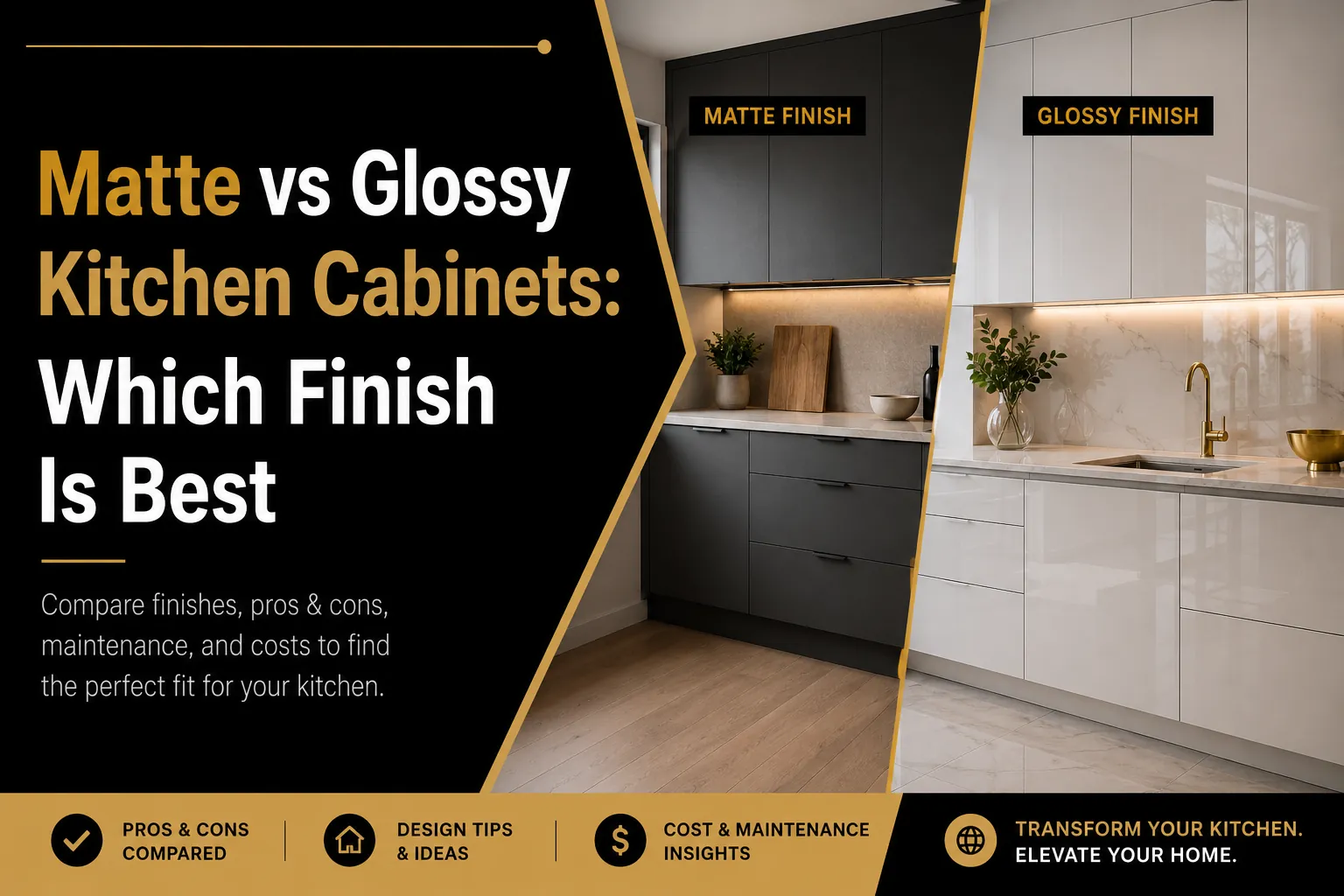
The difference comes down to what the surface does with light. A glossy finish reflects it heavily and reads shiny, close to mirror-like. A matte finish diffuses and absorbs it, so the door looks softer and smoother with no hot spots. Within those two families there are a few distinct products worth knowing by name:
- Gloss cabinets: reflective, modern, bright, dramatic.
- Matte cabinets: soft, muted, elegant and fingerprint-resistant.
- High gloss: an ultra-reflective premium surface, common in luxury contemporary kitchens.
- Matte lacquer: a smooth, non-reflective coating with a modern feel.
Manufacturers reach these finishes through laminates, acrylic coatings, thermofoil, paint systems or matte lacquer applications. Which route your cabinets take matters as much as the sheen, because the quality of the material and the installation is what decides how the finish ages. According to the EPA Indoor Air Quality Guide, choosing high quality remodeling materials and finishes can improve indoor environmental quality and reduce the long-term problems that come with low-grade coatings. That point comes back later, when we get to cheap cabinet paint.
Matte kitchen cabinets: where they win and where they struggle
Why homeowners choose matte
Matte cabinets have become extremely popular in upscale remodels because they read as sophisticated and timeless. They work well in contemporary kitchens, transitional spaces and modern luxury homes, and they do a few practical things that gloss cannot:
- Hide fingerprints better
- Reduce glare from overhead and under-cabinet lighting
- Give the doors a softer visual texture
- Warm up the room
- Sit comfortably next to natural wood and stone
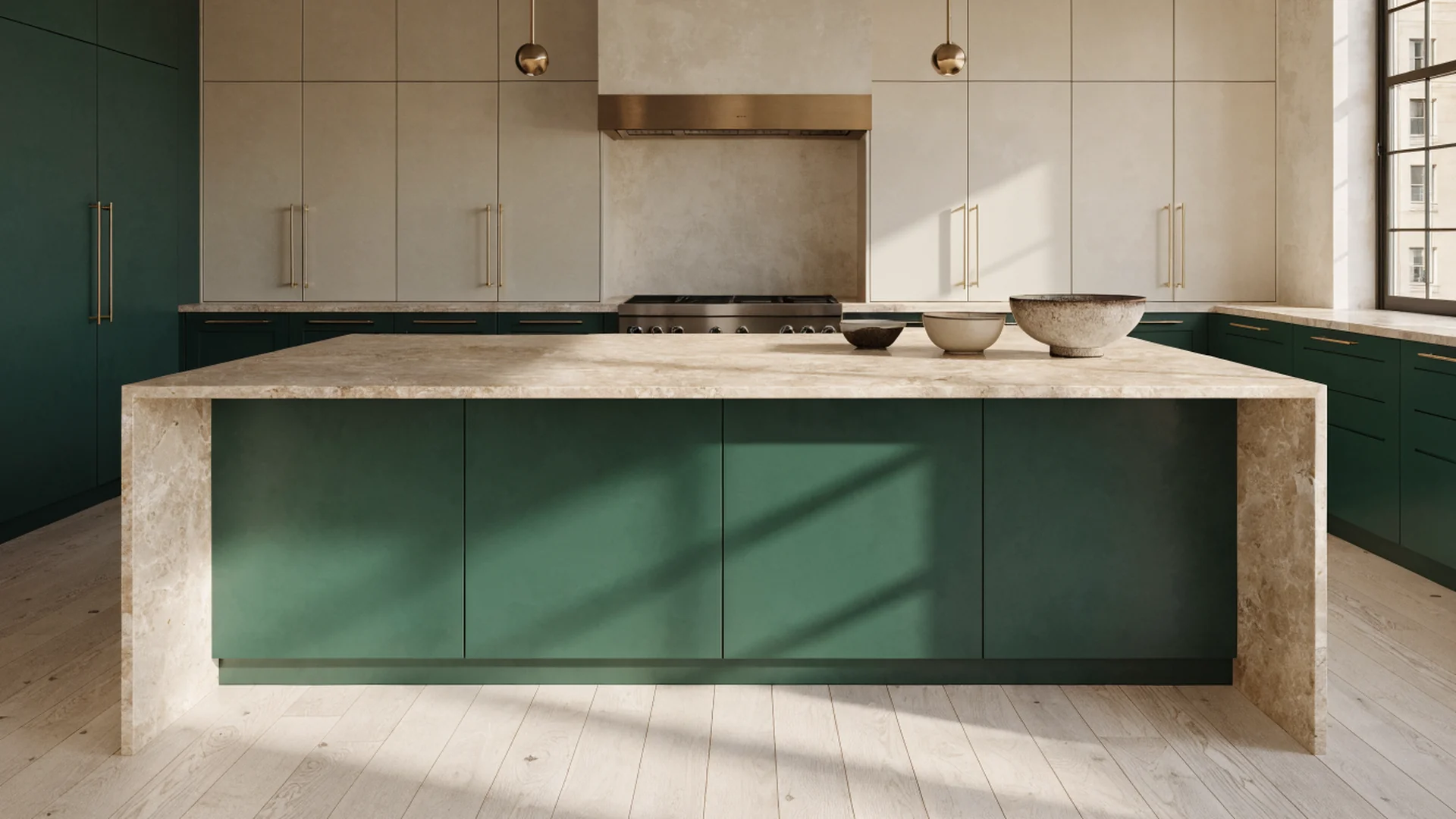
- Carry darker palettes, matte black especially, without looking harsh
Matte black is leading modern kitchen design
Matte black cabinets keep gaining ground because they deliver bold contrast without taking over the room. A black gloss door throws every smudge back at you; a matte black door minimizes them and keeps that refined designer look through a normal week of cooking. Homeowners often pair matte black with quartz countertops, warm wood flooring, brass hardware, natural lighting and white backsplash tile. If you are collecting ideas for a premium renovation, our roundup of modern kitchen trends and our Plano kitchen remodeling page both show how these pairings get built.
Where matte falls short
Matte looks luxurious, but it is not the right answer for every household:
- It can show grease buildup in cooking zones
- Its lower reflectivity can make a small kitchen feel darker
- Some matte surfaces are harder to deep clean
- Cheap matte materials may fade unevenly
That last point matters more than it sounds. Poor-quality matte finishes are one of the biggest reasons DIY cabinet painting fails: an uneven coating that looked fine on the first day often becomes visible within months.
Glossy kitchen cabinets: where they win and where they struggle
Why gloss is popular
Glossy kitchen cabinets are the pick for homeowners who want a bright, sleek, modern kitchen. The reflective surface bounces natural and artificial light around the room, which makes a compact kitchen feel larger than its footprint. The case for gloss:
- Excellent light reflection
- A modern luxury look
- Easy to wipe clean
- Right at home in minimalist spaces
- Ideal for white kitchens
Gloss white kitchen cabinets stay especially popular for exactly that reason: they push brightness as far as it will go and give the room a clean, upscale atmosphere.
High gloss for contemporary kitchens
High gloss cabinets show up most often in luxury European-inspired kitchens. Their ultra-reflective acrylic or lacquer surfaces create dramatic visual depth. The homeowners who choose high gloss tend to share the same priorities: a minimalist look, modern architecture, an open-concept layout, strong natural light and a contemporary kitchen overall. The reflective quality can even lift the brightness of a kitchen with limited windows. If light is your constraint, our guide to natural lighting covers the other strategies that work alongside a gloss finish.
Where gloss falls short
Gloss is impressive to look at and more demanding to live with than matte. Expect the following:
- Fingerprints appear quickly
- Scratches are more visible
- Glare can feel overwhelming under strong light
- Low-quality gloss finishes can peel
- Cleaning streaks are common with DIY methods
Not sure which of these applies to your house? A short conversation settles it faster than any calculator.
Matte vs glossy, side by side
Here is the whole comparison in one place, matte first and glossy second on each line:
- Light reflection: matte absorbs light softly; glossy reflects a significant amount of it.
- Fingerprint visibility: lower on matte; higher on glossy.
- Cleaning: matte may require specialty cleaning; glossy is easy surface wiping.
- Scratch visibility: moderate on matte; higher on glossy.
- Style: matte reads warm and elegant; glossy reads modern and dramatic.
- Best for: matte suits luxury matte kitchen designs; glossy suits bright contemporary kitchens.
- Maintenance: moderate for matte; glossy needs frequent wiping.
Neither column wins outright. Matte trades easy wiping for forgiveness; gloss trades forgiveness for brightness. Which trade is worth making depends on the house and the people in it.
How to decide for your kitchen, in order
The factors that settle this choice are the same ones we walk through with clients: lighting, cooking habits, cabinet material, family size and the style you are after. Taking them in this order keeps the decision honest, because the practical questions get answered before the pretty ones.
Start with the light
Stand in the kitchen at the times you actually use it. Gloss bounces whatever light there is around the room and helps a compact or window-poor kitchen; matte absorbs it and can leave a small kitchen feeling darker.
Be honest about cooking
A kitchen that cooks most nights puts grease on the doors near the range. Matte can show that buildup and may need specialty cleaning to shift it; gloss wipes clean quickly but shows every fingerprint in between.
Look at the material under the finish
Laminate, acrylic, thermofoil, a paint system or matte lacquer all age differently. Cheap matte fades unevenly and low-quality gloss can peel, so the product line matters more than the sheen.
Count the hands on the doors
A full house means constant physical contact. Matte hides that traffic; gloss records it, so a busy family leaning toward gloss should plan on frequent wiping.
Settle the style last
Matte black with wood, quartz and brass, or gloss white in a minimalist open plan. Once the practical questions are answered, the style choice usually makes itself.
I ask clients to hold a matte sample and a gloss sample up under their own kitchen lights, next to their own countertop, before we order a single door. The finish that photographs best is not always the one that looks right at the sink on a weeknight.
DIY cabinet refinishing: what usually goes wrong
Plenty of homeowners try DIY cabinet refinishing after a few online tutorials. Basic repainting looks simple on a screen. A professional-grade finish, the kind that reads as factory-made, is extremely hard to reach without specialized preparation and spraying equipment. The common home methods are roller painting, brush painting, cabinet wrapping, peel-and-stick finishes and spray paint refinishing. Each can improve the look for a while; none of them reliably reaches the durability or smoothness of a factory-grade finish.
When a refinish fails, it almost always traces back to preparation, moisture exposure or the materials chosen. Kitchen cabinets take constant temperature shifts, grease, humidity and physical contact, and a weak coating gives up under that load. These are the failures we see most often:
Sanding unevenly
The texture underneath telegraphs straight through the new coat, and the door looks rough as soon as light hits it from the side.
Buying a low-grade coating
It chips quickly, and chipping is the point where a refinish visibly fails.
Rushing the cure
Coating that has not cured properly peels, and a peeling door reads worse than the tired one it replaced.
Using a cheap primer
Primer that cannot handle moisture fails, and kitchens are never dry for long.
Rehanging doors by eye
Cabinet doors come back misaligned after reinstallation, and a crooked door on a fresh finish is the first thing a visitor notices.
High gloss is especially unforgiving here. A reflective coating magnifies every tiny imperfection beneath it, so a small sanding flaw that would vanish under matte becomes obvious under gloss. If the refinish is part of a bigger upgrade, read up on kitchen ROI before you commit to a design direction, because the finish you choose sits in front of buyers as well as family.
Tell us what you are planning. We will walk your house, tell you what is actually possible, and put a real number on it before you commit to anything.
Or read the numbers first: kitchen remodeling in Plano, TX.
The risk in cheap cabinet paints and chemical products
Some cabinet paints and adhesives release strong volatile organic compounds (VOCs), especially while they cure, and cheap coatings bring a second set of problems on top of the fumes. They may discolor, bubble or leave a lingering odor indoors. The full list of what low-grade product costs you:
- Poor indoor air quality
- Premature peeling
- Surface cracking
- Yellowing on white finishes
- Reduced durability near heat sources
This is why the National Kitchen & Bath Association points homeowners toward high quality materials and experienced professionals for kitchen renovations: long-term performance and safety are decided by what goes on the door and who puts it there, not by the color.
When the job needs a professional
Some cabinet problems are cosmetic, some are structural, and a few are a signal that a refinish was never the right fix. Bring in a remodeling crew when:
- Cabinet surfaces are peeling or bubbling
- There is water damage around the sink
- Doors no longer align
- You want a luxury matte lacquer finish
- You are upgrading to high gloss cabinets
- The storage layout no longer works efficiently
- The kitchen feels dark or outdated
Professional work matters most once structural modifications, electrical work, lighting upgrades or custom cabinetry enter the picture. At that point the finish is one line item in a larger plan, and it needs to be chosen alongside the layout and the lighting rather than after them.
How UHS Remodeling approaches cabinet projects
UHS Remodeling builds kitchens that combine durability, function and modern design. Every cabinet project is planned around lighting, layout, cooking habits, family needs and long-term value, and it comes with custom cabinet design, premium matte and glossy finishes, experienced remodeling specialists, modern kitchen design expertise, detailed project planning and high quality materials and craftsmanship. Bold matte black or clean gloss white, professional installation protects the investment and keeps the finish on your kitchen cabinets durable for years. A professionally designed kitchen also prevents the expensive refinishing mistakes covered above. If you are weighing a cabinet upgrade, a design consultation or a full cabinet replacement as part of kitchen remodeling in Plano, TX, we can help you settle the finish, the layout and the materials so they match both your lifestyle and your investment goals.
Questions we get
Are glossy kitchen cabinets harder to maintain?
Yes, glossy kitchen cabinets usually require more frequent cleaning because fingerprints, grease, and smudges are easier to see on reflective surfaces. However, they are also easier to wipe clean quickly, especially in modern kitchens with smooth high gloss finishes.
Do matte kitchen cabinets make a kitchen look smaller?
Matte kitchen cabinets absorb light instead of reflecting it, which can make compact kitchens feel slightly darker. Proper lighting, lighter cabinet colors, and open layouts help maintain spaciousness while still achieving the elegant matte finish homeowners prefer today.
Are matte black cabinets still in style?
Matte black cabinets remain one of the most requested luxury kitchen trends. They work especially well in contemporary kitchens with wood accents, quartz countertops, and modern lighting. Their soft appearance creates sophistication without the harsh glare associated with gloss cabinets.
Which cabinet finish lasts longer?
Durability depends more on material quality and installation than the finish alone. Professionally installed matte lacquer and high gloss cabinets can both last many years when properly maintained. Poor DIY preparation, however, often shortens cabinet lifespan significantly.
Do high gloss kitchen cabinets scratch easily?
High gloss kitchen cabinets can show scratches more visibly because reflective surfaces highlight imperfections. Using soft microfiber cloths, avoiding abrasive cleaners, and choosing premium cabinet materials can help reduce visible wear over time in busy kitchens.
What is the matte and glossy difference in cleaning?
Glossy cabinets are easier to wipe clean quickly, but they show streaks and fingerprints more often. Matte cabinets hide marks better but sometimes require specialized cleaning methods to remove grease buildup without damaging the matte finish texture.
Pick the finish by your light, your cooking and the people using the doors, not by the color chip. Matte gives warmth and forgiveness, gloss gives brightness and easy wiping, and cheap coatings fail under either sheen. A professionally installed matte lacquer or high gloss cabinet lasts many years when it is looked after; poor DIY preparation is what shortens a cabinet’s life.
Related from the journal
Pick the finish under your own kitchen lights with a Plano crew that installs both.
Fully insured · 500+ client reviews · fixed-price contracts · 1-year workmanship warranty.
Prefer to talk? (469) 850-7087 · or use the contact page.