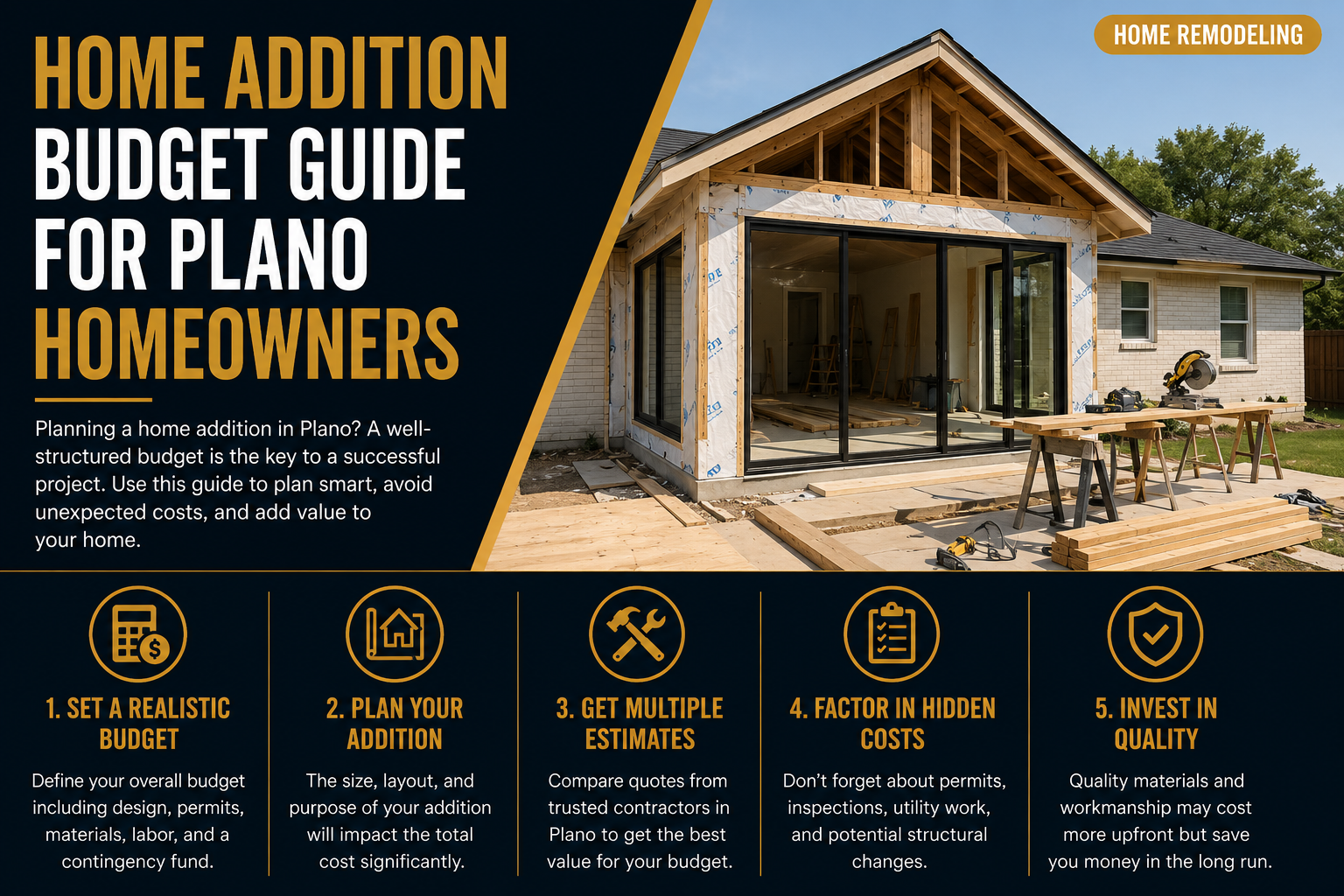

Planning a home addition is one of the best ways to create more living space without moving to a new house. Whether you’re adding a bedroom, expanding your kitchen, building a home office, or creating an in-law suite, a well-planned addition can improve both your daily lifestyle and your property’s long-term value. However, before construction begins, developing a realistic budget is essential. Understanding the costs involved helps you avoid unexpected expenses while ensuring your project stays on track. Learning How to Budget for Your Home Addition Project with Contractors in Plano allows homeowners to make informed decisions and complete their projects with confidence.
Many homeowners begin by exploring the remodeling services offered by UHS Remodeling to understand what’s possible within their available budget. Working with experienced professionals early in the planning process helps identify cost-saving opportunities, estimate project expenses accurately, and prioritize features that deliver the greatest value without sacrificing quality.
If you’re planning to increase your home’s living space, investing in a professionally designed Home Addition Plano TX project ensures every square foot is carefully planned. Experienced contractors can recommend practical layouts, help select durable materials, and create detailed estimates that reduce the likelihood of unexpected costs during construction.
Many local homeowners also review completed projects through Home Addition Contractors in Plano before selecting a contractor. Seeing real remodeling projects and customer experiences provides valuable insight into workmanship, design quality, and budgeting expectations while giving homeowners greater confidence before beginning their own home addition project.
Why Creating a Budget Before Construction Is So Important
A home addition is a significant investment, and successful projects always begin with careful financial planning. While it’s exciting to focus on design ideas and extra living space, overlooking the budgeting process can quickly lead to delays, unexpected expenses, and unnecessary stress.
Creating a detailed budget helps you understand where your money will be spent, from design and permits to labor, materials, and finishing touches. It also gives you the flexibility to prioritize must-have features while identifying areas where you can save money without compromising quality.
According to information about Home Improvement on Wikipedia, additions and renovations are common ways homeowners increase living space, improve comfort, and enhance property value. Proper planning remains one of the most important factors in completing these projects successfully.
next
Key Factors That Affect the Cost of a Home Addition
Every home addition project is different, which means the total cost depends on several important factors. Understanding these variables helps you create a realistic budget while avoiding financial surprises during construction.
Size of the Addition
The size of your addition has the biggest impact on the overall budget. A small guest room costs significantly less than a large family room or second-story addition because larger spaces require more materials, labor, insulation, electrical work, and finishing.
Before finalizing your plans, determine exactly how much additional living space your family needs instead of building more than necessary.
Type of Home Addition
Different additions require different levels of investment.
Examples include:
- Bedroom additions
- Kitchen expansions
- Family room additions
- Sunrooms
- Home offices
- Garage conversions
- Second-story additions
Projects involving plumbing, HVAC systems, or structural modifications generally cost more because they require additional skilled labor and specialized materials.
Building Materials
Material selection plays a major role in your overall budget.
Premium flooring, custom cabinetry, luxury countertops, designer lighting, and high-end windows increase project costs considerably.
If you’re working within a fixed budget, discuss alternative materials with your contractor. Many modern products offer excellent durability and appearance at a much lower price.
Balancing quality with affordability allows you to stay within budget while achieving beautiful results.
Create a Detailed Project Budget
One of the best ways to avoid overspending is to divide your budget into clear categories.
Your budget should include:
- Design and planning
- Architectural drawings
- Building permits
- Demolition (if required)
- Foundation work
- Framing
- Roofing
- Electrical installation
- Plumbing
- HVAC modifications
- Insulation
- Drywall
- Flooring
- Cabinets
- Paint
- Fixtures
- Landscaping
- Final inspections
Breaking costs into categories allows you to monitor spending throughout the project instead of waiting until construction is complete.
It also makes discussing costs with contractors much easier because everyone understands where the money is being allocated.
Don’t Forget Permit and Inspection Costs
Many homeowners focus only on construction expenses and forget that permits and inspections are required for most home additions.
Permit costs vary depending on the size and complexity of your project.
Inspections ensure your addition complies with local building codes while protecting your investment.
Skipping permits may seem like a way to save money, but it often leads to expensive fines, construction delays, or difficulties when selling your home in the future.
Set Aside a Contingency Fund
Even carefully planned remodeling projects can uncover unexpected issues.
Older homes may contain hidden plumbing problems, outdated electrical wiring, water damage, or structural concerns that only become visible after construction begins.
For this reason, experienced contractors recommend setting aside approximately 10% to 20% of your total budget as a contingency fund.
Having emergency funds available allows construction to continue smoothly without causing financial stress.
Compare Multiple Contractor Estimates
Never choose a contractor based solely on the lowest price.
Instead, compare several detailed estimates while evaluating:
- Experience
- Licensing
- Insurance
- Project timeline
- Warranty coverage
- Materials included
- Customer reviews
- Communication
A detailed estimate provides greater transparency and reduces the likelihood of unexpected costs later.
The lowest quote is not always the best value if important services or materials have been excluded.
Choose Quality Over Short-Term Savings
Trying to reduce costs by purchasing the cheapest materials often leads to higher maintenance expenses in the future.
Investing in quality windows, insulation, roofing materials, flooring, and structural components increases durability while improving your home’s energy efficiency.
Higher-quality materials may require a larger initial investment, but they typically deliver better long-term value and reduce repair costs over time.
Ways to Save Money Without Sacrificing Quality
Staying within budget doesn’t always require cutting important features.
Instead, consider practical ways to reduce expenses:
- Keep the existing layout whenever possible.
- Avoid making design changes during construction.
- Choose standard-sized windows and doors.
- Reuse existing fixtures when appropriate.
- Select durable mid-range materials instead of luxury finishes.
- Schedule your project during slower construction seasons if possible.
These strategies help control costs while maintaining excellent workmanship and long-lasting results.
Increase Long-Term Property Value
A well-planned home addition is more than extra living space—it’s an investment in your property’s future.
Thoughtfully designed additions often improve:
- Home functionality
- Family comfort
- Resale value
- Energy efficiency
- Storage space
- Market appeal
When the design complements your existing home, the addition feels seamless rather than looking like an afterthought.
Many homeowners also browse discussions about Home addition ideas to learn from other homeowners’ experiences, budgeting strategies, and renovation tips before starting their own project.
next
Work with Experienced Home Addition Contractors in Plano
Choosing the right contractor is one of the most important financial decisions you’ll make during your remodeling project. Experienced Home Addition Contractors in Plano not only build quality additions but also help homeowners stay within budget through accurate planning and transparent pricing.
A professional contractor will:
- Prepare a detailed project estimate.
- Explain where every dollar will be spent.
- Recommend cost-effective materials.
- Identify potential construction challenges early.
- Maintain realistic project timelines.
- Help prevent costly mistakes and delays.
Good communication between you and your contractor also makes it easier to adjust the budget if changes become necessary during construction.
Questions to Ask Before Hiring a Contractor
Before signing a construction agreement, ask several important questions to ensure you’re making the right choice.
Consider asking:
- Are you licensed and insured?
- Have you completed similar home additions in Plano?
- Can you provide recent customer references?
- What is included in the estimate?
- How will unexpected expenses be handled?
- Will permits and inspections be managed for me?
- What is the estimated project timeline?
- Do you provide workmanship warranties?
These questions help you compare contractors fairly while giving you confidence in your investment.
Common Budgeting Mistakes Homeowners Should Avoid
Many remodeling projects exceed their original budget because of avoidable mistakes rather than unexpected construction issues.
Some of the most common budgeting mistakes include:
Starting Without a Detailed Plan
Beginning construction before finalizing the design often leads to expensive changes midway through the project.
Complete your layout, material selections, and design decisions before construction begins.
Ignoring Hidden Costs
Many homeowners budget only for visible construction expenses while overlooking:
- Permit fees
- Inspection costs
- Temporary storage
- Landscaping repairs
- Utility upgrades
- Interior painting
- Furniture replacement
Including these expenses in your initial budget prevents financial surprises later.
Choosing Price Over Experience
The lowest estimate may not include everything required to complete your addition properly.
Some contractors reduce prices by excluding important materials or services that later become additional charges.
Instead of comparing only the final price, compare what each estimate actually includes.
Making Frequent Design Changes
Changing layouts, finishes, or materials after construction begins almost always increases costs.
Finalize as many decisions as possible before work starts to avoid unnecessary delays and additional labor charges.
Conclusion
Planning a successful home addition begins with creating a realistic budget that covers every stage of the project, from design and permits to construction and finishing details. Understanding the factors that influence cost allows homeowners to make informed decisions while avoiding unexpected financial surprises. By working with experienced professionals, choosing quality materials, maintaining a contingency fund, and carefully comparing contractor estimates, you can complete your project with greater confidence and long-term value.
Whether you’re adding a bedroom, expanding your kitchen, building a home office, or creating additional family living space, careful planning is the key to success. If you’re ready to begin your project, United Home Services Remodeling can help you design and build a home addition that fits both your lifestyle and your budget while delivering exceptional craftsmanship that adds lasting value to your home.
Frequently Asked Questions
How much should I budget for a home addition in Plano?
The cost depends on the size of the addition, design complexity, materials, labor, permits, and utility modifications. Requesting a detailed estimate from experienced Home Addition Contractors in Plano is the best way to determine an accurate project budget.
Should I set aside extra money for unexpected expenses?
Yes. Most remodeling professionals recommend reserving 10% to 20% of your total budget as a contingency fund to cover hidden structural issues, plumbing upgrades, electrical modifications, or other unforeseen costs discovered during construction.
What factors have the biggest impact on the cost of a home addition?
The largest cost factors include the size of the addition, construction materials, labor, foundation requirements, roofing, plumbing, electrical work, HVAC modifications, permits, and interior finishes.
How can I reduce the cost of my home addition without sacrificing quality?
You can save money by keeping the existing layout whenever possible, selecting durable mid-range materials, avoiding design changes during construction, comparing multiple contractor estimates, and planning the entire project before work begins.
Why should I hire professional Home Addition Contractors in Plano?
Experienced contractors provide accurate estimates, manage permits, coordinate inspections, recommend cost-effective materials, maintain construction schedules, and ensure your home addition complies with local building codes while delivering high-quality workmanship.