
How to Budget for Your Home Addition Project with Contractors in Plano
The additions that finish on budget are the ones that were budgeted before construction began. Here is how to split the money into line items, what to hold back, and how to read a Plano contractor’s estimate so the low bid does not turn into the expensive one.
Adding on is how you get more room without leaving the street you like, and Plano homeowners do it for the same handful of reasons: an extra bedroom, an expanded kitchen, a home office, an in-law suite. A well-planned addition improves daily life and the property’s long-term value. It is also a large bill, and the additions that end well are the ones where the budget was built before the first wall came down. Knowing how to budget for your home addition project with contractors in Plano is what lets you make decisions with a clear head and finish the job without the mid-build scramble. This guide covers which categories to split the money into, the lines most homeowners forget, how much to hold back, and how to read a contractor’s estimate so the surprises stay small.
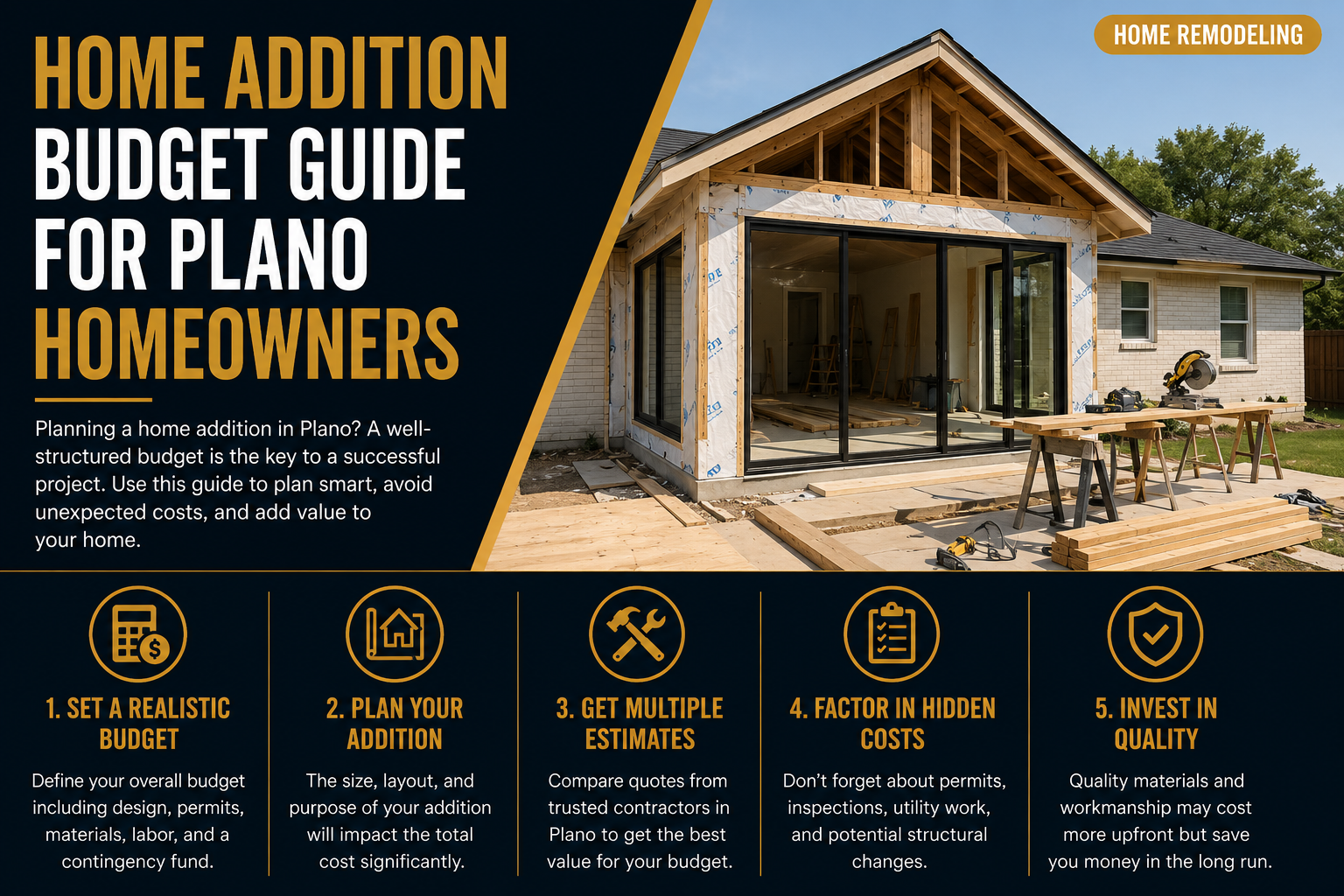
Split the budget by line item, add permits and inspections, hold back 10% to 20%, and compare estimates on what they include.
Break the money into categories from design and permits through final inspection, so you can track spending while the job runs. Keep 10% to 20% aside for what older Plano homes hide behind the drywall. Then get several detailed estimates and compare what each one includes rather than the number at the bottom.
Many homeowners start by looking at what UHS Remodeling builds, to get a feel for what is possible at their budget. Bringing an experienced contractor in early, while the layout is still on paper, is how the cost-saving opportunities get found: a good builder can suggest practical layouts, steer you toward durable materials, price the work accurately, and write a detailed estimate that leaves fewer costs to be discovered once the walls are open. A professionally designed home addition in Plano, TX plans every square foot before anything is ordered. It also pays to look at finished work from home addition contractors in Plano before you choose one. Real projects and real customer experiences tell you more about workmanship, design quality and what a budget actually buys than any brochure will.
Why the budget comes before construction
An addition is one of the larger investments a Plano household makes in its house, and the projects that finish on time and on budget are the ones that started with the money worked out. It is more fun to think about the layout and the new living space than about a spreadsheet, but skipping the budgeting step is how additions run late, run over, and turn into a source of stress instead of a room the family enjoys.
A detailed budget tells you where each dollar goes: design, permits, labor, materials, finishing. It also shows you where you have room to move, so you can protect the features you care about and trim where a cheaper option will never be noticed. Wikipedia’s overview of home improvement lists additions and renovations among the common ways homeowners add living space, comfort and property value. Proper planning remains one of the biggest factors in whether those projects succeed.
There is a practical reason to do the numbers before construction rather than during it. A budget worked out in advance tells you what the addition can be before anyone commits to it, so the layout, the material selections and the design decisions get made on paper, where changing your mind is cheap, instead of on site, where it almost always costs more.
What moves the number on a Plano addition
No two additions cost the same. The total comes down to a short list of drivers: the size of the addition, the type of space you are building (a bedroom, a kitchen expansion, a sunroom, a garage conversion or a second story), the materials you select, and whether plumbing, HVAC or structural work is involved. Size is the obvious one, but the type of space matters just as much, because a garage conversion, a sunroom and a second story ask very different things of the existing house, and extending plumbing, ductwork or structure adds cost that the square footage alone will not show.
For current price ranges broken down by addition type and size, see our home addition cost guide for Plano. This article stays on the planning side: how to build a budget that keeps those numbers under control from day one, whatever kind of addition you end up building.
Build the budget line by line
The surest way to avoid overspending is to refuse to hold the budget as one lump sum. Split it into categories, in roughly the order the work happens on site, and you can watch spending against each line while the job is running instead of finding out where the money went after the final inspection. It also makes every conversation with a contractor easier, because both of you are looking at the same list and can see where the money is being allocated.
Design and planning
Design and planning fees, architectural drawings, and building permits. This is the money spent before a single tool arrives on site, and it is the spending that decides everything after it.
Site and structure
Demolition, if the addition requires it, then foundation work, framing, and roofing. These are the lines that carry the structural cost of the project, and they are the hardest to trim without changing the addition itself.
Rough-in trades
Electrical installation, plumbing, and HVAC modifications. Extending the existing systems into new square footage is where older homes tend to reveal what they have been hiding.
Insulation, drywall and floors
Insulation, drywall, and flooring. This is the point where the addition stops being a frame and starts being a room.
Finishes
Cabinets, paint, and fixtures. These are the lines you have the most control over, and the easiest place to trade a luxury finish for a durable mid-range one without anyone noticing.
Close-out
Landscaping to repair what construction disturbed, and final inspections. Both are real costs, and both are routinely missing from first-draft budgets.
Every line above deserves its own number, even if the number is an estimate. A line left blank fills itself in later, and rarely at a price you would have chosen.
Not sure which of these applies to your house? A short conversation settles it faster than any calculator.
The two lines homeowners leave out
Permit and inspection costs
Plenty of homeowners budget for construction alone and forget that permits and inspections are required for most home additions. Permit costs vary with the size and complexity of the project, and the inspections that come with them confirm the addition meets local building codes, which protects the money you have just spent. Skipping the permit looks like a saving on paper. In practice it tends to end in fines, construction delays, or a headache when you come to sell the house. Put the permit line in the first draft of the budget and ask your contractor early whether permits and inspections will be managed for you.
A contingency fund of 10% to 20%
Even carefully planned projects uncover things. Older homes in particular hide plumbing problems, outdated electrical wiring, water damage and structural concerns that only become visible once construction begins and the walls are open. That is why experienced contractors recommend setting aside roughly 10% to 20% of the total budget as a contingency fund. With that money already in place, a surprise behind the drywall is a line-item adjustment rather than a stopped job and a strained conversation, and construction keeps moving without the financial stress.
A contingency fund is not padding; it is what lets the crew keep working on the day they find the water damage instead of waiting for you to find the money.

Where to spend and where to save
Spend on the parts that wear
Chasing the cheapest price on every material usually buys higher maintenance bills later. Quality windows, insulation, roofing materials, flooring and structural components last longer and improve the home’s energy efficiency, and while they need a larger initial investment, they typically deliver better long-term value and lower repair costs over time.
Ways to save without cutting quality
Staying inside the budget rarely means giving up the features you wanted. These are the savings that do not show in the finished room:
- Keep the existing layout wherever you can.
- Do not make design changes once construction has started.
- Choose standard-sized windows and doors.
- Reuse existing fixtures where they still suit the space.
- Pick durable mid-range materials over luxury finishes.
- Schedule the project for a slower construction season if your timeline allows.
None of those touch the workmanship. They change how much of the budget goes to things a visitor will never notice, and they leave the money for the parts that matter.
What a well-planned addition gives back
An addition is more than extra square footage; it is an investment in the property’s future. Additions that are thought through tend to improve home functionality, family comfort, resale value, energy efficiency, storage space and market appeal all at once. The test is whether the design complements the existing house. When it does, the addition reads as original to the home rather than as something bolted on later, which is exactly the effect you are paying for.
How to choose home addition contractors in Plano
Choosing the contractor is the biggest financial decision in the whole project. Experienced home addition contractors in Plano do two things at once: they build a sound addition, and they keep you inside the budget through accurate planning and pricing you can read line by line. On a job that has been priced properly, a good contractor will:
- Prepare a detailed project estimate.
- Explain where every dollar will be spent.
- Recommend cost-effective materials.
- Identify potential construction challenges early, before they become change orders.
- Keep the project on a realistic timeline.
- Help prevent the mistakes and delays that cost money.
Good communication between you and the contractor also matters more than it sounds. When something has to change mid-build, a contractor who talks to you early can adjust the budget with you rather than presenting a surprise at the end. That is what a Plano home addition should look like from the client’s side of the table: no number you have not seen coming.
I would rather lose a job to a cheaper bid than send out an estimate with the foundation work missing. When we price an addition, the drawings are finished first, so the estimate describes the house we are actually going to build.
Compare estimates on what they include
Never pick a contractor on the lowest price alone. Get several detailed estimates and compare them on experience, whether plumbing, electrical and HVAC work is done by licensed trades, insurance, the project timeline, warranty coverage, the materials included, customer reviews, and how well each one communicates. A detailed estimate is a transparency document: the more it itemizes, the fewer costs are waiting to appear later.
The lowest quote is not the best value if the services or materials that make it low have simply been left off the page.
Questions to ask before you sign
Before you sign a construction agreement, put the same questions to every contractor on your list:
- Are you insured, and is plumbing, electrical and HVAC work handled by Texas-licensed trades?
- Have you completed similar home additions in Plano?
- Can you provide recent customer references?
- What is included in the estimate, and what is not?
- How will unexpected expenses be handled?
- Will permits and inspections be managed for me?
- What is the estimated project timeline?
- Do you provide workmanship warranties?
The answers let you compare contractors on the same terms, and they tell you a great deal about how each one will handle the conversation when something on site does not go to plan.
Tell us what you are planning. We will walk your house, tell you what is actually possible, and put a real number on it before you commit to anything.
Or read the numbers first: home addition services in Plano.
Budgeting mistakes that sink Plano additions
Most additions that go over budget do so because of avoidable decisions, not because the house hid something nobody could have predicted. The same handful of mistakes come up on job after job:
Starting without a detailed plan
Beginning construction before the design is final is the most reliable way to pay for expensive changes halfway through the project. Finish the layout, the material selections and every design decision before work begins.
Ignoring hidden costs
Budgeting only for the visible construction leaves out permit fees, inspection costs, temporary storage, landscaping repairs, utility upgrades, interior painting, and furniture replacement. Put them in the first draft and they stop being surprises.
Choosing price over experience
The lowest estimate may not cover everything the addition needs. Some contractors get to a low number by leaving out materials or services that come back later as additional charges. Compare what each estimate actually includes, not the figure at the bottom.
Making frequent design changes
Changing layouts, finishes or materials after construction starts almost always costs more, in labor and in delay. Lock in as many decisions as you can before the crew arrives.
Plan it once, build it once
A successful addition begins with a realistic budget that covers every stage, from design and permits through construction and the finishing details. Once you know which factors drive the cost, the decisions get easier and the surprises get smaller. Work with experienced professionals, spend on the materials that carry the house, keep the contingency fund intact, and compare estimates on what they include rather than what they total, and you finish the project with the confidence and the long-term value you were after.
Careful planning is the whole game on any addition: a new bedroom, an expanded kitchen, a home office, or simply more room for the family. When you are ready to start, UHS Remodeling’s home addition services in Plano can design and build an addition that fits your life and your budget, with the craftsmanship that adds lasting value to the house.
Questions we get
How much should I budget for a home addition in Plano?
The cost depends on the size of the addition, design complexity, materials, labor, permits, and utility modifications. Requesting a detailed estimate from experienced Home Addition Contractors in Plano is the best way to determine an accurate project budget.
Should I set aside extra money for unexpected expenses?
Yes. Most remodeling professionals recommend reserving 10% to 20% of your total budget as a contingency fund to cover hidden structural issues, plumbing upgrades, electrical modifications, or other unforeseen costs discovered during construction.
What factors have the biggest impact on the cost of a home addition?
The largest cost factors include the size of the addition, construction materials, labor, foundation requirements, roofing, plumbing, electrical work, HVAC modifications, permits, and interior finishes.
How can I reduce the cost of my home addition without sacrificing quality?
You can save money by keeping the existing layout whenever possible, selecting durable mid-range materials, avoiding design changes during construction, comparing multiple contractor estimates, and planning the entire project before work begins.
Why should I hire professional Home Addition Contractors in Plano?
Experienced contractors provide accurate estimates, manage permits, coordinate inspections, recommend cost-effective materials, maintain construction schedules, and ensure your home addition complies with local building codes while delivering high-quality workmanship.
Do I need a permit for a home addition in Plano?
Permits and inspections are required for most home additions, and the permit cost varies with the size and complexity of the project. Inspections confirm the addition meets local building codes. Skipping permits to save money tends to lead to fines, construction delays, or difficulties when you sell the home later, so budget for them from the start and ask your contractor whether permits and inspections will be managed for you.
What should a home addition estimate include?
A detailed estimate should show the materials included, the project timeline, who handles the plumbing, electrical and HVAC work, and how unexpected expenses will be handled. Compare several estimates on what they include rather than on the lowest price. The lowest quote is not the best value if important services or materials have been excluded.
Build the budget line by line before the design is final, put permits, inspections and a 10% to 20% contingency in the first draft, and never choose a contractor on the lowest price alone. Freeze the design before the crew arrives, because changes after that point almost always cost more than the same decision made on paper.
Related from the journal
Get a line-by-line estimate for your Plano addition before construction begins.
Fully insured · 500+ client reviews · fixed-price contracts · 1-year workmanship warranty.
Prefer to talk? (469) 850-7087 · or use the contact page.