
What Is a Mudroom? Purpose, Must-Have Features & Why DFW Homes Need One
The hardest-working room in the house: a defined transition zone that keeps Texas dirt, dust, and clutter out of your living space.
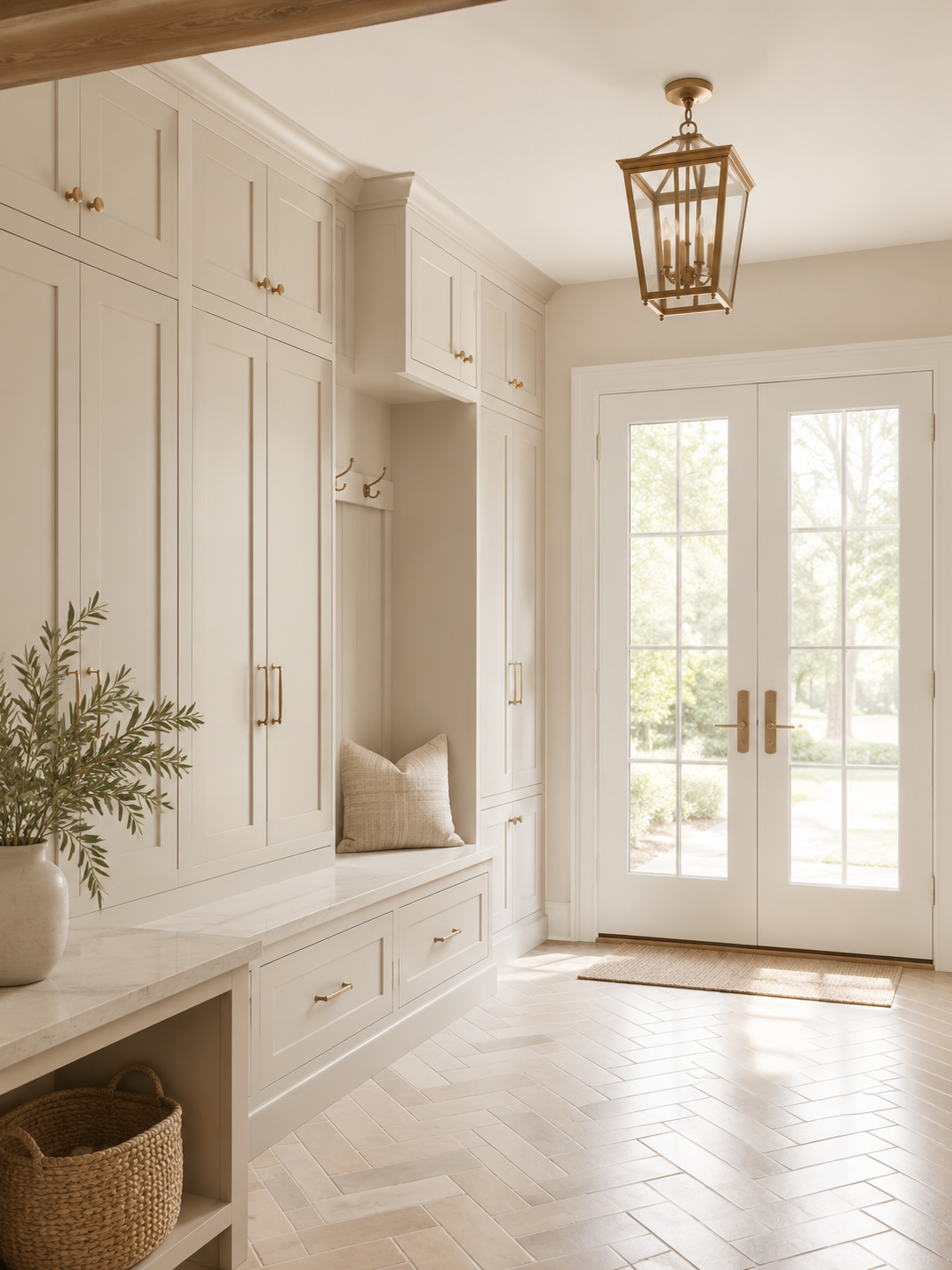
A mudroom is a dedicated transition space between an exterior entry (often the garage or back door) and the main living area, where household members remove and store shoes, coats, bags, and gear. It contains dirt, moisture, and clutter at the threshold, keeping the rest of the home cleaner and more organized.
What a mudroom is, in one line
A mudroom is a buffer room at a secondary entrance, fitted with hooks, cubbies, benches, and durable flooring, that catches the mess of daily comings and goings before it reaches your living space. In DFW, where homes rarely have basements and garage entries see heavy daily traffic from kids and pets, a well-designed mudroom is one of the highest-value organizational upgrades you can make. It is typically built as part of a broader interior remodel or home addition.
§ 01What is a mudroom and what is it for?
A mudroom is a small, purpose-built room positioned between an exterior door and your main living area. Its job: catch the mess that walks in with people. Wet shoes, muddy cleats, backpacks, dog leashes, jackets, sports gear, grocery bags, and delivery boxes all get a home here instead of piling up on your kitchen counter or hallway floor.
Historically, mudrooms earned their name in farmhouses, where field work meant literal mud at the door. The job has not changed much: a drop zone that keeps the grit off your floors and gives each person in the house one spot to leave and find their things. Most mudrooms sit at the garage entry or back door, the doors a busy household actually uses every day, rather than the formal front entrance.
§ 02What are the must-have features of a mudroom?
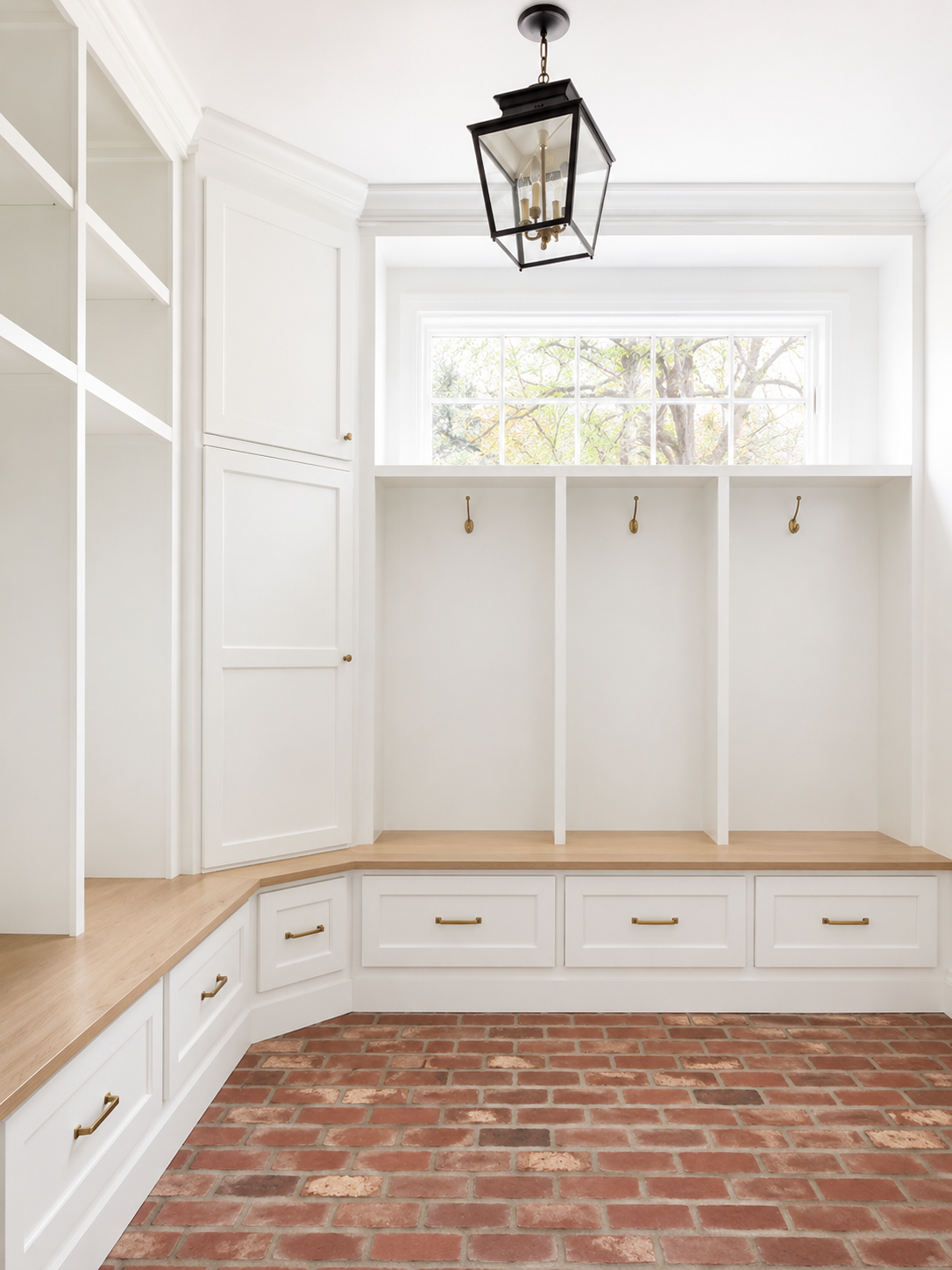
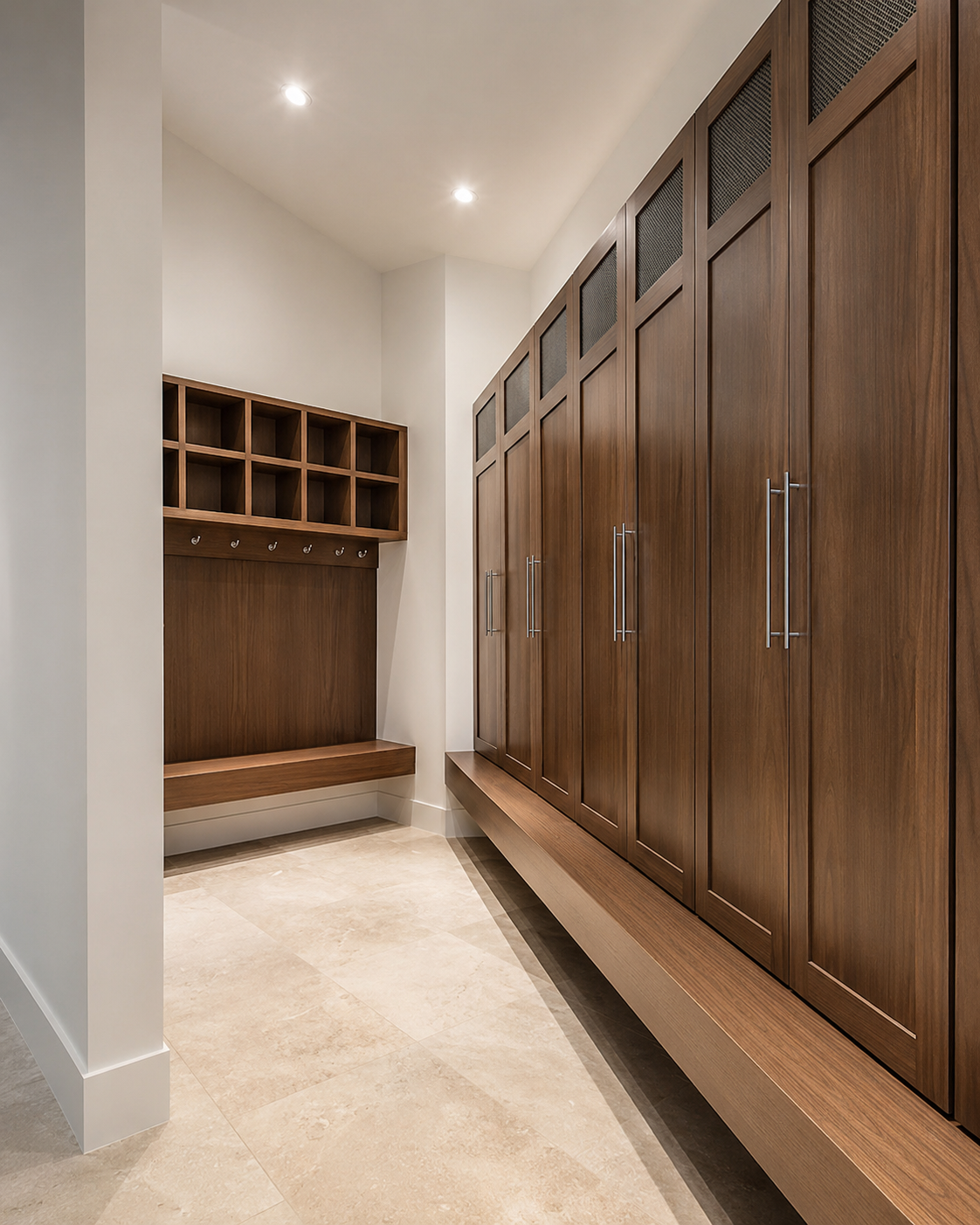
Size matters less than what goes in it. A mudroom that works has most of these:
- Bench seating for sitting to take off and put on shoes, ideally with storage underneath.
- Wall hooks or a coat rack at adult and child height for jackets, bags, and leashes.
- Cubbies or lockers assigned per family member, so everyone has their own zone.
- Closed cabinetry to hide seasonal items, cleaning supplies, and overflow out of sight.
- Durable, water-resistant flooring such as porcelain tile or luxury vinyl that shrugs off mud and moisture.
- A shoe tray or boot mat to corral wet footwear and protect the floor.
Higher-end DFW mudrooms often add a utility sink, a built-in dog-washing station, a second refrigerator or freezer, a charging drawer for devices, and sometimes a combined laundry function. If you are working with a tight footprint, our guide to 15 space-saving mudroom designs shows how to fit real storage into a narrow entry or a converted corner of the garage.

A mudroom isn’t a luxury; it’s the room that protects every other room. Get the drop zone right at the garage door, and the rest of your house stays calmer all year.— May N. · Co-Founder, UHS Remodeling
§ 03Mudroom vs. foyer vs. entryway: what’s the difference?
Homeowners use these three words for the same spot by the door, but they are different rooms with different jobs:
| Space | Primary location | Main purpose | Typical features |
|---|---|---|---|
| Mudroom | Garage or back entrance (everyday use) | Function: store gear, contain dirt and clutter | Benches, cubbies, hooks, durable flooring, storage |
| Foyer | Front entrance (formal/guest use) | First impression: welcome and transition for visitors | Console table, mirror, lighting, decorative finishes |
| Entryway | Any interior entry point | General catch-all term for the area just inside a door | Varies; often a smaller, less defined space |
In short: a foyer makes a first impression for guests, an entryway is the generic space just inside any door, and a mudroom is the workhorse built for daily function rather than display. Many DFW families want both: a polished foyer at the front and a hardworking mudroom off the garage.
§ 04Why do DFW homes especially benefit from a mudroom?
A few things about North Texas houses make a mudroom more useful here than in most places:
- No basements. Most DFW homes sit on slab foundations, so there is no lower level to absorb gear, storage, and overflow the way a basement does in colder climates. That storage need pushes up to the main floor, and a mudroom answers it.
- Garage-first entry. The vast majority of Plano, Frisco, and McKinney families enter through the garage, not the front door. Without a defined transition zone there, shoes and bags spill straight into the kitchen.
- Texas dirt and weather. Red clay soil, lawn-treatment dust, pool water, and sudden storms all track inside. A mudroom with tile flooring and a boot tray keeps that mess at the threshold.
- Active households. Cleats, leashes, and pool towels come in through the garage door every day and need a place to land.
Because so many homes lack one, adding a mudroom is also a frequent goal for owners planning a larger renovation. If your current floor plan has no logical drop zone, adding a mudroom to your home through a garage conversion or a small bump-out is often the cleanest path. For homes that already have the space but not the buildout, our interior remodeling services in DFW turn an awkward hallway or laundry corner into an organized, finished mudroom.
§ 05How much does it cost to build a mudroom in DFW?
Mudroom cost depends heavily on whether you are outfitting existing square footage or creating new space. As a general DFW guideline:
| Project type | What’s involved | Typical DFW range |
|---|---|---|
| Outfit an existing nook | Built-in bench, cubbies, hooks, paint, durable flooring | Lower end of an interior project |
| Convert laundry or hallway | Reconfigure layout, custom cabinetry, sink, electrical | Mid-range interior remodel |
| Garage conversion to mudroom | Insulation, HVAC, flooring, drywall, full buildout | Higher-end interior remodel |
| New addition (bump-out) | Foundation, framing, roof, full finish-out | Home addition: $120K-$400K (full project scope) |
A simple buildout of an existing space is a modest line item within a kitchen or interior project, while a true addition that expands your footprint falls into our home-addition range of $120K-$400K, depending on size, finishes, and structural work. Garage conversions require careful attention to insulation, HVAC, and permitting to bring the space up to conditioned-living standards. Every UHS project is delivered on a fixed-price contract and backed by our 1-year workmanship warranty, so you know the number before work begins.
Your DFW mudroom planning checklist
§ 06What does the mudroom design and build process look like?
For a buildout within your existing home, a mudroom is usually folded into a broader kitchen or interior remodel. The process starts with a design consultation to map how your family moves through the space, followed by a fixed-price proposal, cabinetry and finish selections, and then the build itself, typically a few weeks for an outfit-only project and longer for conversions or additions that involve structural and mechanical work.
Because converting a garage or adding a bump-out changes your home’s footprint and systems, those projects require permits. As a Plano-based design-build remodeler serving 21 DFW communities, UHS pulls all permits, is fully insured, and uses licensed trades for electrical, plumbing, and HVAC work, so the finished mudroom passes inspection and holds up.
§ Q&AFrequently asked questions.
Want a mudroom in your DFW home? Let us design your drop-zone.
Fully insured · 500+ verified five-star reviews · fixed-price contracts · 1-year workmanship warranty.
May N.
Co-Founder and design lead at UHS Remodeling, a Plano-based DFW design-build firm. She has helped guide kitchen, bath, and whole-home projects across the metroplex since 2014.
UHS Remodeling brings over a decade of experience to remodeling across 21 DFW communities, on fixed-price contracts backed by a 1-year workmanship warranty.