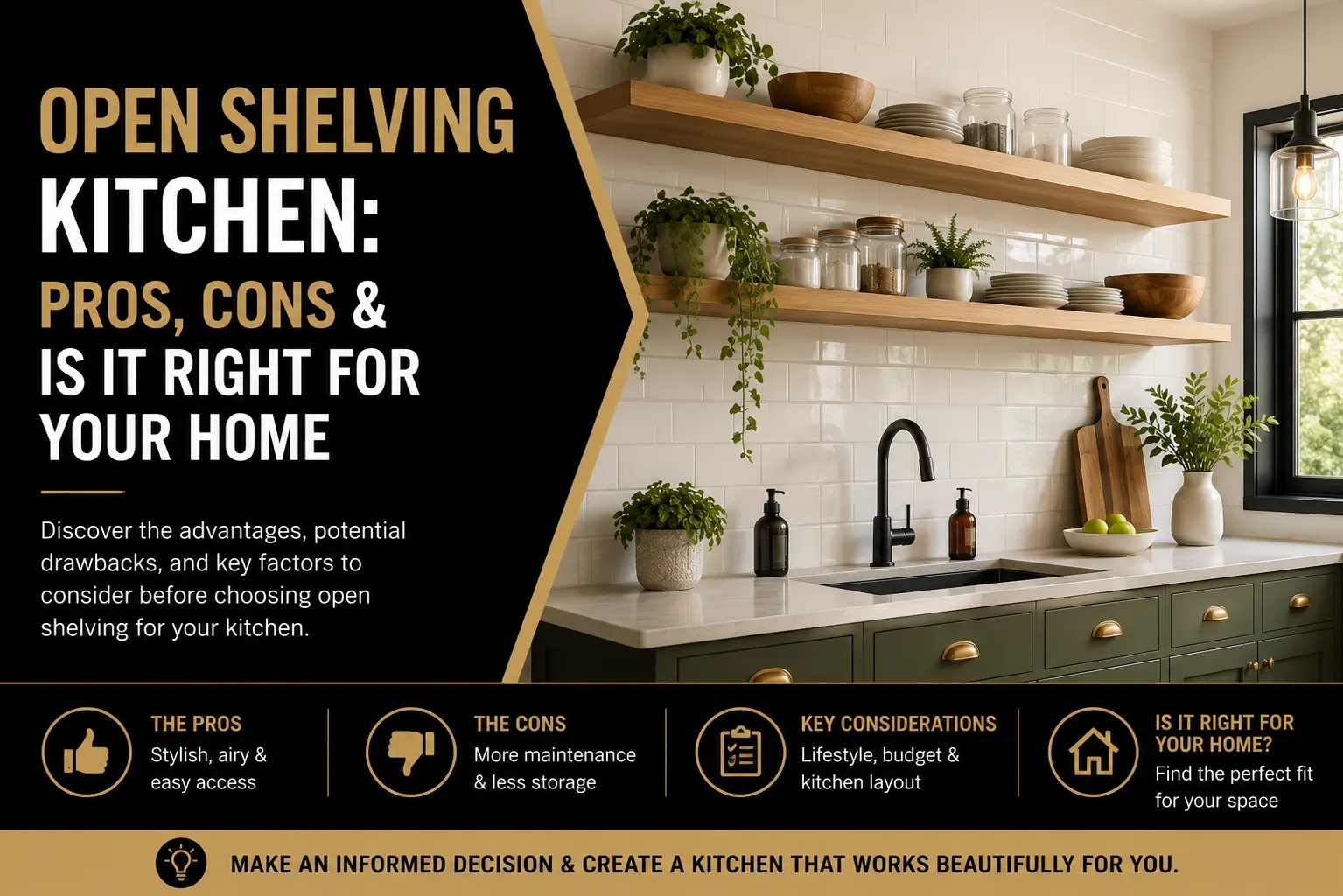
The debate around open shelving kitchen pros and cons continues to grow as more homeowners seek modern, functional, and visually appealing kitchen spaces. Open shelves have become a defining trend in contemporary kitchen design, replacing traditional upper cabinets in many remodeling projects. The look is easy to like, but homeowners often wonder whether kitchen open shelving is truly practical for everyday living.
In 2026, kitchens are expected to balance style, organization, functionality, and long-term value. Before replacing cabinets with shelves instead of cabinets, it is important to understand both the advantages and limitations. The right decision depends on your lifestyle, storage needs, maintenance expectations, and remodeling goals.
Why Open Shelving Has Become So Popular in Modern Kitchen Design
The popularity of open shelf concepts comes from the shift toward cleaner, brighter, and more personalized kitchens. Homeowners increasingly want spaces that feel larger and more welcoming. Removing bulky upper cabinets creates visual openness while allowing decorative items to become part of the design.
Many modern kitchens open directly into living rooms and dining areas. Open shelving ties those spaces together while displaying dishware, plants, artwork, and accessories.
Several factors contribute to the growing popularity of shelving in the kitchen:
- Creates an airy and spacious appearance
- Provides easy access to everyday items
- Encourages better organization
- Offers opportunities for decorative displays
- Works well in small kitchens
- Complements modern, farmhouse, industrial, and transitional styles
- Can reduce cabinetry costs in some projects
Many homeowners exploring modern kitchen trends discover that open shelving remains one of the most requested design features heading into 2026.
The Major Pros of Open Shelving Kitchens
1. Makes the Kitchen Feel Larger
One of the biggest advantages is visual expansion. Traditional upper cabinets create solid walls that can make kitchens feel confined. Open shelves eliminate this visual barrier and create a more spacious environment.
This benefit is especially valuable in smaller homes, condos, and older Texas properties where maximizing visual space is important.
2. Improves Accessibility
Items stored on open shelves are easier to reach than those hidden behind cabinet doors. Frequently used dishes, glasses, bowls, and cookware remain readily accessible.
For busy families, this can streamline meal preparation and reduce daily frustration.
3. Adds Character and Personalization
Open shelving transforms storage into design. Homeowners can display:
- Ceramic collections
- Cookbooks
- Decorative dishes
- Plants
- Artwork
- Family heirlooms
- Glassware
This customization creates a kitchen that reflects personal style rather than looking like a standard builder-grade space.
4. Encourages Organization
Because everything remains visible, homeowners naturally maintain better organization. Clutter becomes obvious immediately, encouraging consistent upkeep.
Many clients discover they accumulate fewer unnecessary kitchen items after switching to open shelving systems.
5. Enhances Natural Light
Removing upper cabinets allows more light to travel throughout the room. Improved light distribution can make kitchens feel cleaner, brighter, and more inviting.
According to research and home environment guidance published by the U.S. Environmental Protection Agency, well-designed interior environments contribute to healthier and more comfortable living spaces.
The Cons of Open Shelving Every Homeowner Should Consider
While the benefits are attractive, understanding the cons of open shelving is essential before making a remodeling decision.
1. Dust and Grease Accumulation
The most common complaint involves dust, cooking oils, and airborne particles settling on exposed items. Unlike upper cabinets, open shelves provide no barrier against kitchen contaminants.
Homeowners who cook frequently often need to clean displayed items more regularly.
2. Requires Consistent Organization
Open shelving leaves no room for hidden clutter. Every item becomes part of the kitchen’s visual presentation.
If organization is not maintained, the kitchen can quickly appear messy and overcrowded.
3. Limited Storage Capacity
Traditional upper cabinets typically provide greater storage volume than open shelving. Large appliances, food storage containers, and miscellaneous kitchen items often require alternative storage solutions.
4. Fragile Items Are More Exposed
Dishes and decorative pieces remain vulnerable to accidental bumps, impacts, and falls.
Families with young children may find this especially concerning.
5. Not Ideal for Every Lifestyle
Busy households that prioritize convenience over aesthetics may struggle with the maintenance requirements associated with open shelf installations.
Open Shelving Kitchen Pros and Cons Table
| Pros | Cons |
| Creates a more open and spacious kitchen design | Exposes items to dust, grease, and cooking residue |
| Improves accessibility for daily-use items | Requires constant organization and maintenance |
| Enhances natural light and visual flow | Reduces hidden storage capacity compared to cabinets |
| Allows decorative and personalized styling | Not ideal for hiding mismatched or bulky items |
| Can reduce cabinet installation costs | May feel cluttered if not carefully arranged |
| Works well in modern and open-concept homes | Less suitable for high-traffic or busy family kitchens |
Mixed Shelf Offerings: Combining Open Shelves and Cabinets
Many homeowners ask whether mixed shelf offerings provide the best of both worlds. In most cases, the answer is yes.
Rather than eliminating all upper cabinets, designers often combine open shelving with traditional storage. This hybrid approach delivers visual openness while preserving concealed storage where needed.
Popular mixed shelf offerings include:
- Open shelves around windows
- Floating shelves above coffee stations
- Cabinets on one wall and shelves on another
- Glass-front cabinets paired with open displays
- Shelving around range hoods
This strategy often delivers the ideal balance of aesthetics and practicality.
DIY Open Shelving Installation: What Homeowners Should Know
Many homeowners attempt DIY shelf installation after watching online tutorials. While simple projects may appear straightforward, professional installation often produces safer and more durable results.
Typical DIY steps include:
- Locating wall studs
- Selecting bracket systems
- Measuring shelf spacing
- Ensuring level installation
- Anchoring heavy loads properly
- Finishing shelf surfaces
Although these steps seem manageable, numerous technical challenges can arise.
Why DIY Open Shelving Projects Often Fail
Many homeowners underestimate the structural demands of kitchen shelving. Open shelves frequently support significant weight from dishes, cookware, and decorative items.
Common DIY mistakes include:
- Incorrect anchor selection
- Missing wall studs
- Uneven shelf placement
- Insufficient weight support
- Improper spacing
- Inconsistent shelf alignment
- Failure to account for electrical or plumbing lines
These issues can lead to sagging, wall damage, expensive repairs, and safety hazards.
Homeowners planning larger renovations should also review our guide on contractor mistakes to avoid common remodeling pitfalls.
How Open Shelving Impacts Home Value
One of the most common questions involves resale value. The answer depends largely on execution.
Professionally designed shelving systems integrated into a larger kitchen remodel often enhance buyer perception. However, poorly installed shelves may reduce appeal.
Buyers generally respond positively when:
- The kitchen remains functional
- Sufficient storage exists elsewhere
- The design feels intentional
- Materials complement the home’s architecture
- The shelves are professionally installed
For homeowners focused on return on investment, our article about kitchen ROI provides additional insights.
What Research Says About Visual Organization and Home Design
Studies on environmental psychology suggest that organized spaces can positively influence comfort and perceived functionality. Research and educational resources from institutions such as Utah State University Extension Interior Design Program emphasize storage planning and thoughtful interior layouts.
Open shelving works best when homeowners commit to maintaining organization and visual consistency.
Understanding the Difference Between Kitchen Design Terms and Financial Terminology
While researching open shelving online, homeowners occasionally encounter unrelated financial phrases such as company registers, stock price, type of security, registration process, registration statements, forms S-3, securities and exchange commission, exchange commission SEC, corporation finance, and selling securities.
These terms belong to financial and regulatory industries rather than kitchen remodeling. However, the similarity between phrases like “open shelf” and certain business terminology can sometimes create confusion in search results.
When evaluating remodeling decisions, focus on practical kitchen considerations, lifestyle needs, storage requirements, and long-term value rather than unrelated financial references.
Signs It’s Time to Hire a Professional Remodeling Company
- Your project involves electrical relocation
- You are removing upper cabinets
- Walls require structural modification
- You want custom shelving solutions
- You are planning a complete kitchen remodel
- You need permit guidance
- You want maximum resale value
- You need integrated lighting or custom cabinetry
The National Kitchen and Bath Association consistently emphasizes professional planning and design for achieving functional, code-compliant kitchen renovations.
Why Homeowners Choose UHS Remodeling
Kitchen remodeling requires more than installing shelves. It requires understanding how design, storage, lighting, workflow, materials, and construction all work together.
UHS Remodeling helps homeowners create kitchens that are beautiful, functional, and built for long-term performance.
- Custom kitchen design solutions
- Experienced remodeling professionals
- Detailed project planning
- High-quality craftsmanship
- Transparent communication
- Code-compliant construction
- Tailored storage solutions
- Focus on long-term value
From open shelving to custom cabinetry to a full kitchen remodel, professional guidance helps your investment deliver lasting results.
Frequently Asked Questions About Open Shelving Kitchens
Is mixed shelf offering good or bad?
Mixed shelf offerings are generally a good solution when homeowners want both style and practicality. They combine open shelving for display with closed cabinets for storage, reducing clutter while maintaining a modern aesthetic. This hybrid approach is often recommended in full kitchen remodel planning.
What do open shelf reviews magazine articles say?
Most open shelf reviews magazine features highlight the strong visual appeal and modern design flexibility of open shelving kitchens. However, they also consistently mention drawbacks such as dust buildup, limited hidden storage, and the need for ongoing organization to maintain a clean appearance.
Is kitchen open shelving still trending in 2026?
Yes, kitchen open shelving remains highly popular in 2026, especially in modern and minimalist kitchen design. Homeowners continue to choose shelves for their airy look and accessibility, though professionals increasingly recommend blending them with upper cabinets for balance and long-term functionality.
Are shelves instead of cabinets a good idea?
Using shelves instead of cabinets can work well for homeowners who prioritize aesthetics and easy access. However, it may not suit those who need maximum storage or prefer hidden organization. A mixed design is often the most practical solution in real homes.
What is an open shelf kitchen design best suited for?
An open shelf kitchen design works best in homes that value visual openness, a modern look, and carefully styled shelves. It is especially effective in smaller kitchens or open-concept layouts where upper cabinets might feel heavy or restrictive.
How difficult is it to maintain open shelving kitchens?
Open shelving kitchens require more maintenance than traditional cabinetry. Items are exposed to dust, grease, and kitchen activity, meaning regular cleaning is essential. Homeowners must also maintain consistent organization to avoid a cluttered appearance.
Do open shelves affect home resale value?
Open shelves can positively influence resale value when integrated into a professionally designed kitchen remodel. Buyers generally appreciate modern, well-designed shelving systems, but poorly executed DIY installations may reduce buyer interest.
Final Conclusion: Making the Right Choice for Your Kitchen
Understanding the open shelving kitchen pros and cons is essential before committing to any design change. While open shelving delivers a clean, modern look and improves accessibility, it also introduces challenges such as maintenance, limited storage, and exposure to dust and grease.
The most successful kitchens often use a balanced approach combining open shelves with traditional cabinetry to achieve both beauty and functionality. This hybrid design ensures your kitchen remains practical for everyday use while still reflecting your personal style.
If you are planning a kitchen upgrade, choosing the right layout early in the process can save time, money, and frustration later. A professional remodeling plan makes sure your storage, workflow, and design all work together.
Related guides from UHS Remodeling: