
What Are the Advantages of Using a Double Kitchen Sink?
Two basins, one for washing and one for rinsing, take most of the chaos out of cleanup. Here is what a double bowl sink gives you, what it costs in plumbing and counter space, and how to size one for the cabinet you already have.
You are washing dinner dishes and rinsing plates under running water, and with a single bowl you are switching between the two jobs the whole time. Water splashes everywhere. Dirty dishes pile up on the counter. A double kitchen sink fixes this. Two separate basins mean you wash in one and rinse in the other. You can soak pans while prepping vegetables, or defrost meat on one side and keep the other clean for drinking water. It is not about more sink. It is about less chaos. Here is why a double bowl setup adds function and efficiency to a kitchen, and what it asks of you in return.
Wash in one bowl, rinse in the other, and stop fighting your own sink.
A double kitchen sink separates dirty from clean, so you can soak pans while prepping or thaw meat on one side while the other stays clean. The most common size is 33 x 22 inches in a 36-inch cabinet, and 18-gauge stainless steel is the spec that resists dents. Expect two P-traps, $150-$300 more in installation than a single bowl, and 3-4 inches of lost depth on the disposal side.
The core advantage: task separation that saves time
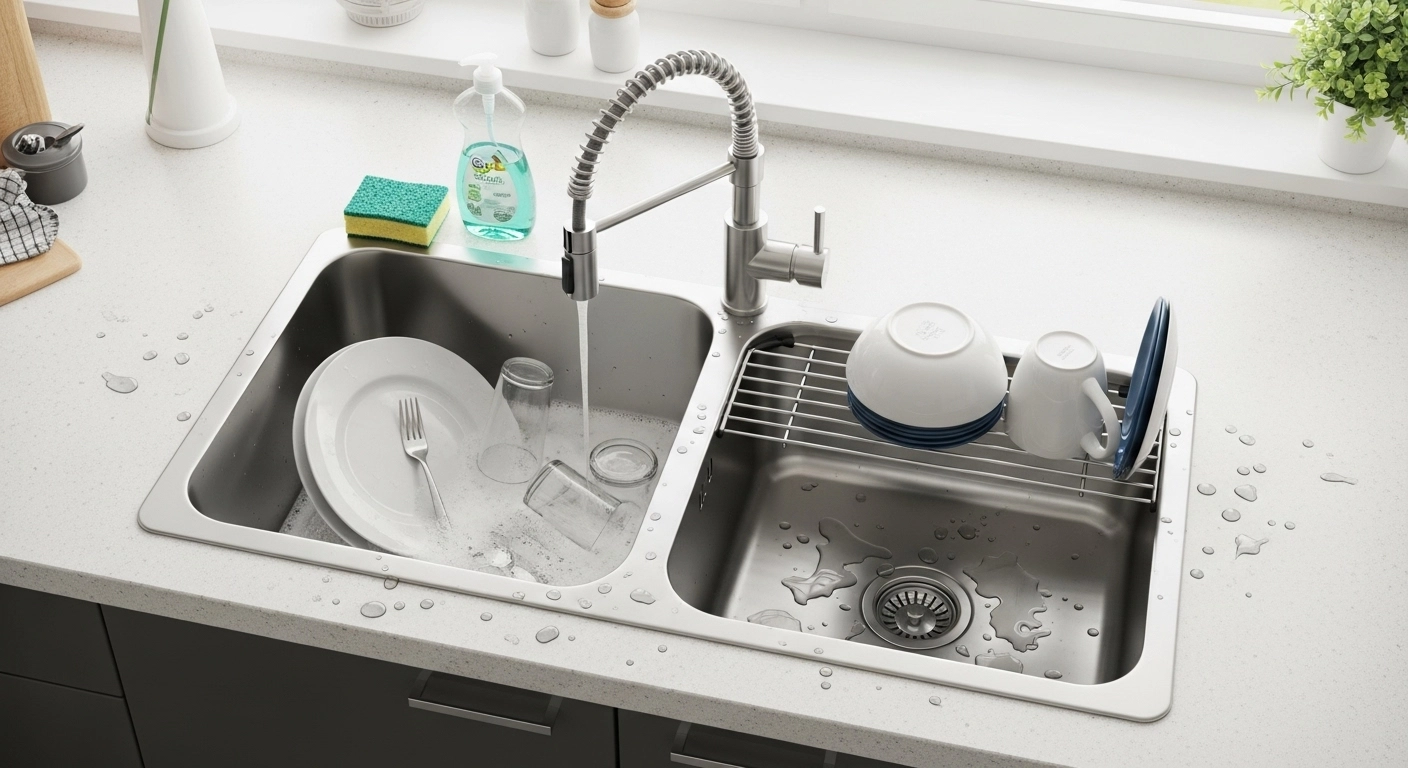
One side for dirty, one for clean. This is the entire thing. With a double kitchen sink you fill the left basin with hot soapy water, scrub plates, utensils and cutting boards, stack them in the right basin, and run cold water to rinse. No cross-contamination, and no stopping to drain and refill.
Commercial kitchens figured this out decades ago. Health codes require separate wash and rinse stations, and your home kitchen benefits the same way. What that looks like on an ordinary week:
- Prep salad in one bowl while burnt cookware soaks in the other.
- Thaw frozen chicken on one side and wash fresh produce on the other.
- Fill one basin with ice for drinks during a party and keep the other working.
- Soak dishes overnight without losing access to running water.
Restaurants have run separate wash and rinse stations for decades. A double basin brings the same discipline home and lets you multitask at the sink instead of queueing everything through one bowl.
Double bowl stainless steel: why the material matters
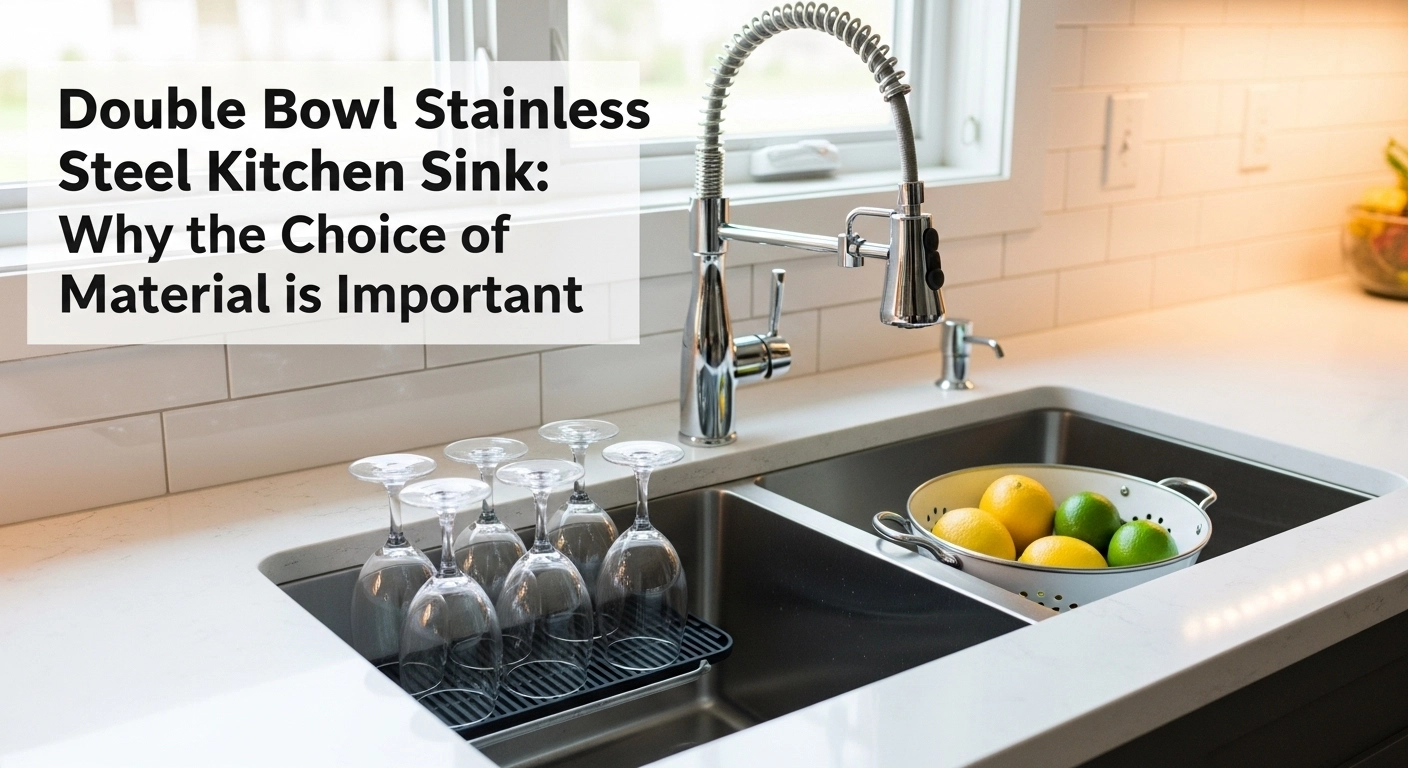
Stainless steel is the popular choice for kitchen sinks for some obvious reasons. It resists rust and corrosion. It survives boiling water and ice without cracking. Tomato sauce and coffee do not stain it. And it is hygienic, because bacteria cannot penetrate the surface. The question is not whether to buy stainless, it is which stainless, and two specifications decide that.
Gauge determines quality
Gauge is the thickness of the steel, and lower numbers are thicker. An 18-gauge sink resists denting better than a 22-gauge sink. Expect to pay in the range of $200-$400 for 18-gauge versus $100-$200 for 22-gauge. A cheaper sink dents when you drop a cast iron skillet in it. The thicker one takes the hit and stays flat.
Sound dampening matters too
Cheap stainless steel sinks ring like bells every time water hits them. An undercoating or sound-dampening pads on the underside absorb that vibration, so the kitchen stays quieter during dish duty. Premium double bowl stainless sinks include this. Cheap ones do not.
Double kitchen sink dimensions: finding the right fit for your space
Double bowl sinks come in a handful of standard sizes, and the base cabinet you already own decides which of them are even possible.
33 x 22 inches, the most common
Fits a 36-inch base cabinet. Each bowl measures roughly 14-16 inches wide, which handles everyday cooking and cleanup for a household of 2-4 people.
36 x 22 inches
Requires a 39-inch cabinet at minimum and gives you 17-18 inches per bowl. Better for families who cook large meals or wash large pots regularly.
48 x 22 inches, oversized
Needs a 48-inch cabinet. Rare in standard kitchens, and common in luxury remodels where counter space is not the constraint.
Depth changes how the sink feels
- 6-7 inches: too shallow. Water splashes onto the counters.
- 8-9 inches: the standard, and a good balance between capacity and ergonomics.
- 10+ inches: deep enough for stockpots, but you bend to reach the bottom. Harder on your back over years of use.
Measure the base cabinet before you shop. A 33-inch sink does not go into a 33-inch cabinet; you need 3 inches of clearance for the mounting hardware. That single measurement rules out more sinks than any other decision on this page.
Not sure which of these applies to your house? A short conversation settles it faster than any calculator.
Small double kitchen sinks: making dual basins work in tight layouts
A double sink does not require a big kitchen. Compact versions keep the task separation and give up some soaking room.
27 x 19 inches
Two small bowls in a 30-inch cabinet. Each basin holds about 2-3 place settings. Works for apartments or galley kitchens where every inch counts.
30 x 20 inches
Fits a standard 33-inch cabinet. The bowls are narrow but functional. You sacrifice soaking capacity but keep the wash-and-rinse split that makes a double sink worth having.
Offset designs
One large bowl takes roughly 60% of the sink and one small bowl takes the remaining 40%. The large side handles pots and pans; the small side is for rinsing or food prep. This layout gets the most use out of the sink without eating the whole countertop.
Top mount vs undermount
Top mount (drop-in) sinks sit on the counter. They are easier to install and cost less, but the raised rim collects grime along its edge. Undermount sinks attach beneath the counter: a cleaner look, and you wipe crumbs straight off the counter into the bowl. Installation needs a professional and runs about $200-$400 more.
For a small double kitchen sink, top mount is the economical choice. For a high-end remodel, undermount gives the finish people expect. If the sink is one piece of a broader update, understanding the difference between renovation vs remodel helps you budget correctly and settle on the right scope before you buy fixtures.
Double bowl vs single bowl: the honest trade-offs
A double bowl is the better choice when:
- You hand-wash dishes regularly.
- Multiple people use the kitchen at the same time.
- You prep and clean at the same time.
- You soak pans or defrost meat often.
A single bowl suits you better when:
- You wash oversized items: baking sheets, roasting pans, woks.
- You have a dishwasher and rarely hand-wash.
- Counter space is limited.
- You prefer a sleek, minimalist look.
The math is simple. A 33-inch single bowl gives you one uninterrupted workspace. A 33-inch double bowl splits that into two 14-inch sections. Neither is wrong; it depends on how you actually use your kitchen.
The double drainer option
A double drainer kitchen sink adds raised, ribbed sections on one or both sides of the bowls. Dishes air-dry there without a separate rack cluttering the counter, the water drains straight back into the sink, the countertop stays dry, and the ribbed area holds drying dishes, washed vegetables or thawing meat. The drawback is that you lose counter space to it. In a large kitchen that is fine. In a compact layout the trade-off hurts, and you are better off with a standalone dish rack you can put away when it is not needed.
I ask clients to stand at their current sink and walk me through a Sunday dinner cleanup before we settle on a bowl configuration. How you actually wash, not how you imagine washing, decides whether the divider helps you or gets in your way.
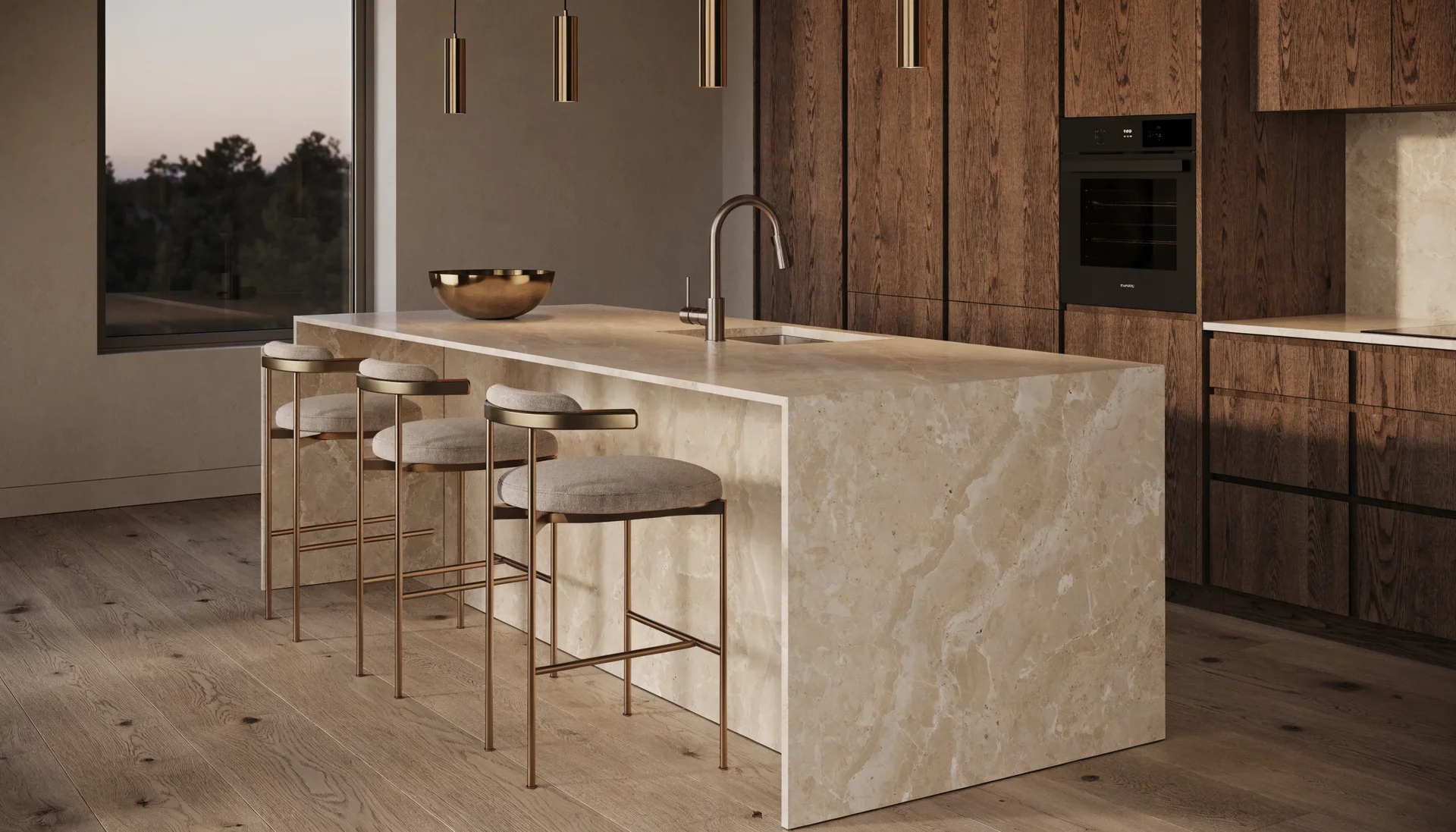
Double sink with tap: faucet holes and reach
The faucet is chosen after the sink, because the deck holes in the sink decide what can be mounted on it.
- 1-hole: requires a single-handle faucet. Modern, minimalist, easy to clean around.
- 3-hole: standard for traditional faucets, two handles plus a spout. Some models include a sprayer hole.
- 4-hole: adds a soap dispenser or an air gap for the dishwasher.
Buy the sink first and match the faucet to the hole configuration, not the other way around.
Reach matters just as much. The spout needs to clear both bowls. A faucet with an 8-inch reach on a 33-inch double sink barely reaches the center of the far bowl, so you twist your wrist to rinse anything on that side. Look for 10-12 inches of reach at minimum on a double basin sink.
Installation in different kitchen layouts
The cabinet decides which sinks fit. The shape of the kitchen decides where the sink should go.
Galley kitchens (48 inches wide or less)
A small double kitchen sink at 27-30 inches preserves counter space. Position it near the dishwasher so dirty dishes travel the shortest possible distance.
L-shaped kitchens
Place the double sink in the corner or along the longer wall, leaving prep space on both sides. This mirrors professional kitchen design: what works in restaurants works at home. The same logic applies to smart shower layouts in bathrooms, where fixture placement changes daily function more than any finish does.
Island installations
Double bowl stainless sinks work well in islands, giving you a work zone that faces into the room. But you need 42-48 inches of island depth to fit the sink plus counter space behind it.
U-shaped kitchens
These have the most flexibility. A 36-inch double sink fits comfortably without sacrificing prep areas.
Before you commit to dimensions, map your workflow. Where do you chop vegetables? Where does the dishwasher sit? Where do you stack dirty dishes? Sink placement affects everything; get it wrong and the kitchen fights you every day. For a major update that reworks the whole space, Plano kitchen remodeling professionals can configure a layout around how your household actually cooks and cleans, rather than around where the old plumbing happened to be.
Tell us what you are planning. We will walk your house, tell you what is actually possible, and put a real number on it before you commit to anything.
Or read the numbers first: kitchen remodeling in Plano, TX.
The hidden costs nobody tells you about
Two bowls means more plumbing
Two drains mean two P-traps: more connections and more potential leak points. Installation costs $150-$300 more than a single-bowl setup.
Garbage disposal compatibility
Most people install the disposal under one bowl. That basin becomes the dirty side and the other stays clean for food prep. But a disposal reduces bowl depth by 3-4 inches, so a 9-inch deep sink becomes 5-6 inches usable, and suddenly the large pots do not fit on that side.
Cleaning effort
Two bowls mean double the surfaces to scrub, and the divider between them collects grime. Count on an extra 2-3 minutes per cleaning session. Not a dealbreaker, just honest math.
The mistakes that turn these costs into regret are predictable:
Buying the sink for the cabinet you wish you had
A 33-inch sink in a 33-inch cabinet does not fit; there is no room for the mounting hardware. Measure first, and keep the 3 inches of clearance.
Choosing the faucet before the sink
The deck holes decide the faucet, and an 8-inch spout on a 33-inch double sink leaves you twisting your wrist over the far bowl for years.
Saving money on thin steel
A 22-gauge sink feels flimsy, dents from normal use, and rings like a bell when the water runs.
Forgetting the disposal steals depth
The disposal side loses 3-4 inches of usable depth. If stockpots go on that side, they stop fitting.
Adding a drainer to a compact kitchen
The ribbed drying section eats counter space you cannot spare. A removable rack does the same job and disappears when you need the counter back.
Choosing the right double bowl kitchen sink for your household
A double kitchen sink makes the time you spend at the counter easier, less chaotic and less annoying. Fewer trips to the dishwasher, less counter clutter, and cooking and cleaning that can run side by side. The right spec depends on who is using it.
For families (4+ people): a 36-inch double bowl stainless steel sink, 9+ inches deep, in 18-gauge steel. Undermount installation for easier cleanup.
For couples or small households: the 33-inch standard size, 8-9 inches deep. Top mount saves on installation, and 20-gauge steel works fine.
For serious home cooks: an offset design. One large bowl of 18+ inches for pots, one small bowl for prep and rinsing.
For resale value: a stainless steel double kitchen sink. Neutral, durable, and it appeals to the widest buyer pool. Granite composite looks premium but polarizes; some buyers love it and others hate it.
The order to do it in is short:
Measure the base cabinet
Confirm the cabinet width and subtract the 3 inches of clearance the mounting hardware needs. That number tells you which sink sizes are on the table: a 36-inch cabinet takes the 33 x 22 standard, a 39-inch cabinet takes a 36 x 22.
Pick size, depth and bowl split
Choose between the standard 33 x 22, the larger 36 x 22 or a compact 27 x 19 or 30 x 20, then settle the depth (8-9 inches is the standard; 10+ holds stockpots but is harder on your back) and whether you want equal bowls or an offset.
Choose gauge and mounting
Decide between 18-gauge and lighter steel, and between top mount and undermount, with the extra $200-$400 for undermount installation in view. Check that the sink includes sound-dampening pads or an undercoating.
Buy the sink, then the faucet
Match the faucet to the deck holes (1-hole, 3-hole or 4-hole) and check the spout reach against both bowls; 10-12 inches is the minimum on a double basin.
Install it right
Two P-traps, a disposal on one side if you want one, and a plumber who has done it before. Remember that the disposal side loses 3-4 inches of depth, so large pots will not fit on that side.
Measure your cabinet. Pick the suitable material. Install it right. Your kitchen will work better, every single day. And if the sink is the start of a bigger project, our kitchen remodeling team in Plano plans the sink, the cabinet run and the plumbing as one decision instead of three.
UHS Remodeling serves North Texas: based in Plano with dedicated crews across Plano, Frisco, Allen, Dallas, Highland Park, Prosper and 9 more DFW cities. See the 2026 DFW Kitchen Remodeling cost guide for what a full kitchen project runs.
Questions we get
What is the standard size for a double kitchen sink?
33 x 22 inches is the standard size for a double kitchen sink. Fits a 36-inch base cabinet. Each bowl measures 14-16 inches wide and 8-9 inches deep. Handles most cooking and cleaning tasks for average households.
Are double sinks better than single bowl sinks?
It depends on usage. Double bowls are best for multitasking. Wash in one, rinse in the other. Single bowls fit oversized cookware better. If you hand-wash dishes regularly, double is the most suitable choice. If you use a dishwasher and cook with large pots, you should go for a single bowl.
Can you install a garbage disposal with a double bowl sink?
Yes. Install it under one basin. That side becomes your disposal side for food waste. The other side stays clean for rinsing produce or filling water glasses. Note that the disposal reduces bowl depth by 3-4 inches.
What gauge stainless steel is best for kitchen sinks?
18-gauge is best for durability. Resists dents from dropped cookware. 20-gauge is suitable for budget-friendly installs but dents easier. Avoid 22-gauge. It feels flimsy and dents from normal use.
How much faucet reach do I need for a double kitchen sink?
Look for a spout with 10-12 inches of reach at minimum. An 8-inch reach on a 33-inch double sink barely reaches the center of the far bowl, so you end up twisting your wrist to rinse on that side. Buy the sink first, then match the faucet to its deck holes and reach.
Does a double kitchen sink cost more to install than a single bowl?
Yes. Two drains mean two P-traps and more connections, which adds $150-$300 to installation over a single-bowl setup. An undermount installation adds roughly $200-$400 more than a top mount on top of that.
What size cabinet do I need for a double kitchen sink?
The 33 x 22 inch standard needs a 36-inch base cabinet, a 36 x 22 needs a 39-inch cabinet at minimum, and a compact 27 x 19 fits a 30-inch cabinet. Allow 3 inches of clearance beyond the sink width for mounting hardware, so a 33-inch sink never goes into a 33-inch cabinet.
Measure the base cabinet, keep 3 inches of clearance, and buy the sink before the faucet. Go 18-gauge stainless with sound dampening, 8-9 inches deep for most households, and accept the extra P-trap and the 2-3 minutes of cleaning as the price of never queueing dishes through one bowl again.
Related from the journal


Plan the sink with the rest of the kitchen so the cabinet, the plumbing and the faucet get decided once.
Fully insured · 500+ client reviews · fixed-price contracts · 1-year workmanship warranty.
Prefer to talk? (469) 850-7087 · or use the contact page.