
One-Day Bathroom Remodels in DFW: Real Cost, and When They’re Worth It
A one-day remodel is an acrylic cover over your existing tub or shower. Over a sound wall it is worth every dollar; over a wet one it is a sealed lid on a growing problem. Here is how to tell which bathroom you have, with real remodel numbers to compare against.
A one-day bathroom remodel is not a remodel. It is a cover: an acrylic liner or wrap molded over your existing tub or shower surround, installed in a single day, over whatever is underneath. For the right bathroom, that is a legitimate and sensible purchase. For the wrong one, it is money spent hiding the exact problem a real remodel would have fixed, and homeowners across DFW search some version of “are one day bathroom remodels worth it” because the ads never explain which bathroom is which.
A wrap is worth it over a sound, dry wall on a short horizon. Over a wet one, it is money buried.
One-day remodels cover your existing tub or shower with molded acrylic; nothing is removed and nobody checks what is underneath. Over a dry substrate, for a rental or a few remaining years, that is a fair purchase at a fraction of remodel cost. Over trapped moisture, it seals the damage in, and the real remodel, $8,000 to $60,000 fixed-price in our case, still happens later.
We are a design-build remodeling company, so we should say our bias out loud: we do full remodels, not wraps. But the honest answer is not “always remodel.” It is a decision tree with three questions: what condition is the wall behind your tile in, how long will you keep the bathroom, and what does each option actually cost. This guide walks through all three, with the real numbers from our own bathroom remodeling in Plano, TX pricing so you can compare like for like.
What a One-Day Bathroom Remodel Actually Is
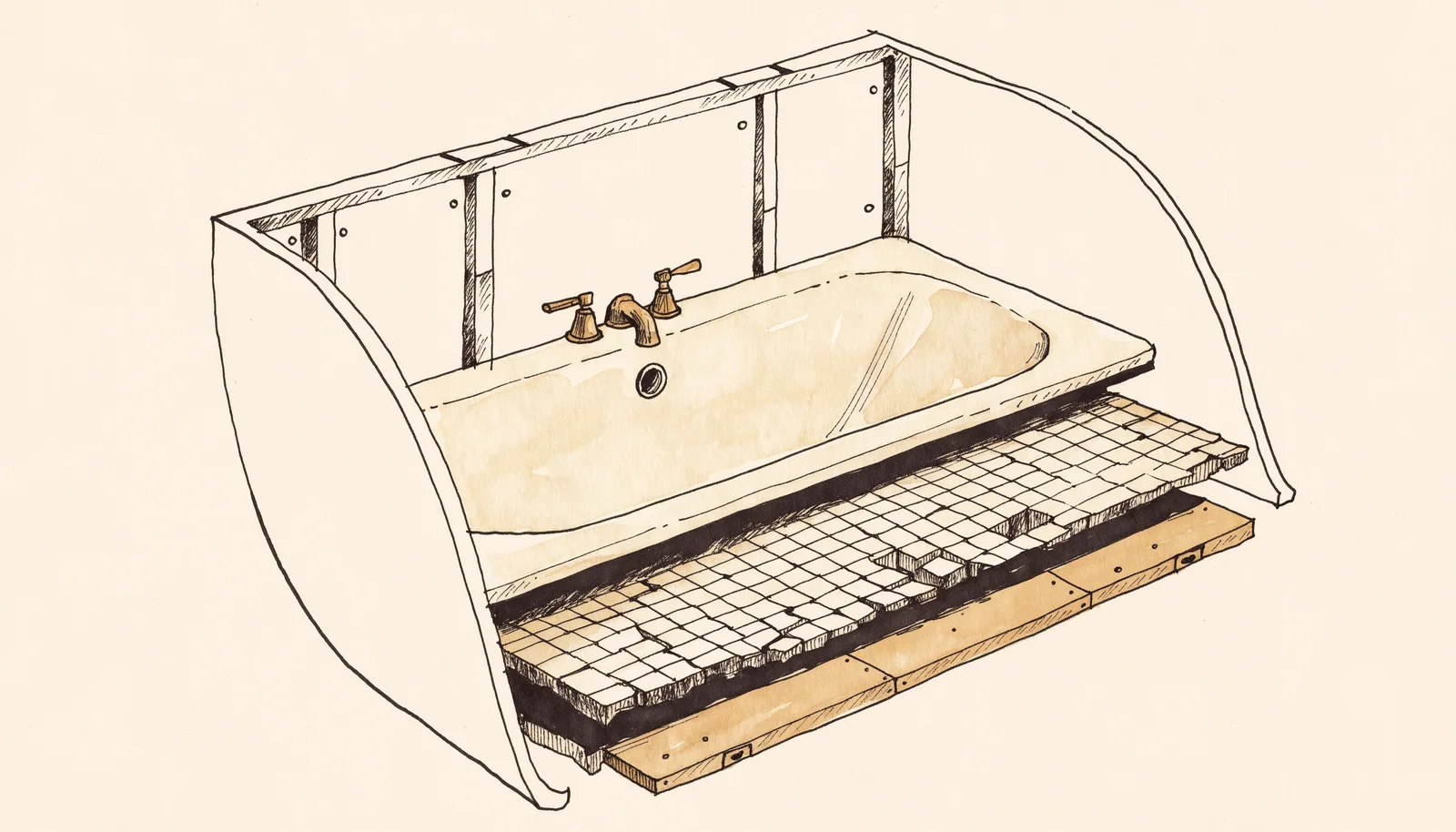
The phrase covers a family of products that share one mechanic: nothing is removed. A fabricator measures your existing tub or shower, molds an acrylic or PVC shell to match it, and a crew glues that shell over the old surface in a day: tub liner over the tub, wall panels over the tile, sometimes a new fixed shower base over the old one. Refits and tub-to-shower conversions from the same companies work the same way: the old assembly stays in the wall, and the new surface is bonded on top of it.
That is the entire trade-off in one sentence. The speed comes from skipping demolition, and skipping demolition means nobody ever looks at the substrate: the wallboard, the studs, the subfloor, the plumbing connections behind and beneath the surface you can see.
Every question about whether a one-day remodel is worth it reduces to one question: is the structure behind your tile sound and dry? Over a sound substrate, a wrap is a fair surface-level purchase. Over a wet one, it is a sealed lid on a problem that keeps growing.
What One Day Really Costs and What It Buys
Wrap companies rarely publish prices, and we will not invent numbers for someone else’s product. The honest qualitative framing is this: a liner or wrap installation costs a fraction of what a full remodel costs, because it replaces a fraction of what a full remodel replaces. That gap is real, and it is the whole appeal.
The comparison only means something against real remodel numbers, so here are ours. A full bathroom remodel with UHS Remodeling runs $8,000 to $60,000, quoted as a fixed price before work begins. Within that span, the tiers on our bathroom remodel cost guide break out as small guest baths at $8,000–$14,000, most mid-range remodels between $15,000 and $27,000, and luxury primary-bath renovations reaching $30,000–$60,000+. If your budget sits below that $8,000 floor, a wrap (or waiting and saving) is genuinely the more honest option, and our breakdown of whether $10K is enough for a bathroom remodel in DFW shows exactly what the bottom of the remodel market buys.
What the extra money purchases is not just tile. A remodel replaces the waterproofing, the wallboard, the fixtures and the failed parts of what a wrap covers up, and on our jobs it carries a 1-year workmanship warranty on the whole assembly, not just the new surface layer.
Not sure which of these applies to your house? A short conversation settles it faster than any calculator.

“Before I quote a bathroom in DFW I press on the tub floor and the tile around the valve with my thumb. If it gives, the conversation about finishes waits, because whatever we put over a wet wall is coming back out.”
Wrap vs. Full Remodel: The Honest Comparison
Neither column wins outright. They are different products for different bathrooms, and the table is only useful if you read it against your own substrate, horizon and budget.
The two rows that decide most cases are hidden damage and horizon. Everything else is preference; those two are risk.
When a One-Day Wrap Is Worth It
There are situations where we would tell a caller not to hire us, and these are them:
- A rental or a flip. If the bathroom needs to look clean for a tenant or a listing and someone else will own its long-term condition, a wrap prices correctly for the job it is doing.
- A short ownership horizon. Moving within a few years? A full remodel’s value assumes you live with it. A wrap buys the years you actually need.
- A sound, dry substrate with ugly finishes. If the tile is dated but the wall behind it is dry and solid (no soft spots, no flexing tub floor, no musty smell), then the thing a remodel fixes is not broken, and covering the surface is a defensible shortcut.
- A budget below the remodel floor. When the money genuinely is not there, a wrap beats a half-finished remodel or a lowest-bid contractor cutting the waterproofing you cannot see.
Notice what every scenario has in common: the wrap is being bought as what it is, a surface product with a short job description, not as a substitute for a remodel.
When a Wrap Hides Rot and Wastes Money
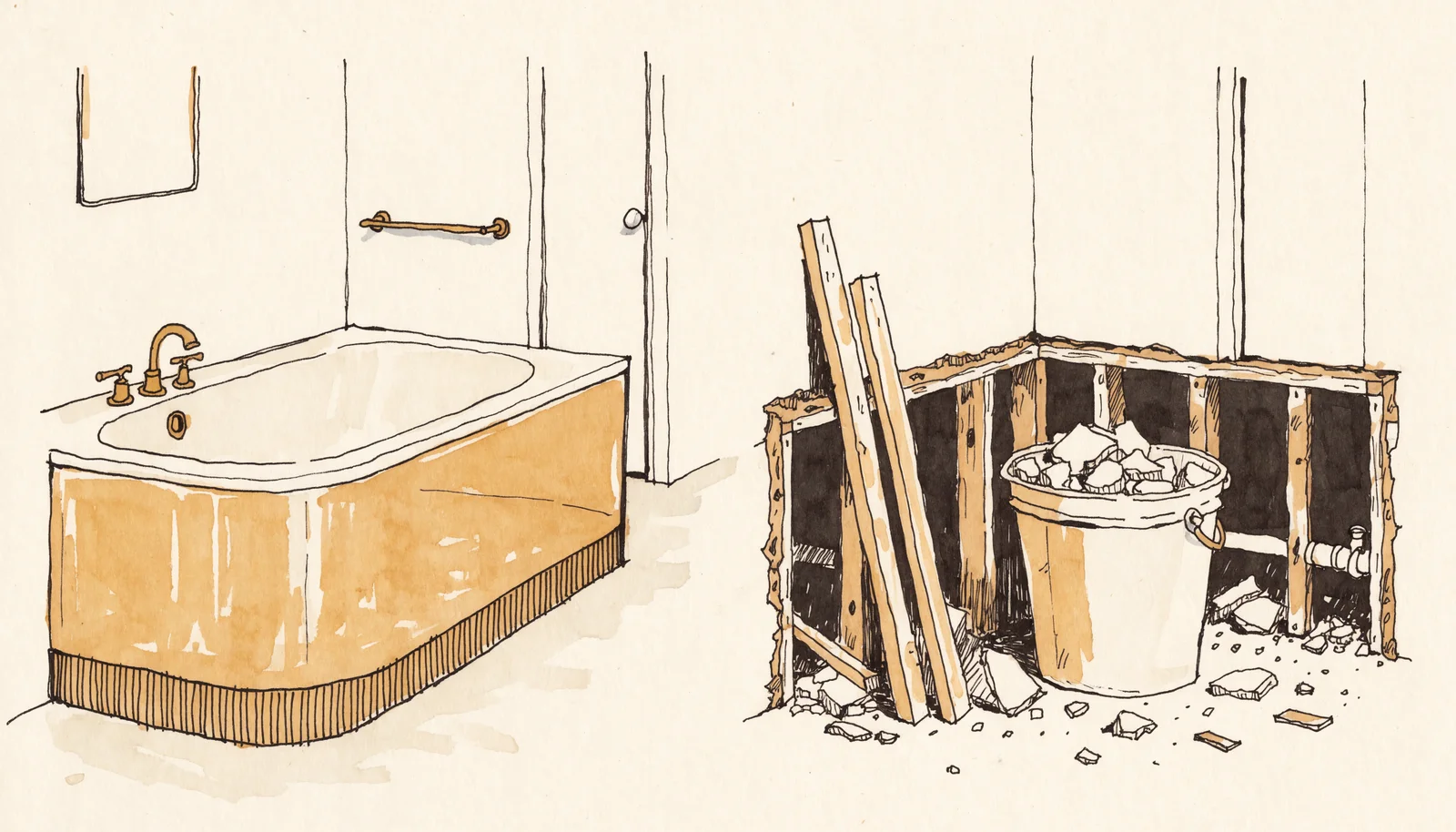
The failure cases are just as specific, and they are the reason the question “worth it” exists at all. These are the mistakes we see when a covered bathroom finally gets opened up:
Wrapping over active moisture
Soft grout lines, a flexing tub floor, stains on the ceiling below, a musty smell: these are symptoms of water already behind the surface. An acrylic shell seals that moisture in with the organic material it feeds on. The problem does not pause; it compounds out of sight.
Paying twice for the same bathroom
A wrap over a failing substrate does not replace the remodel; it schedules it. When the wall finally has to be opened, the liner comes out with everything else, and the money it cost bought a delay, not an asset.
Trapping a small leak until it is a big one
A loose tile caught early is a contained repair. The same leak discovered years later, after a liner hid the evidence, can involve the subfloor and framing, the expensive end of every bathroom project.
Expecting remodel value from a cover
Buyers’ inspectors recognize liners on sight. A wrapped tub does not read as a renovated bathroom at resale; it reads as a question about what is underneath.
Solving a layout problem with a surface product
If the real complaint is a cramped footprint, no storage, or a tub nobody uses, a wrap changes none of it. The footprint is the one thing the product cannot touch.
The pattern across all five: a wrap is only ever as good as the day-one condition of what it covers, and the sales process for a one-day install has no step where anyone verifies that condition.
Tell us what you are planning. We will walk your house, tell you what is actually possible, and put a real number on it before you commit to anything.
Or read the numbers first: bathroom remodeling in Plano, TX.
What a Real Bathroom Remodel Timeline Looks Like
The one-day pitch lands because homeowners picture months of chaos as the alternative. The actual gap is smaller than the marketing suggests. On our Plano bathroom remodels, guest baths run 3 to 4 weeks and primary baths with custom showers and tub installs run 5 to 6 weeks, and most bathroom projects across the market land in the 2–4 week range. Here is where those weeks go:
Demolition
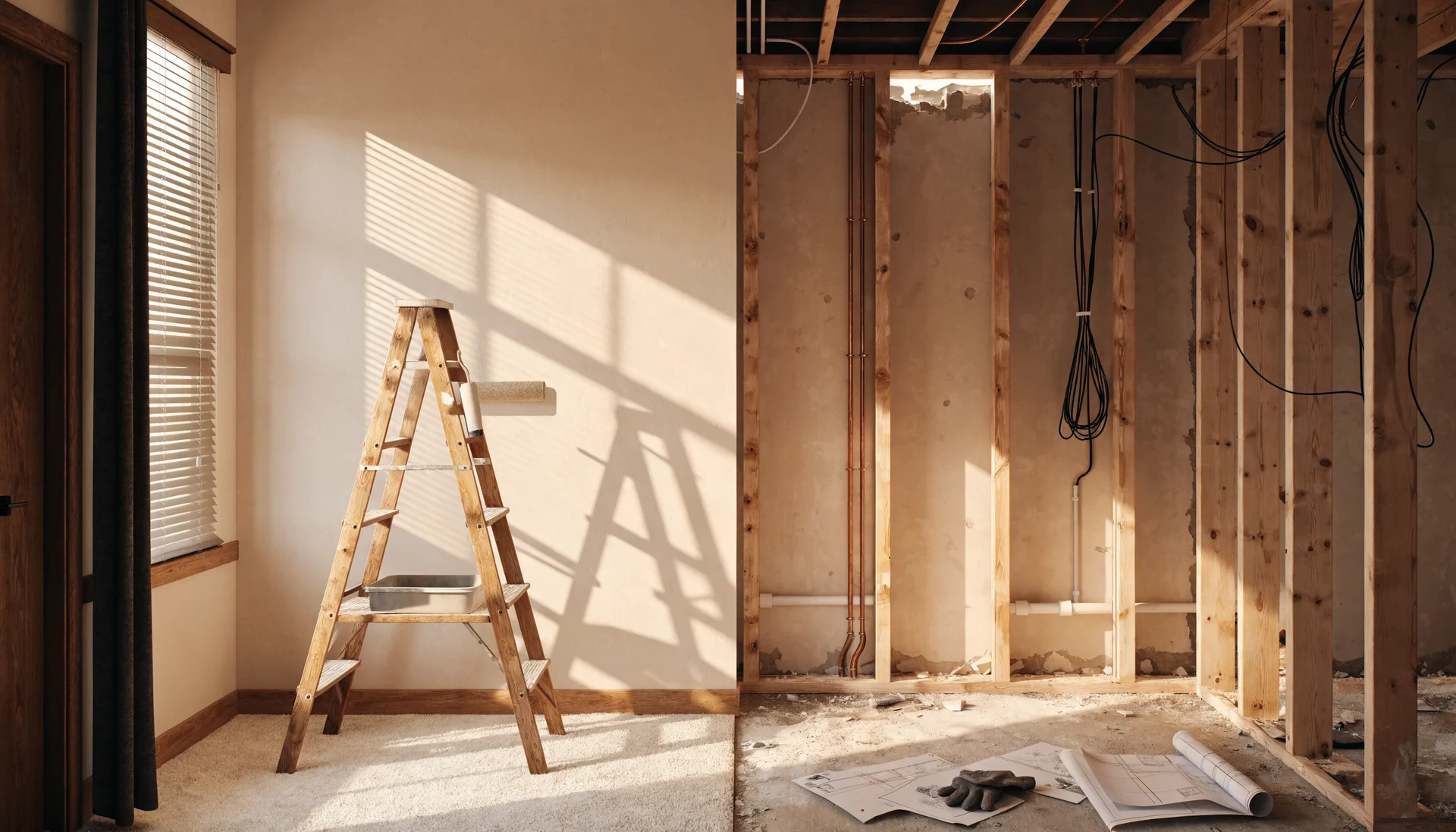
About 2 days. This is the step the wrap skips, and the step where hidden damage stops being hidden. Whatever is behind the tile gets found here, while it is still cheap to reach.
Rough plumbing and framing
About 1 week. Valves, drains and any framing repairs are done new, not inherited from the old assembly.
Tile and waterproofing
1–2 weeks. The layer that decides whether the bathroom is dry in year ten is rebuilt from scratch and inspected before it is covered.
Vanity and fixture install
About 1 week. Cabinetry, counters, glass and fixtures go in against surfaces that are known to be sound.
Punch list and walkthrough
Final corrections, then a room-by-room review before sign-off.
Living through those weeks is a real cost and we will not minimize it. Our guide to a bathroom renovation while living in the house covers how families actually manage it, especially with a second bathroom available. But it is weeks, not months, and it is the difference between covering a problem and retiring it.
How to Decide for Your Bathroom
Strip the marketing away and the decision is three questions, asked in order.
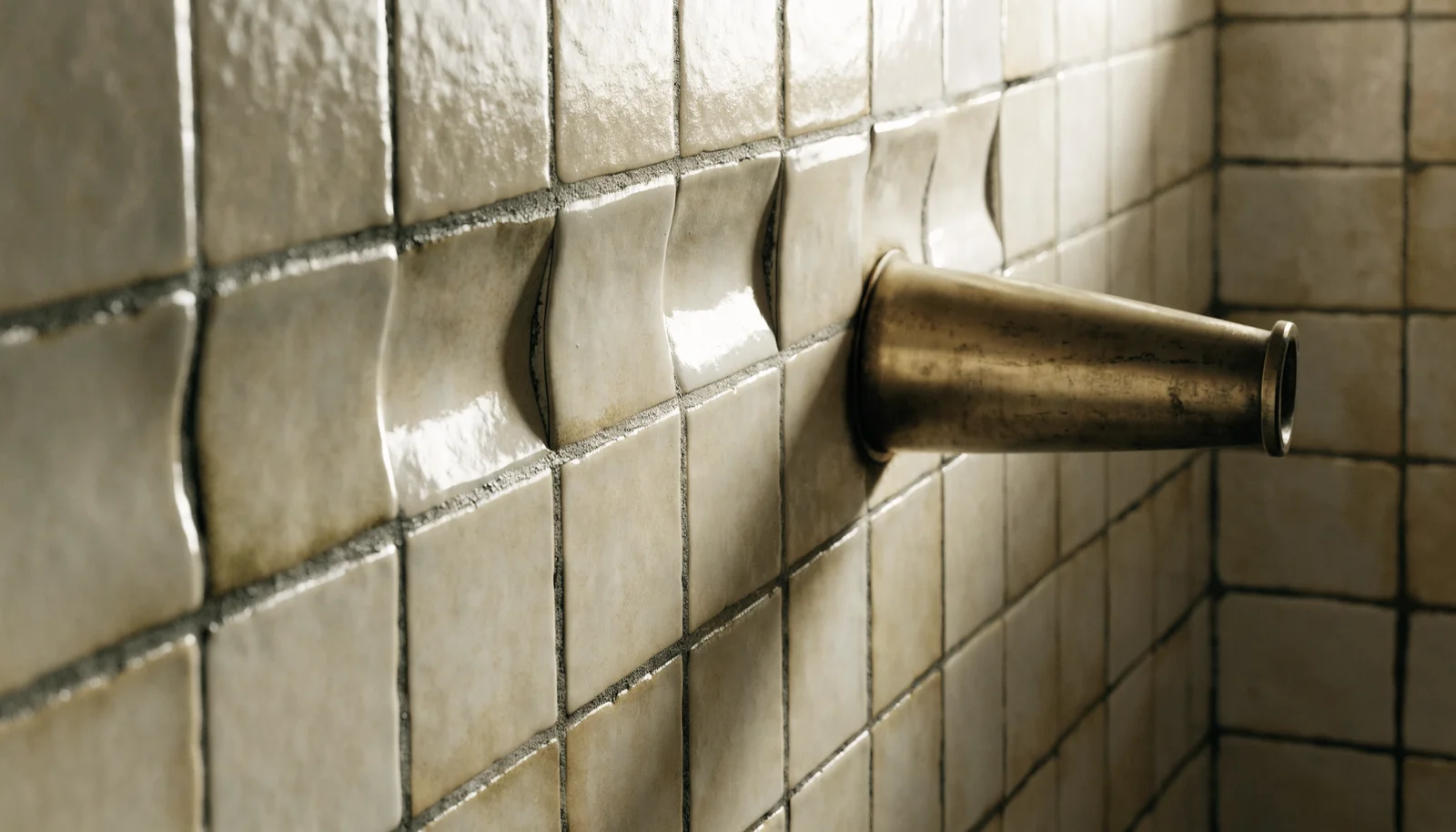
First, the substrate: press the tub floor and the tile around the valve. Any flex, softness, loose tiles or musty smell means moisture is already in the wall, and a wrap is off the table: not because we say so, but because sealing wet material inside a wall has one outcome.
Second, the horizon: under a few years of ownership, or a rental, and the wrap’s short job description may match yours. Ten more years in the house, and paying for a surface while the assembly underneath keeps aging is the more expensive path even though the invoice is smaller.
Third, the warranty question, the one almost nobody asks at the one-day sales pitch: what exactly is covered, the new surface layer or the whole wall? Ask it of any wrap company and any remodeler, us included. Our answer is a written 1-year workmanship warranty on the complete assembly, and our remodeling warranty guide for DFW explains what that should include and what weasel wording to watch for in anyone’s terms.
Before you sign for a wrap, pay for a plumber’s or inspector’s time to check the substrate. If it passes, buy the wrap with a clear conscience. If it fails, the wrap was never really an option; it was a delay with an installation fee.
And if the answer points to a real remodel, get the fixed number first. Our bathroom work runs $8,000 to $60,000, priced as a fixed quote before demolition, with 500+ client reviews behind the process and samples brought to your home rather than picked from a rack. That is the like-for-like comparison the one-day ads never put next to their own price, and it is worth seeing before you decide.
Questions we get
Are one day bathroom remodels worth it in Dallas?
They are worth it in a narrow set of cases: a rental, a flip, a short ownership horizon, or a dated bathroom whose wall structure is verifiably dry and sound. They are not worth it when there is any sign of moisture behind the tile (soft grout, a flexing tub floor, a musty smell), because the liner seals the damage in and the full remodel still happens later, on top of what the wrap cost.
How long does a bathroom remodel take?
Most bathroom remodels take 2 to 4 weeks. On our Plano projects, guest baths run 3 to 4 weeks and primary baths with custom showers and tub installs run 5 to 6 weeks: roughly 2 days of demolition, a week of rough plumbing and framing, 1 to 2 weeks of tile and waterproofing, a week of vanity and fixture installation, then the punch list.
How much does it cost to rip out and replace a bathroom?
A full rip-out-and-replace bathroom remodel runs $8,000 to $60,000 with UHS Remodeling, quoted as a fixed price before work begins. Small guest baths sit at the $8,000–$14,000 end, most mid-range remodels land between $15,000 and $27,000, and luxury primary baths reach $30,000–$60,000+. A one-day wrap costs a fraction of that, because it replaces nothing.
What is the most expensive part of a bathroom remodel?
Labor and waterproofing dominate a bathroom remodel budget: the trades and the layers you never see again once the tile goes on. That is also why the wrap-versus-remodel gap is so wide: the wrap skips exactly the expensive, invisible work, which is fine when that work is not needed and costly when it was.
Can I renovate my bathroom for $5000?
Not as a full renovation: $5,000 sits below the $8,000 floor where real remodels start in DFW. At that budget the honest options are a cosmetic refresh (paint, hardware, lighting, a new vanity top), a one-day liner over a verified-sound tub, or saving toward the guest-bath tier. What to avoid is a bid that promises a complete remodel at that number, because the money has to come out of the waterproofing.
What to avoid when renovating a bathroom?
The two costliest mistakes are covering damage instead of opening it up (a liner or new tile over a wet substrate) and cutting the waterproofing budget because it is invisible at the walkthrough. Avoid moving plumbing fixtures without a reason, since each relocation on a slab foundation adds real cost, and avoid any contractor who will not put the scope, price and warranty in writing before demolition.
The wrap and the remodel are different products: one buys a surface, the other retires a problem. Check the substrate, be honest about how long you are staying, and price both sides with real numbers. If the wall is wet, the one-day option was never cheap; it was a delay with an installation fee.
Related from the journal
Price the real remodel before you buy the cover with a fixed quote for your bathroom, before any demolition.
Fully insured · 500+ client reviews · fixed-price contracts · 1-year workmanship warranty.
Prefer to talk? (469) 850-7087 · or use the contact page.