
Second-Story Addition in DFW: Build Up vs. Build Out (2026 Cost & Feasibility Guide)
When adding a second floor beats a ground-floor bump-out in Dallas-Fort Worth, and what the clay soil, staircase, and budget really demand.
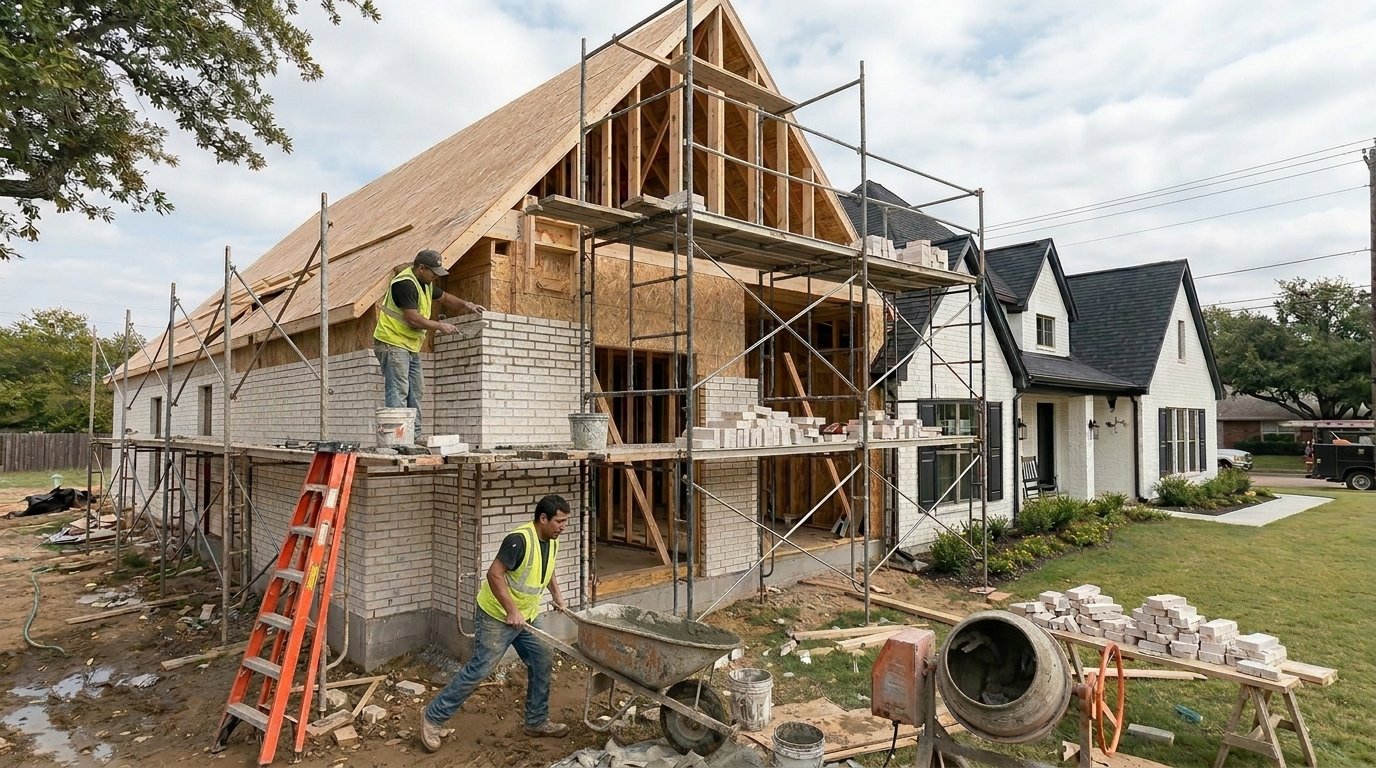
A second-story addition in DFW typically runs $200 to $400+ per square foot, with most full projects landing in the $150K to $400K+ range. That is usually higher per foot than building out, but it is the right call when your lot is small, your trees are mature, or zoning caps your footprint. Feasibility hinges almost entirely on whether your foundation can carry the load.
Build up or build out in DFW?
Build OUT when you have open yard and a foundation that is cheaper to extend than to reinforce; it is usually the lower cost-per-square-foot path. Build UP when your lot is tight, you want to preserve mature trees and yard, or zoning caps your footprint. The deciding factor in DFW is almost always the foundation: our expansive-clay soil and slab-on-grade homes mean a structural engineer must confirm the existing slab and footings can carry a new floor before anything else is priced. Budget $250 to $400+ per square foot for a second story, plan for an 4 to 8 week temporary relocation, and expect the staircase to consume real downstairs square footage.
§ 01Should you build up or build out for a DFW home addition?
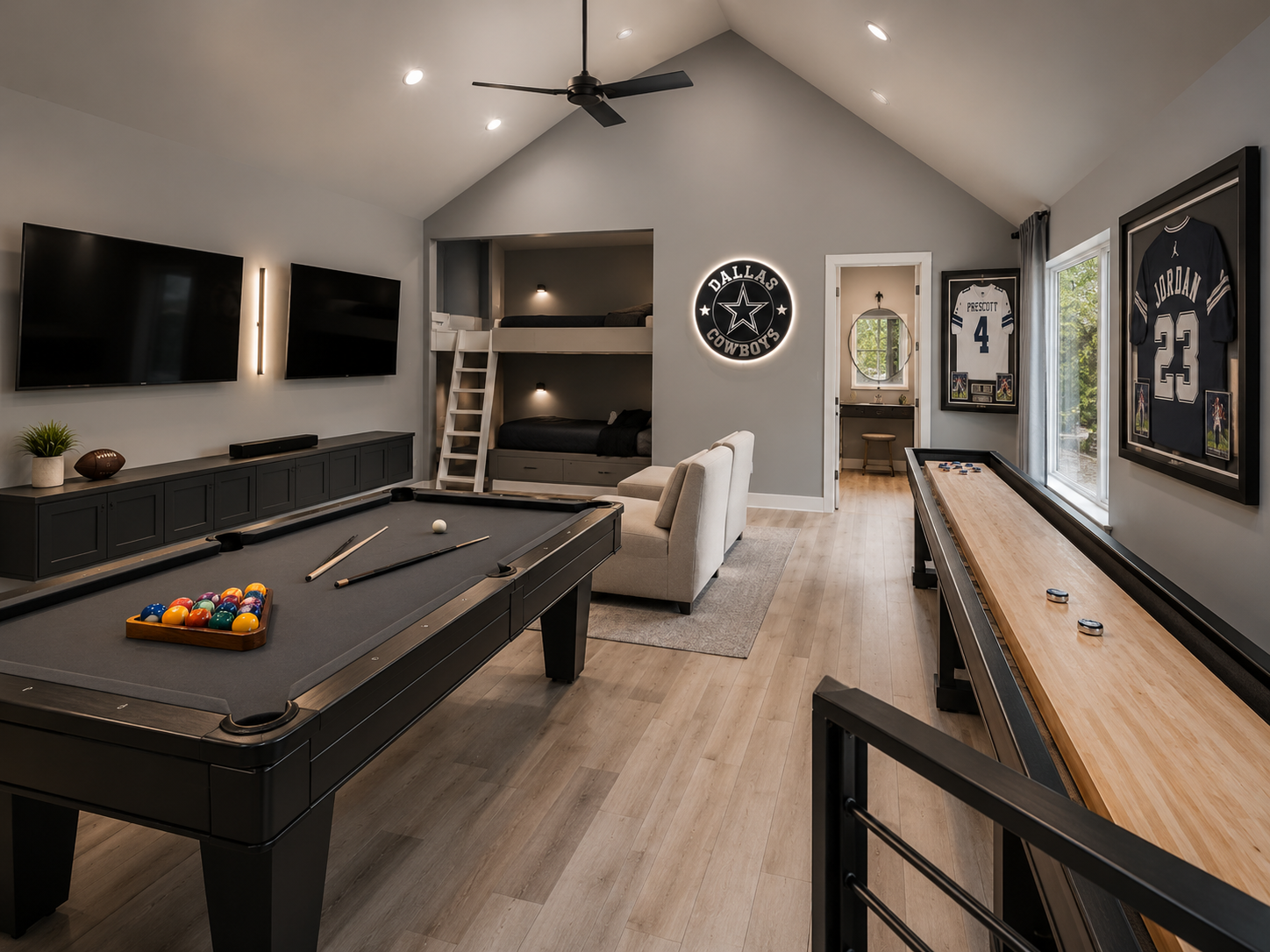
Most homeowners ask it the week they realize the house is too small but the street is exactly right. There is no universal winner; the answer comes down to your lot and what your foundation can carry. Building out (a ground-floor bump-out) is generally the lower cost-per-square-foot option because it avoids the structural reinforcement, staircase, and roof work that a vertical addition demands. Building up preserves your yard, keeps your footprint inside tight setbacks, and saves mature trees. Those things matter a great deal on the smaller, established lots common in Plano, Richardson, and the Park Cities.
Here is how our DFW room addition team frames it: build out when you have the land and a wider footprint rewards the budget; build up when the land is the constraint and the value lives in square footage you cannot get any other way. For a fuller menu of options before you commit to a direction, our guide to home addition ideas for DFW homes walks through every common configuration.
§ 02Why does DFW soil make a second story a foundation question first?
This is the part that catches homeowners off guard. North Texas sits on expansive clay soil that swells when wet and shrinks when dry, and the vast majority of DFW homes are built on slab-on-grade foundations. That slab and its footings were engineered to carry one floor, not two. Before anyone draws a single line, a licensed structural engineer has to evaluate whether the existing foundation, framing, and load-bearing walls can support a full second story.
Sometimes the answer is yes with minor reinforcement. Sometimes it requires new piers, beams, or footing work that adds tens of thousands to the project. Occasionally the existing slab simply cannot be brought up to capacity affordably, and that finding alone tips the decision toward building out. This is not a step to skip or rush. At UHS Remodeling we pull all permits, work with licensed structural and MEP trades, and carry full insurance on every job. A second story is the project where you want every one of those pieces in writing before the roof comes off.

On a second story, the foundation decides everything. Before we talk floor plans, we find out what your slab can carry, because in DFW’s clay soil, that one answer usually settles whether you build up or build out.— May N. · Co-Founder, UHS Remodeling
§ 03How much does a second-story addition cost in DFW in 2026?
A second story almost always costs more per square foot than a comparable ground-floor addition. You are paying for foundation reinforcement, a new staircase, temporary weather protection while the roof is open, and the logistics of building above an occupied (or recently vacated) home. Here is how the two paths compare in the current DFW market.
| Factor | Build Up (Second Story) | Build Out (Ground-Floor) |
|---|---|---|
| Typical cost per sq ft | $250–$400+ | $200–$350 |
| Foundation work | Reinforce existing slab/footings; can be major | New slab section; predictable |
| Footprint impact | None; preserves yard & trees | Consumes yard; subject to setbacks |
| Staircase | Required; eats downstairs square footage | Not needed |
| Roof & weather risk | Roof opened; schedule around weather | Lower exposure |
| Typical project range | $150K–$400K+ | $120K–$350K |
For context, full additions in our market commonly land in the $120K to $400K range depending on size and finish level, and a true whole-home reconfiguration can climb higher. If you are weighing a large vertical addition against a full reimagining of the house, compare it with whole-home remodeling in DFW; sometimes redistributing existing space costs less than adding it. For line-item detail, see our DFW cost study and the current breakdown of 2026 DFW home addition costs.
§ 04What does a second story do to your staircase and daily life?
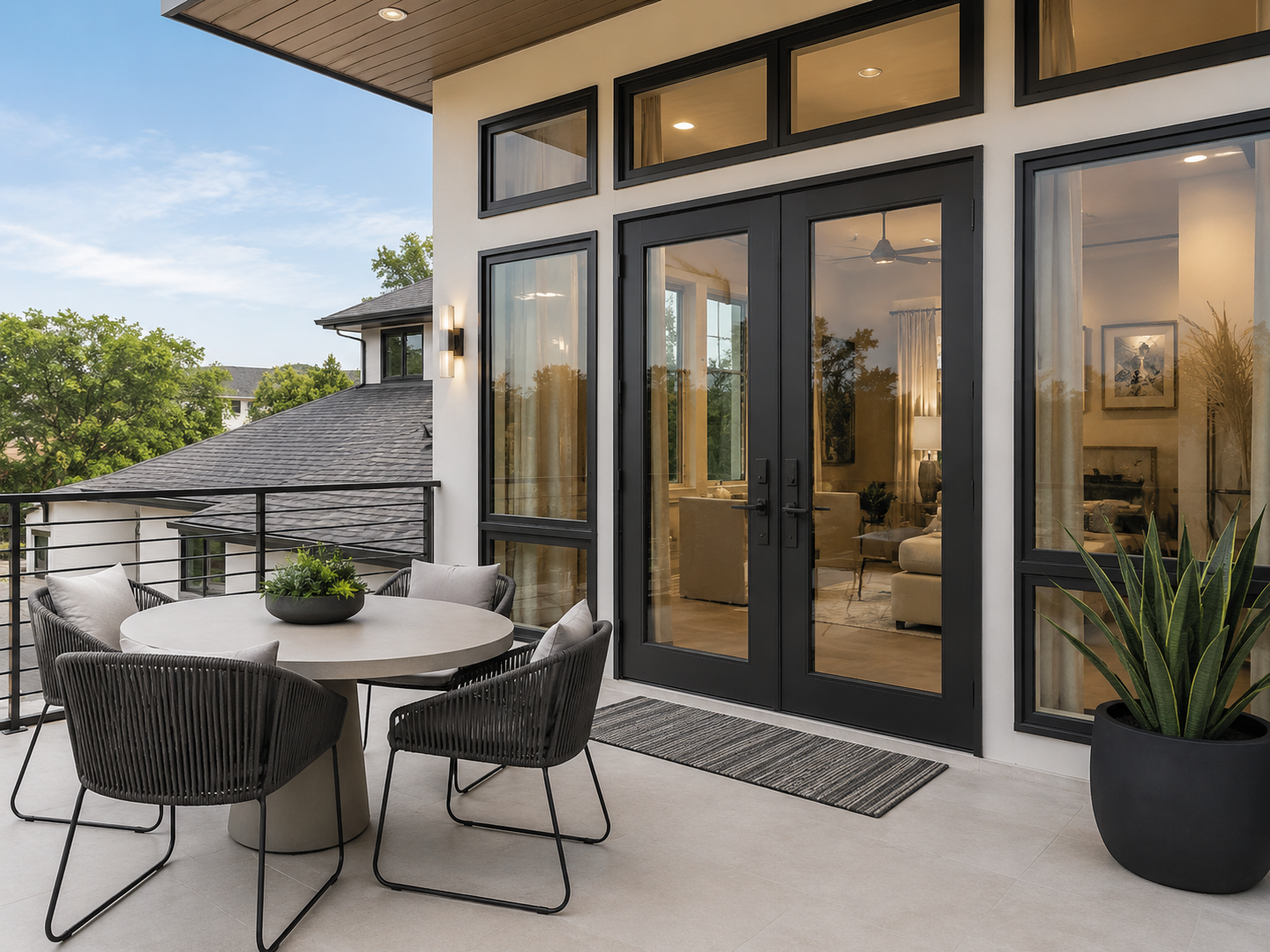
Two realities homeowners underestimate: the staircase and the relocation. A code-compliant staircase consumes roughly 80 to 120 square feet of your existing first floor. That space has to come from somewhere, often a bedroom, office, or part of a living area. Where that stair lands shapes the entire downstairs layout, so it belongs in the very first design conversation, not the last.
Then there is living through it. Because a second story opens the roof and disrupts the structure below, most families relocate for the heaviest phase, typically 4 to 8 weeks depending on scope. We plan that window with you upfront so it is a budgeted line item, not a mid-project surprise. A ground-floor bump-out is often more livable during construction, and that should count in the decision alongside the square footage.
§ 05When is building up clearly the better call?
Building up wins when the constraint is land. On a smaller established lot in Plano, the Park Cities, or an older Richardson neighborhood, setbacks and lot-coverage limits may leave no room to build out at all. Mature trees that take decades to replace, a pool you do not want to give up, or a yard that is part of why you bought the home all push toward a vertical addition. Homeowners pursuing Plano home additions frequently land here because lots are generous in living space but tight on buildable yard. At the high end, University Park luxury additions are almost always vertical, because tear-down-level lot prices make every preserved square foot of land enormously valuable.
Second-Story Feasibility Checklist
§ 06What is the smart way to start?
Begin with feasibility, not floor plans. A structural assessment of your foundation tells you in one step whether building up is even on the table and roughly what reinforcement it would demand. That single answer often makes the up-versus-out decision for you. From there, a design-build firm can carry the project from engineering through permits to finished space under one fixed-price contract, which matters most on six-figure work where change orders and surprises do the real damage to a budget.
§ Q&AFrequently asked questions.
Out of room to build out? Let us see if you can build up.
Fully insured · 500+ verified five-star reviews · fixed-price contracts · 1-year workmanship warranty.
May N.
Co-Founder and design lead at UHS Remodeling, a Plano-based DFW design-build firm. She has helped guide kitchen, bath, and whole-home projects across the metroplex since 2014.
UHS Remodeling brings over a decade of experience to remodeling across 21 DFW communities, on fixed-price contracts backed by a 1-year workmanship warranty.