


Bathroom Exhaust Fan Sizing Guide: How to Choose the Right Fan for Your Space
The square-footage rule gets you a starting number, and then the ceiling height, the tub, and the duct run take it away. Here is how to size a bathroom exhaust fan for the room you actually have, and when to stop guessing.
The bathroom exhaust fan is a small fixture, and it is the one that decides whether the walls, the paint, and the insulation behind the tile stay dry. Pick a fan by its trim or its price and the room will tell you: fog that will not clear, a musty smell that comes back after every shower, a ceiling that starts to bubble. This bathroom exhaust fan sizing guide walks through how to select the correct CFM rating, where the do-it-yourself math goes wrong, and the point at which a professional evaluation is the cheaper option. At UHS Remodeling we see the same pattern across Plano and the rest of DFW: a fan that was undersized on day one, followed by persistent humidity, odors, and eventually ceiling damage.
Start at 1 CFM per square foot, then add capacity for ceiling height, tubs, and the duct run.
Small bathrooms need a minimum of 50 CFM, medium bathrooms 80 to 100 CFM, and larger rooms or jetted tub areas 150+ CFM. The rule fails in real homes because moisture load, long duct runs, and tall ceilings all cut into the number on the box. If the mirror stays fogged or the paint is peeling, it is time for a professional evaluation.
Why bathrooms end up with the wrong fan
Most bathroom ventilation problems start with improper sizing or an outdated fan. The fan’s job is to pull moisture, odors, and airborne contaminants out of the room. When its CFM rating is too low for the space, the air has nowhere to go, and humidity builds quickly after every shower. In the bathrooms we open up, the cause is usually one of these:
- An undersized fan installed in a larger room
- Ceiling height left out of the calculation, so the volume of air was underestimated from the start
- An outdated bath fan model rated below 50 CFM
- Poor duct routing that cuts the airflow the fan can actually deliver
- No ventilation at all in a powder room or a jetted tub space
None of these is cosmetic. The U.S. Environmental Protection Agency (EPA) ties moisture buildup and poor indoor air quality to mold growth and respiratory issues when ventilation is not properly maintained, and the bathroom is the wettest room in the house.
A fan can match the square-footage rule exactly and still fail once ceiling height, duct resistance, and the steam from a shower are counted.
The rule of thumb homeowners start with
The DIY approach most people find is a square-footage calculation: 1 CFM per square foot of bathroom floor. A 100 sq ft bathroom, by that rule, needs at least a 100 CFM fan. It is a reasonable starting point, and it is where a lot of homeowners stop, sometimes after upgrading to a fan with a light, a fan with a heater, or a flush mount ceiling unit for the added function.
The basic sizing guide that travels with that rule looks like this:
- Small bathrooms: a minimum of 50 CFM
- Medium bathrooms: 80 to 100 CFM
- Larger rooms or jetted tub areas: 150+ CFM
The University of Minnesota Extension makes the case for why the number matters at all: proper ventilation is what keeps indoor humidity at healthy levels and prevents the slow structural damage that wet air does to a house over years. The rule of thumb gets you into the right neighborhood. What it cannot do is see the room.
Why the square-footage rule fails in real homes
Bathroom airflow is shaped by variables that never show up in a length-times-width calculation. Duct resistance, moisture load, ceiling height, and the physical fan housing all push the real airflow away from the number on the box, which is how a fan ends up correctly sized on paper and underpowered in practice. Assuming that bathroom fan dimensions tell you anything about airflow, or ignoring what the duct does to it, is where most DIY sizing goes wrong. The failures we see repeat:
Ignoring the moisture load from showers and tubs
Bathrooms with the same floor area can carry very different amounts of steam. A room with a shower and a soaking tub produces more moisture per use than a floor-based rule accounts for, and the fan falls behind.
Overlooking airflow loss in long duct runs
A long duct run adds resistance, and the fan delivers less air at the room than its rating suggests. The number on the box was never going to survive the trip through the attic.
Installing a decorative but underpowered unit
Fans chosen for the trim, the light, or the heater are often chosen without reading the CFM rating, and the room pays for the trade.
Not accounting for ceiling height
A taller ceiling means more air to exchange. Sizing by floor area alone treats a tall room like a standard one and under-ventilates it.
ASHRAE (American Society of Heating, Refrigerating and Air-Conditioning Engineers) sets the industry standard here, and its position is that ventilation has to be engineered around occupancy and moisture load, not room size alone. That is the gap between the rule of thumb and a fan that actually keeps the room dry.
Not sure which of these applies to your house? A short conversation settles it faster than any calculator.
What the wrong fan does to a bathroom
An undersized or poorly ducted exhaust fan is not a comfort problem; it is a slow-motion maintenance problem. The fan protects walls, paint, insulation, and the electrical components that sit near water, and when it cannot keep up, the damage arrives in a predictable order:
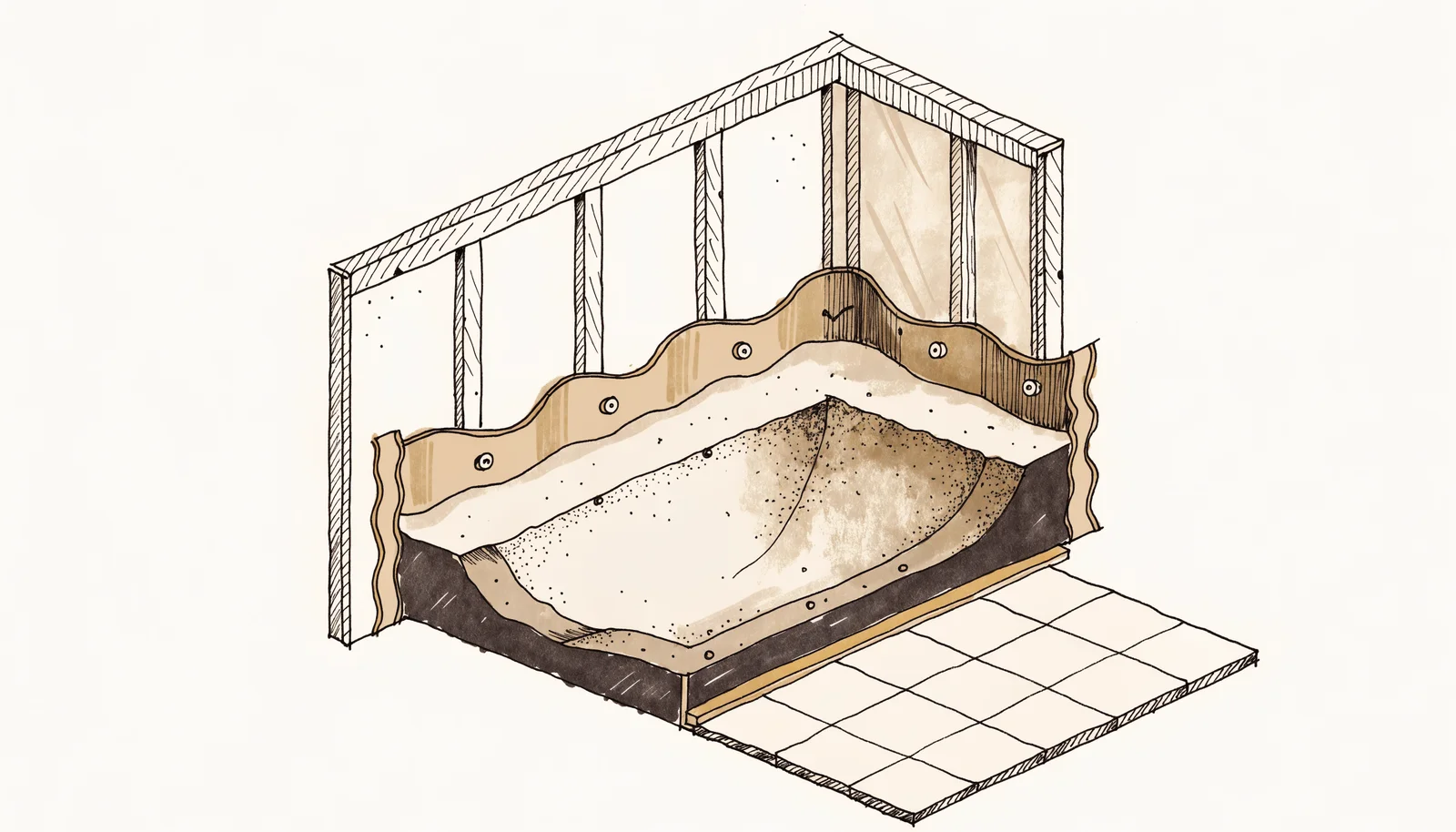
- Mold and mildew growth behind walls, where it stays hidden until a remodel opens the cavity
- Peeling paint and ceiling damage above the shower
- Persistent humidity that degrades indoor air quality for the rest of the house
- Electrical corrosion on fixtures and connections that sit near water
The fix is rarely exotic. An energy-efficient upgrade such as an ENERGY STAR fan, properly sized and properly installed, cuts moisture retention and improves long-term performance. The two conditions in that sentence, sized and installed, are where the difference lives; the fan itself is the easy part.
Signs you need a professional ventilation installation
Persistent moisture, or a smell that returns after every shower, is the point at which we recommend a professional evaluation rather than another trip to the hardware store. The signs we ask homeowners to watch for:
- Mirror fog that remains long after the shower ends
- Paint or drywall that bubbles or peels
- An existing fan that runs but moves air you can barely feel at the grille
- A bathroom with a jetted tub or a large layout
- Multiple fixtures that need coordinated ventilation
Professional installation gets three things right that a box-store swap tends to miss: the correct bathroom ventilation fan size for the actual room, a duct route that lets the fan deliver its rating, and an installation that meets current building standards. If the fan problem is surfacing during a larger bathroom remodeling in Plano, TX project, the ventilation gets designed alongside the layout rather than squeezed in after the tile is up.
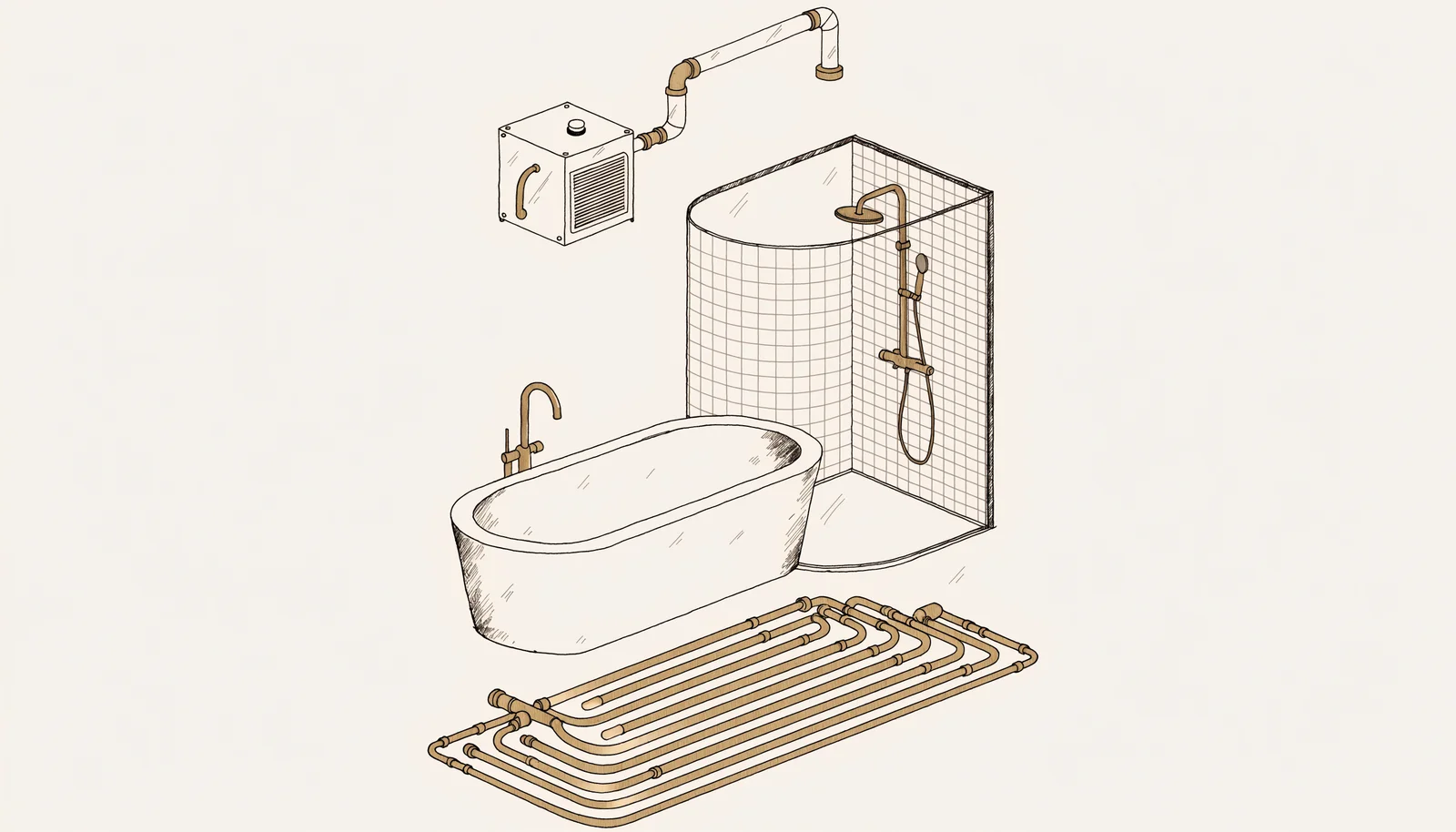
How we size a bathroom fan at UHS Remodeling
We treat the fan as part of a ventilation system, engineered around room size, usage patterns, and the structural layout, rather than a fixture swapped in at the end. The sequence is the same on a compact powder room and a large primary bath:
Measure the room
Multiply length by width to get the square footage. This is the base number the CFM rating is matched against, and it is the only step the DIY rule performs.
Adjust for ceiling height
A taller ceiling holds more air, so the calculation is corrected upward before a fan is chosen, not after the fog problem appears.
Add capacity for the fixtures
Showers, tubs, jetted tubs, and multiple fixtures each add moisture load. Larger rooms and jetted tub areas are pushed toward the 150+ CFM range rather than left at the base rule.
Account for the duct
Airflow resistance in the duct run is weighed against the manufacturer’s CFM rating, so the fan chosen delivers its number at the room and not only at the housing.
Choose and install the unit
The fan is selected on real conditions, installed for the space it serves, whether a larger room or a compact one, integrated with modern profile ceiling fan systems where the design calls for it, and specified as an energy-efficient upgrade.
I size the fan for the shower, not the floor plan. A bathroom that reads small on paper can carry a heavy moisture load once a rain head and a soaking tub go in, and I would rather move the fan closer to the exterior wall than accept a long duct run that quietly eats the airflow.
Tell us what you are planning. We will walk your house, tell you what is actually possible, and put a real number on it before you commit to anything.
Or read the numbers first: bathroom remodeling in Plano, TX.
Where ventilation fits in a bigger remodel
Fan sizing rarely shows up as a project on its own. It surfaces when a homeowner is already planning work, which is the right moment to handle it, because the duct route, the ceiling, and the electrical are all open at once. Our guide on bathroom renovation planning covers how remodeling changes airflow and how the design choices made early improve long-term home performance. The home repair warning signs we see most often overlap with the ventilation symptoms above, and the visit that diagnoses the peeling ceiling usually diagnoses the fan. For a whole-house scope, the renovation planning guide lays out where ventilation sits inside a full-scale upgrade.
For the bathroom itself, from a small refresh to a full primary suite, our Plano bathroom remodeling service page shows what a project looks like when the airflow is planned from day one rather than patched at the end.
Get the fan right the first time
Choosing the right bathroom exhaust fan size is a technical decision with a long tail: it decides how the room ages. If your bathroom still feels humid after the fan has run, or the odors never fully leave, the fan was probably sized for the floor and not for the room. UHS Remodeling sizes, installs, and tunes every ventilation system for the space it serves, on a small bathroom upgrade and on a full master suite remodel alike, so the airflow is correct from the first shower. Contact us to schedule a consultation and have the ventilation done right once.
Questions we get
What size bathroom vent fan do I need?
The size depends on your bathroom square feet. A general rule is 1 CFM per square foot. Small bathrooms may need 50 CFM, while larger spaces or bathrooms with tubs require 100 to 150 CFM for proper ventilation and moisture control.
How to size exhaust fan for bathroom?
To size correctly, calculate the room’s square footage and adjust for ceiling height and fixtures. Multiply length by width, then match with CFM ratings. Add extra capacity for jetted tubs or larger rooms to ensure proper air exchange.
What are bathroom fan dimensions?
Bathroom fan dimensions refer to the physical housing size and duct compatibility, not airflow. Always check both size and CFM rating, as a compact fan can still provide strong ventilation if engineered properly for your bathroom layout.
What is the average CFM for bathroom exhaust fan?
The average CFM ranges from 50 to 100 for standard bathrooms. Smaller powder rooms may function with 50 CFM, while medium to large bathrooms require 80 to 150 CFM depending on moisture levels and ceiling height.
How do I measure exhaust size?
Measure the bathroom’s square footage and evaluate ceiling height. Then compare with manufacturer CFM ratings. For accurate results, consider airflow resistance in ducts and whether the bathroom includes showers, tubs, or multiple fixtures.
What fan size is best for bathroom ventilation?
The best fan size depends on usage. Standard bathrooms need 1 CFM per square foot. However, bathrooms with high humidity or enclosed layouts often require higher-capacity fans for effective moisture removal and air circulation.
Why is bathroom ventilation fan size important?
Correct fan size prevents mold, humidity buildup, and structural damage. Undersized fans lead to poor air quality, while oversized fans waste energy. Proper sizing ensures efficient airflow and long-term protection for your bathroom.
Measure the floor, correct for ceiling height, add capacity for every tub and shower, and check what the duct run takes back. A fan that is right on paper and wrong in the room costs you paint, drywall, and eventually the cavity behind the tile.
Related from the journal



Get the bathroom fan sized right the first time before the tile goes up.
Fully insured · 500+ client reviews · fixed-price contracts · 1-year workmanship warranty.
Prefer to talk? (469) 850-7087 · or use the contact page.